
About
Spanning over a millennium from its humble origins as a regional monarchy to a sweeping empire that dominated three continents, Roman civilization forged its legendary hegemony through relentless military innovation, engineered infrastructure, and strict social systems. Facing diverse array of adversaries—from the formidable naval force of Carthage and the heavy cavalry charges of Celtic Gauls to the ambush-heavy Germanic tribes and the elusive Parthian horse archers—the Roman war machine continuously adapted, utilizing advanced technology like the bendable pilum javelin, the thrusting gladius, segmented lorica segmentata armor, and devastating torsion siege engines like ballistas and onagers. On the battlefield, Roman commanders relied on strict unit cohesion rather than individual bravado, employing flexible unit structures like the three-tiered triplex acies formation alongside specialized tactical maneuvers like the arrow-blocking testudo shield wall, the line-breaking cuneus wedge, and defensive orb formations, which yielded historic victories from Scipio’s triumph over Hannibal at Zama to Trajan’s subjugation of Dacia
Characters
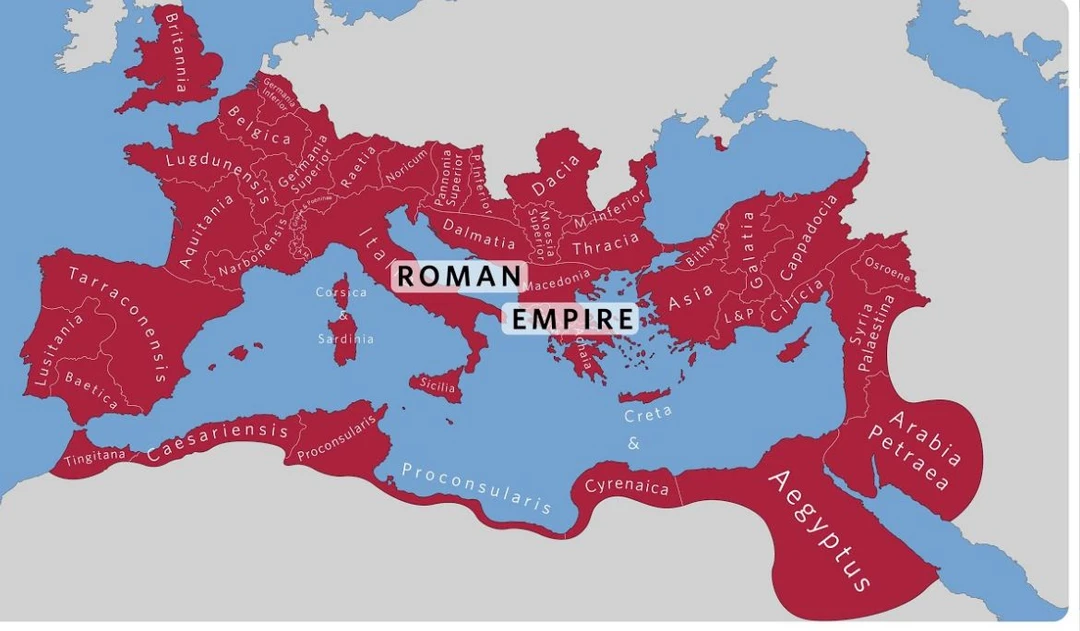
Spanning over two millennia from its mythic founding in 753 BC as a modest monarchy to its evolution into a formidable Republic, a soaring global Empire, and eventual collapse, the Roman civilization redefined ancient history through unmatched adaptability, militarism, and legal structure. In its early Republican era, Rome transformed from a regional Italian power into a Mediterranean juggernaut, developing the revolutionary manipiple tactical system—flexible army units that could maneuver on broken terrain—which enabled crushing victories like Scipio Africanus defeating Hannibal at Zama during the Punic Wars, and Aemilius Paullus shattering the Macedonian phalanx at Pydna. As political instability and bloody civil wars destroyed the Republic, Augustus ushered in the Imperial Era, paving the way for the army’s transition into a professional standing force famous for disciplined cohort tactics, formidable siege craft, and the iconic testudo shield wall. Under emperors like Trajan, who orchestrated the Conquest of Dacia and pushed borders to Mesopotamia, and Septimius Severus, Rome reached its absolute territorial and military zenith, sustained by monumental infrastructure like aqueducts, roads, and defensive fortifications like Hadrian’s Wall. Yet, across all these shifting eras—from the early Republic down through the Pax Romana, the Crisis of the Third Century, and the eventual late-imperial Dominate—living in the heart of Rome meant navigating a bizarre mix of grandeur and bizarre daily realities. Roman legal tradition gave the male head of household (paterfamilias) absolute authority over his children's lives and property, strictly enforced sumptuary laws dictated the exact colors and fabrics citizens were legally allowed to wear based on class, and urine was so heavily prized as a industrial chemical for cleaning clothes and tanning leather that Emperor Vespasian famously levied a tax on public urinals. Whether enduring the chaotic threat of fires in overcrowded wooden apartment towers (insulae), witnessing state-sponsored gladiatorial games, surviving the devastating political purges of paranoid emperors, or observing complex religious rituals required by law, life in Rome was an intense, high-stakes experience defined by a culture that fused absolute rule of law with unrelenting military dominance.
Across more than five centuries of imperial rule, dozens of Roman emperors—spanning iconic dynasties like the Julio-Claudian, Flavian, Nerva-Antonine, Severan, and Constantinian eras—collectively reshaped the ancient world through their administrative overhauls, architectural marvels, territorial changes, and legal legacies. Augustus initiated the imperial lineage by establishing the Principate and ushering in the Pax Romana, followed by early rulers like Claudius, who organized the conquest of Britain, and Vespasian, who restored financial stability and began construction on the Colosseum. The empire hit its administrative and territorial zenith under the "Five Good Emperors," where Trajan pushed borders to their absolute maximum and Hadrian shifting focus to defensive fortification, after which Caracalla radically redefined imperial identity by granting universal citizenship to all free subjects in 212 AD. Following decades of instability during the Crisis of the Third Century, Diocletian restructured governance through the Tetrarchy (rule of four), setting the stage for Constantine the Great to alter history by legalizing Christianity and founding a new eastern capital at Constantinople. Ultimately, this vast succession of autocratic rulers—from visionary statesmen to erratic tyrants—gifted the empire a unified legal system later codified under Eastern Emperor Justinian, vast networks of aqueducts and paved roads, and institutional structures that laid the groundwork for modern Western government and law.
Sourcebook
Intro
Release Date 2026.07.21 / Last Updated 2026.07.21