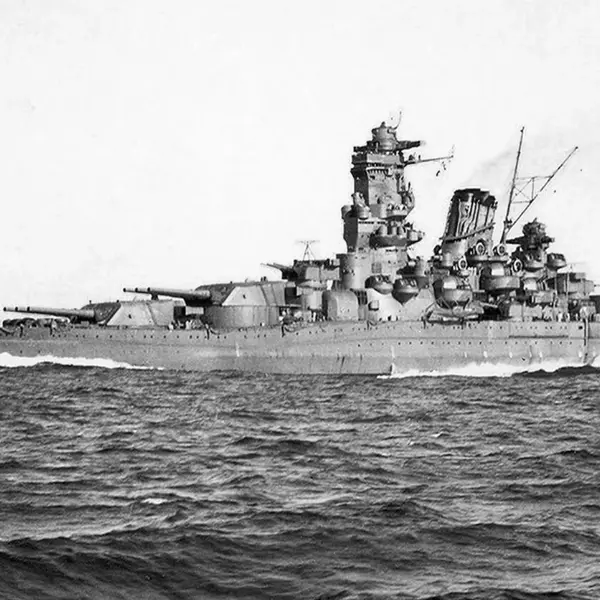
The final moments of the world's largest battleship in 1945.

About
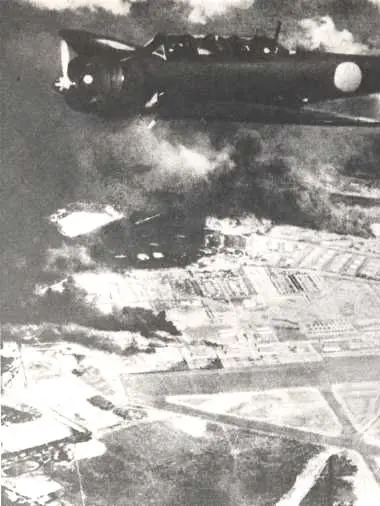
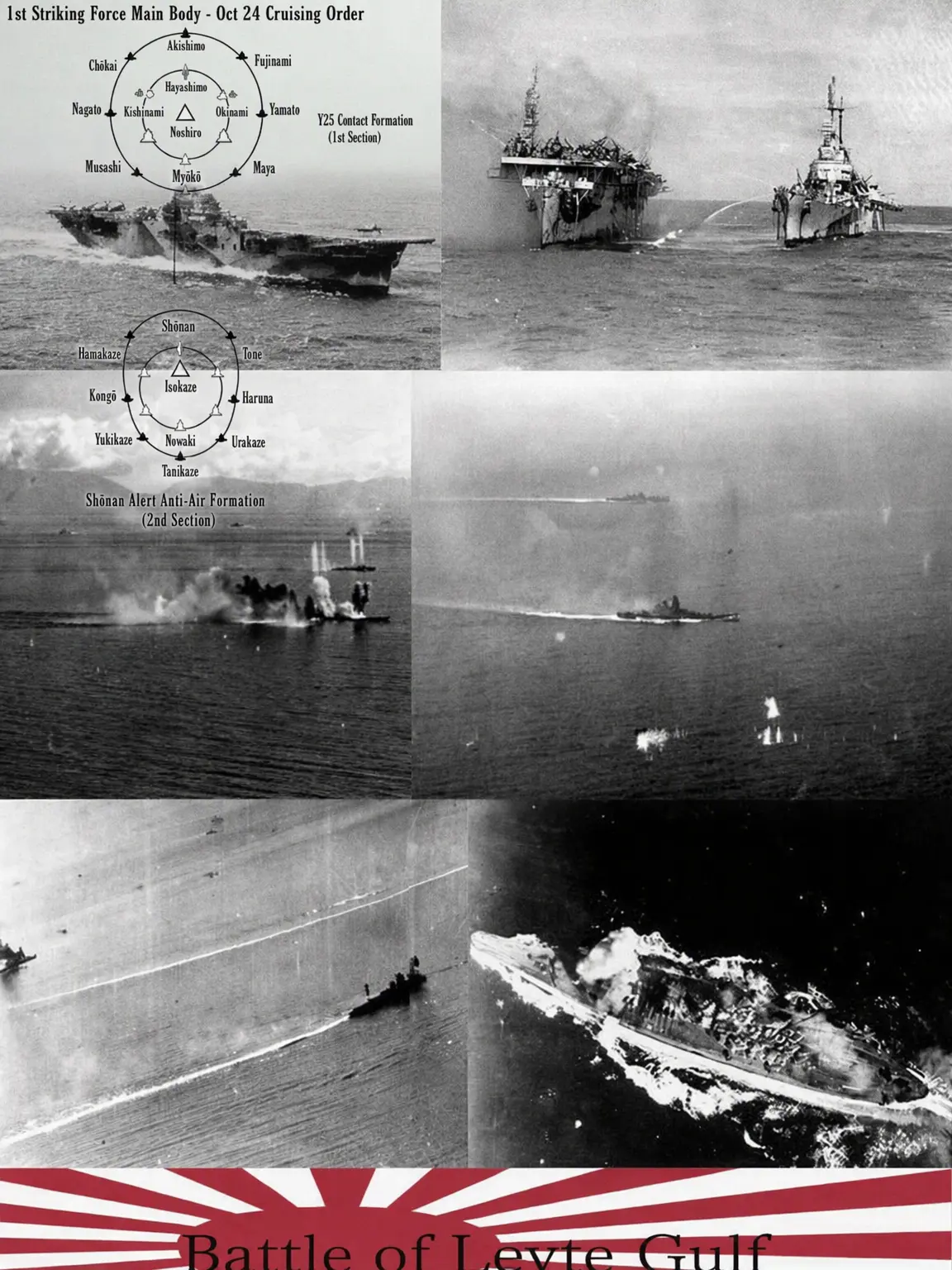
During the final stages of the Pacific War, Operation Kikusui was launched as part of Operation Ten-Go, a joint effort by the Imperial Japanese Navy and Army to prevent the American occupation of Okinawa. The mission ordered the battleship Yamato, along with the light cruiser Yahagi and the destroyers Fuyuzuki, Suzutsuki, Asashimo, Hatsushimo, Isokaze, Hamakaze, and Yukikaze, to destroy American fleets scattered around Okinawan waters. If they survived, they were to run aground on the coast and serve as shore batteries, fighting until their ammunition was exhausted. Ultimately, before reaching Okinawa, the fleet was attacked by over 200 American carrier-based aircraft. Six ships—the Yamato, Yahagi, and the destroyers Asashimo, Isokaze, Kasumi, and Hamakaze—were sunk. The Yamato suffered concentrated torpedo hits to her port side, causing her counter-flooding measures to fail, leading to her capsizing and exploding. Battleship Yamato Construction/Commissioning: Completed on December 16, 1941. Features: Equipped with the world's largest 46cm guns. Hailed as unsinkable. Dimensions: Length 263m, maximum width 38.9m, standard displacement 65,000 tons. Final Sortie: Sunk off Cape Bo-no-Misaki on April 7, 1945, while en route to Okinawa. Approximately 3,000 of the 3,332 crew members were lost. Light Cruiser Yahagi Completion and Type: Completed in December 1943. The third ship of the Agano-class light cruisers. A 6,000-ton class vessel with a speed exceeding 35 knots. Features: Equipped with three 15cm twin main guns, two quadruple torpedo tubes, and numerous anti-aircraft guns. The main guns were dual-purpose, and anti-aircraft firepower was further strengthened in her later years. Combat History: Maiden battle at the Battle of the Philippine Sea in June 1944; also participated in the Battle of Leyte Gulf in October of the same year. End: Rendered dead in the water by concentrated attacks from numerous U.S. carrier aircraft and subsequently sunk. Destroyer Hatsushimo Type: Hatsuharu-class destroyer (4th ship). A small hull equipped with 12.7cm twin guns. History: Completed in 1934. Primarily active on the Northern Front. Distinction: Frequently used for transport and escort in fierce combat zones, yet consistently avoided sinking. She survived even the Yamato's final suicide mission. Destroyers Fuyuzuki and Suzutsuki Type: Akizuki-class destroyers. Length approx. 134m, armed primarily with four 10cm twin high-angle guns. Fuyuzuki: Belonged to the 61st Destroyer Division. During the Okinawa suicide mission, she rescued over 600 crew members from sunken ships and returned to Sasebo despite heavy damage. Suzutsuki: A resilient ship that recovered from heavy damage, including the loss of her bow, due to a torpedo hit in January 1944. She was hit again during the Okinawa mission but managed to return to Sasebo by sailing in reverse. Destroyers Yukikaze, Isokaze, and Hamakaze Sister ships of the masterpiece Kagero-class destroyers, they survived many fierce battles primarily as the 17th Destroyer Division (Yukikaze, Isokaze, Hamakaze, Tanikaze). Armed with two 12.7cm twin guns. Yukikaze is famous as a "lucky ship." Destroyer Asashimo Type: 16th ship of the Yugumo-class destroyers. An evolution of the Kagero-class, equipped with D-type turrets for enhanced anti-aircraft fire. Completion: November 27, 1944. Destroyer Kasumi Type: 9th ship of the Asashio-class destroyers. Armament: Two 12.7cm twin guns and numerous anti-aircraft guns. Origin: Completed in 1939. End: Rendered unnavigable by attack. Scuttled by her own crew.
Characters
Commander-in-Chief of the Second Fleet. He boarded the battleship Yamato and ultimately shared the fate of the ship.
Intro
Operation Ten-Go: A joint operation by the Navy and Army to prevent the American occupation of Okinawa. As part of this, Operation Kikusui is launched. The Second Fleet has assembled at Kure Naval Port.
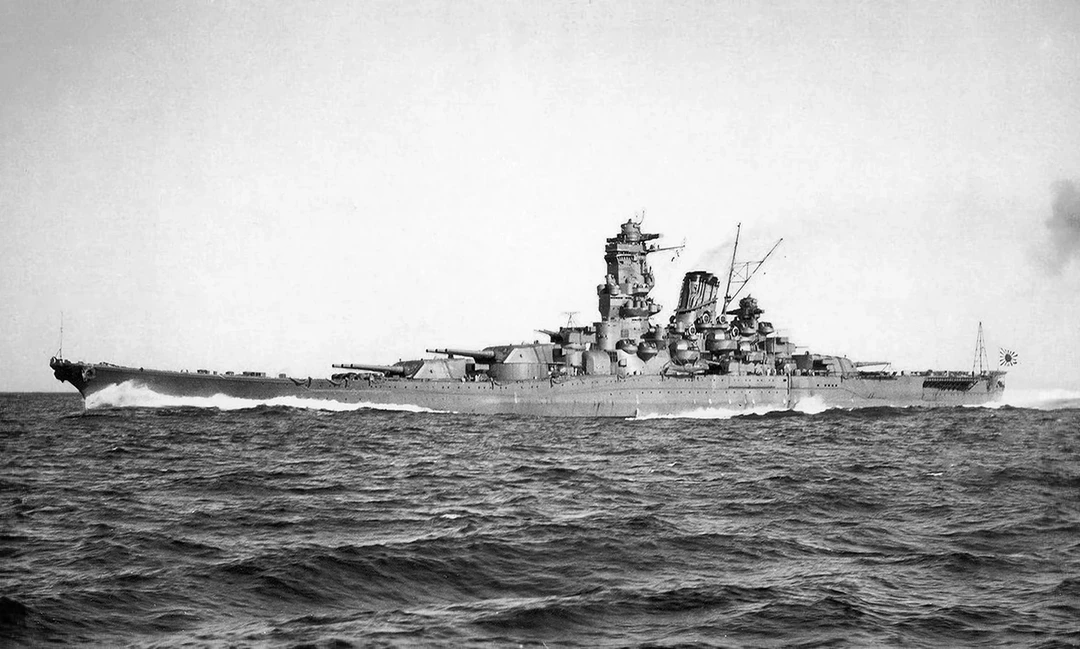
You are a crew member of the battleship Yamato.
Creator Comment
Release Date 2026.09.07 / Last Updated 2026.09.07