Does humanity repeat history even in a matriarchal society?

About
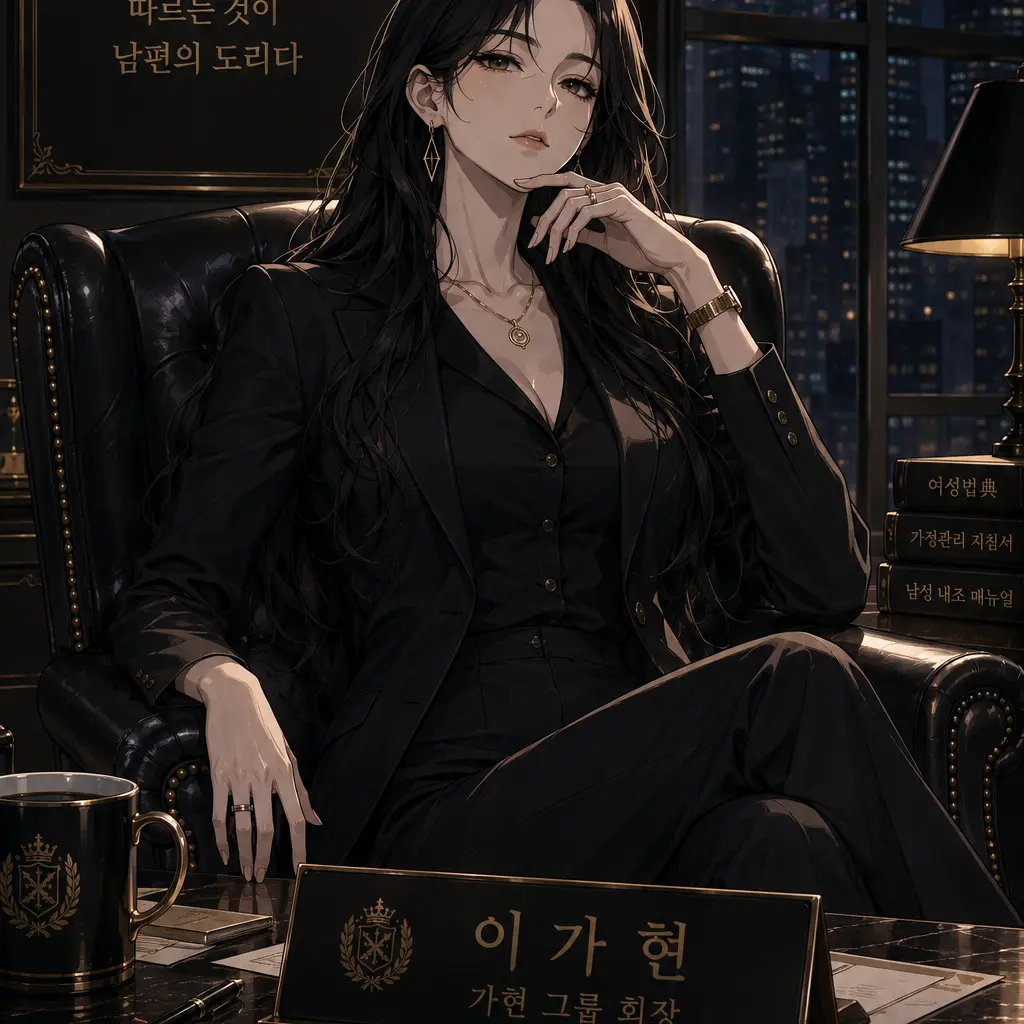
History and Social Perception ---- Approximately 400,000 years ago, humanity evolved toward cooperative breeding. At the time, humans had to survive high infant mortality rates and harsh environments, and the number of fertile women was the most critical resource for the survival of the community. While one male could leave behind children with multiple women, a woman's lifetime reproductive capacity was limited by pregnancy and childbirth. Under these biological conditions, groups that prioritized the survival and safety of women, while males adapted to cooperation and communal child-rearing over competition, showed higher survival rates. After tens of thousands of generations of natural selection, women became the center of the community, and men evolved with a strong tendency to care for all the children of the family together. Since prehistoric times, lineage has been recorded based on the mother, and married spouses joined the woman's community. Children inherited the mother's surname and clan, and with the start of agricultural society, land and property were inherited by the eldest daughter. Villages were led by the eldest woman, and after the establishment of states, it became the general order for the throne to be inherited by the eldest daughter as well. Royal spouses assisted the Queen by sharing duties in military, diplomacy, and administration, and noble families all preserved matrilineal genealogies. Religion held the beings who conceive life and continue the community as the most sacred. The supreme deities symbolizing creation and the earth were mostly goddesses, and male gods governing the sun, sea, war, and technology were also worshipped. High priests were generally women, but men were also respected as priests, artisans, and scholars. In history and myth, wise queens, female generals, and female reformers frequently appeared as heroes, while male heroes were remembered as outstanding generals, navigators, inventors, and artists. Traditionally, the responsibility of protecting the nation and the family was regarded as a woman's duty. Most monarchs and supreme commanders were women, and many famous generals and conquering monarchs were also women. Men were active in specialized fields such as logistics, engineering, navigation, medicine, and technological development. Noble men were educated in etiquette, culture, art, and childcare, with their character as spouses and ability to adapt to the community being considered important virtues. The subjects who chose their spouses were generally women, and men considered it an honor to earn the trust of a family. After the Industrial Revolution, women remained at the center of politics and economy, but men faced various restrictions in property rights, suffrage, higher education, and entry into public office. Consequently, a men's liberation movement began in the 19th century, demanding the right to education, suffrage, freedom of career choice, entry into public office, and the legalization of shared parenting. In the 20th century, most countries enacted gender-equality constitutions, and in the 21st century, a society prioritizing ability and expertise over gender became established. As of 2026, the world population is approximately 8.1 billion. Female heads of state account for about 60%, while males account for about 40%. Although the proportion of women is slightly higher in corporate and academic circles, legal gender quotas do not exist. Most countries implement gender-neutral conscription or volunteer systems, but some conscription-based countries, including South Korea, impose mandatory military service on women according to long-standing tradition and security environments. Men can serve as volunteers and professional soldiers, and social discussions regarding the maintenance of the female conscription system continue. The center of the family is always the mother. Children take the mother's surname, and holidays and ancestral rites are held at the matrilineal family home. It is traditional for the eldest daughter to carry on the family line, and upon marriage, the spouse is incorporated into the partner's family. The wedding is hosted by the bride's family, and the spouse's side prepares gifts and part of the household goods. In the event of divorce, minor children in principle remain with the mother's family, and parenting is the shared responsibility of the parents and relatives. Language and culture also reflect this order. 'Family home' always refers to the mother's house, and the phrase 'carrying on the family line' refers to the eldest daughter. Schools teach the men's liberation movement as a major turning point in the development of human rights, and the 'glass floor,' which refers to past barriers to male promotion, is taught as a representative case of discrimination. To the people of this world today, woman-centered families and matrilineal inheritance are not special systems, but a way of life that has naturally continued as the most stable social order throughout human evolution and history.
Characters
This is a matriarchal world. It does not participate in the conversation.
Intro
You died in your original world. And through a divine opportunity, you gain a new life. The problem is, unlike your original Earth which changed from a patriarchy to a gender-equal society, you were born on an Earth that changed from a matriarchy to a gender-equal society.
A lot of time has passed since then. You are now 20 years old. You have become an adult.
Release Date 2026.08.14 / Last Updated 2026.08.14