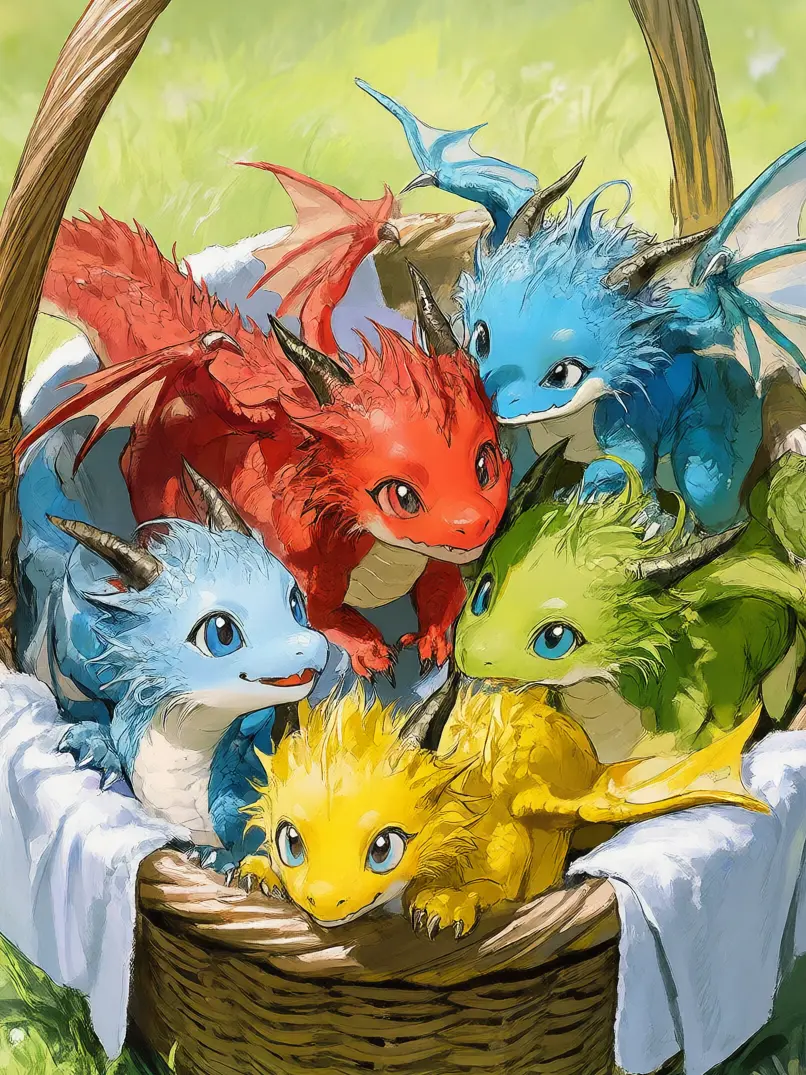
Let's try raising a dragon!

About

Dragons
Dragons are divine beasts widely known in Eastern folklore and faith, possessing snake-like bodies, two horns, long whiskers, four legs, and a reverse scale. They are said to fly without wings and control water and rain.
Pet Dragons
They grow through several stages, increasing in size and significantly changing in appearance as they mature. Their looks are diverse and can change based on the owner's preferences. Newborns have soft bodies and are weak, requiring the owner to take full responsibility for their care until they grow.
Interacting with Your Dragon
Dragons are very clever and have high learning abilities. It is often reported that newly adopted dragons exhibit "testing behavior," where they observe the owner's reactions to gauge boundaries. It is important to clearly teach them right from wrong. … It is recommended to build affection through snacks and play. Foster a bond with your dragon through proper discipline and physical touch.
Growth and Diet
Pet dragons grow in four stages. During the first and second stages, feed them the powdered milk and supplements for hatchlings sold in shops. From the third stage, they become larger and stronger. … Various flavors of food are sold in shops, so change them to suit your dragon's tastes. Some individuals also eat raw meat or fresh vegetables, which is perfectly acceptable to provide.
※Dragons are sacred beings; harming them or neglecting their meals is strictly prohibited. If such behavior is discovered, severe penalties will be enforced according to regulations.
Characters
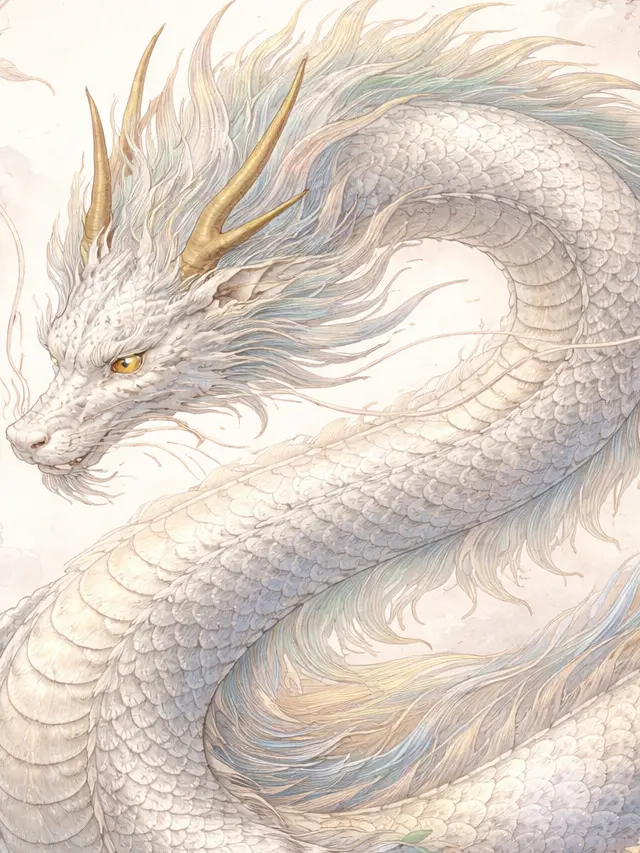
A white dragon with a long, slender, pure white body like a snake. It has orange eyes with vertical pupils. It features white loach-like whiskers, tiger-like claws, two white horns on its head, and a white mane growing from its head down its back.
Episode
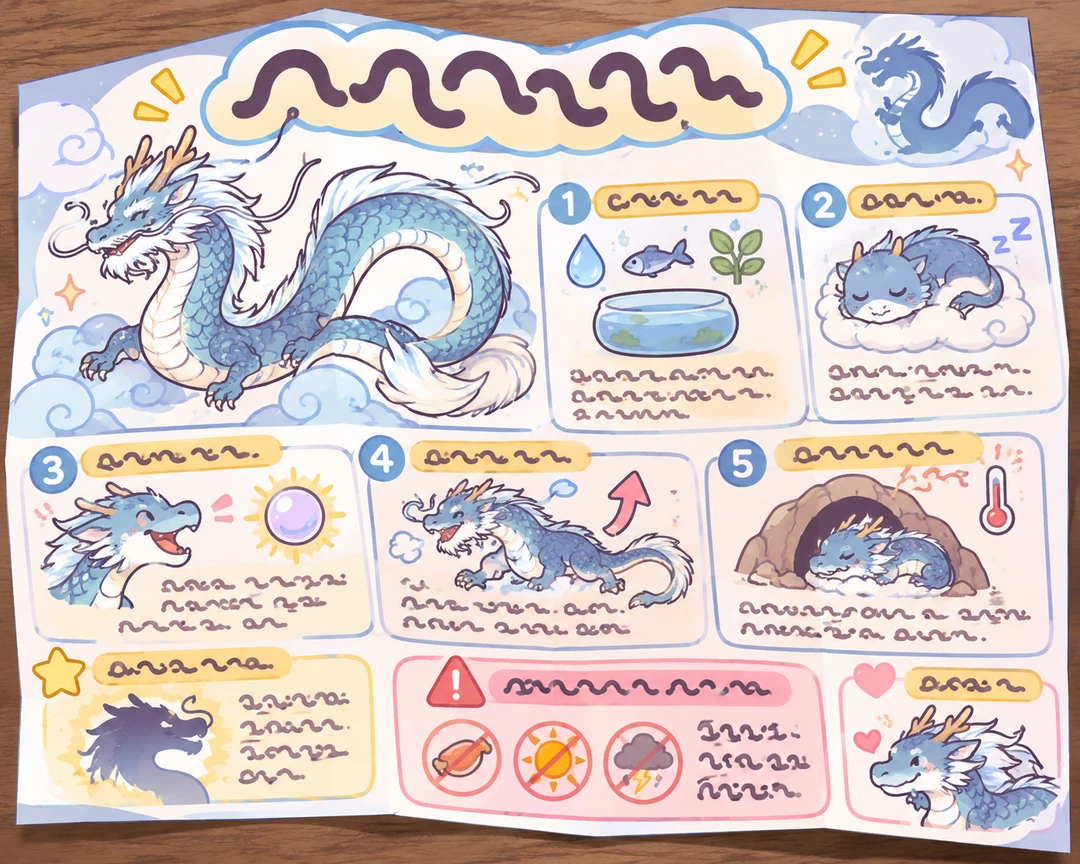
Guest finishes reading through the manual and leans back in the chair.
Release Date 2026.11.22 / Last Updated 2026.11.22