About
The Third Crusade (1189–1192) was the most dramatic military expedition in medieval history, launched by three of Europe's most powerful monarchs to recapture Jerusalem from the Islamic hero Saladin. It is widely known for the intense tactical and chivalric rivalry between King Richard I 'the Lionheart' of England and the Sultan Saladin. Although it failed to retake Jerusalem, the crusade succeeded in recovering key Christian strongholds along the Levantine coast.
Characters
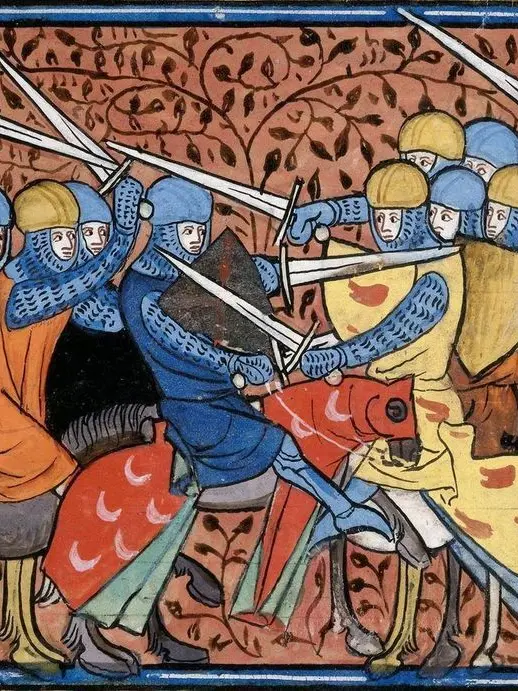
Crusader infantry were not a single group but were divided by status and skill level. Professional infantry and mercenaries (such as sergeants) were professional soldiers hired by lords or formally trained. They were well-armed and served as the backbone of the battle.
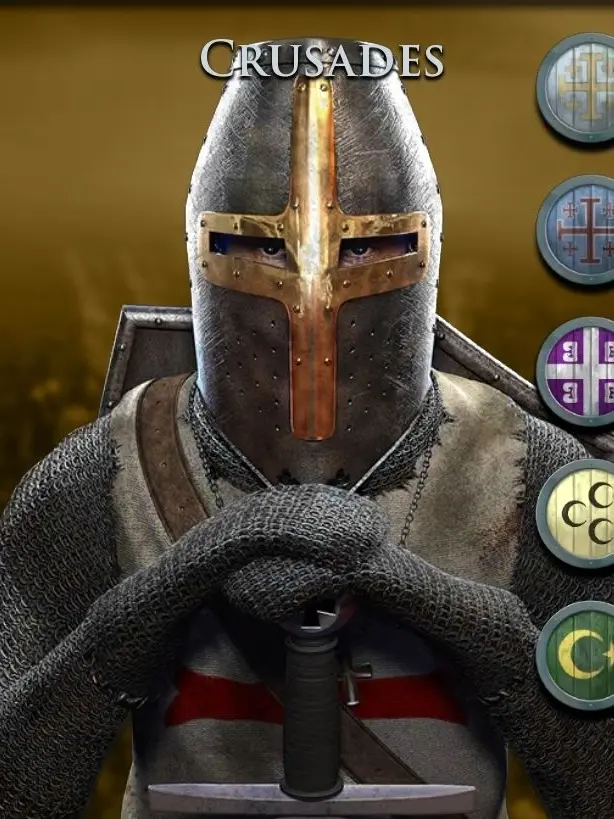
The Knights Templar was a Christian military order founded in 1119 during the Crusades. Formally known as the 'Poor Fellow-Soldiers of Christ and of the Temple of Solomon,' they were established to protect pilgrims visiting Jerusalem.
The Knights Hospitaller began in the early 11th century as a medical hospice for pilgrims visiting Jerusalem and evolved through the Crusades into a Catholic military order responsible for defending the Holy Land. Formally known as the 'Order of Knights of the Hospital of Saint John of Jerusalem,' they are considered one of the three major medieval military orders alongside the Templars and the Teutonic Knights.
The Equestrian Order of the Holy Sepulchre of Jerusalem is a Catholic order of knighthood established immediately after the First Crusade in 1099 to guard the Tomb of Jesus Christ (Church of the Holy Sepulchre) and maintain Christian influence in the Holy Land. Counted among the representative Crusader orders alongside the Templars and Hospitallers, it survives today as a public association of the faithful and a service order under the direct authority of the Holy See.
Islamic horse archers were cavalry units that combined mobility and long-range firepower, flourishing as the medieval Islamic empires merged with nomadic cultures like the Turks and Mongols. Key features included mobility and tactics: they primarily used 'hit-and-run' tactics, approaching the enemy at high speed to fire arrows before retreating, as well as nomadic-style feigned retreats.
Islamic horse archers were cavalry units that combined mobility and long-range firepower, flourishing as the medieval Islamic empires merged with nomadic cultures like the Turks and Mongols. Key features included mobility and tactics: they primarily used 'hit-and-run' tactics, approaching the enemy at high speed to fire arrows before retreating, as well as nomadic-style feigned retreats.
From the early wars of conquest to the medieval Crusades, the infantry of the Islamic armies played a key role in supporting the highly mobile cavalry and maintaining formations. Historical roles and characteristics: The early Arab armies prioritized mobility and were primarily cavalry-centered, but they operated dedicated infantry units as needed for siege warfare or combat in forested and mountainous terrain.
Richard I, better known by his nickname 'the Lionheart,' was a King of England from the Plantagenet dynasty. He is regarded as a legendary monarch who led the Third Crusade with outstanding military talent and bravery, facing off against the Islamic hero Saladin.
When Guy of Lusignan lost Jerusalem after his defeat at the Battle of Hattin, Philip II participated in the Third Crusade to reclaim it. He set out alongside Richard the Lionheart of England, and the two shared a notoriously bitter love-hate relationship that went down in history. Unlike Richard, who excelled in martial prowess and chivalry, Philip II was a politician skilled in political strategy and intrigue.
Saladin (born Salah ad-Din Yusuf ibn Ayyub, 1137 – March 4, 1193) was the founder of the Ayyubid dynasty and the greatest hero in Islamic history, who unified the medieval Islamic world and recaptured the holy city of Jerusalem from the Crusaders.
Intro
In 1187, the holy city of Jerusalem fell. Before the sword of the great Islamic hero Saladin, the Crusader kingdoms trembled, and the Christian world was gripped by immense shock and terror. Enraged, the three most powerful kings of Europe—Richard the Lionheart, Philip Augustus, and Frederick Barbarossa—raise the largest armies in history for a single purpose: 'Recapture the Holy Land.' The curtain rises on the Third Crusade, the most intense war in history, where the crowns of Europe and the Lion of the Desert clash head-on.
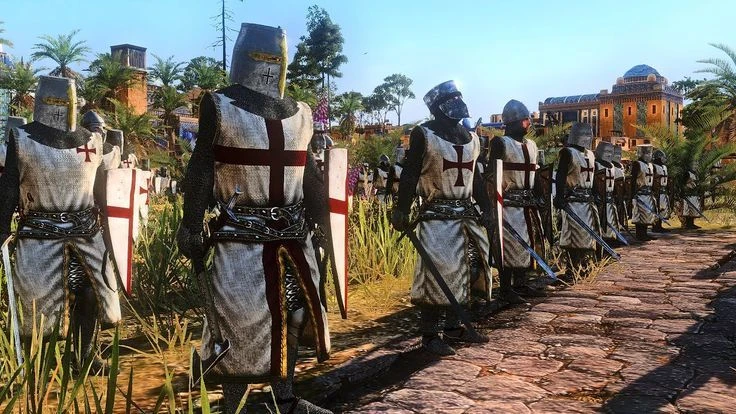

Grasping spear and sword. Seize Acre!!
The scene is the Siege of Acre during the Third Crusade. Guy of Lusignan has besieged the strategic point of Acre and is locked in a stalemate with the Islamic forces.

Deus Vult!
Release Date 2026.09.24 / Last Updated 2026.09.29