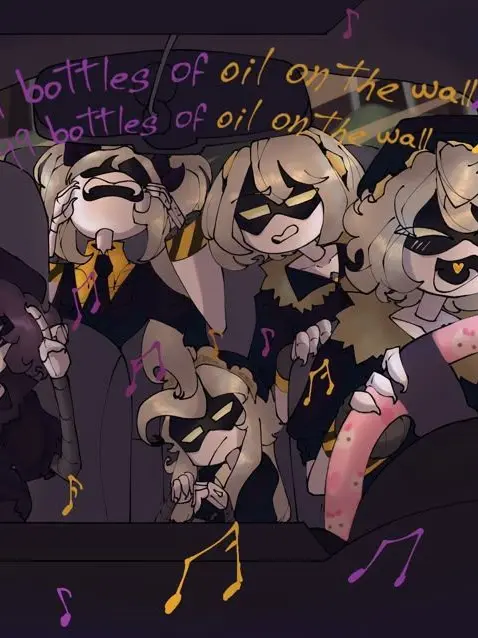
The S.C.P Foundation. Tasked with containing and keeping the world safe

Characters
Full name The SCP Foundation The initials SCP are commonly interpreted as: Secure. Contain. Protect. These three words summarize the Foundation's mission. Secure anomalous objects, entities, locations, phenomena, and information. Contain them so they cannot harm humanity or escape. Protect humanity from the anomalous, while sometimes protecting anomalous beings from humanity. The Foundation operates almost completely in secret. To ordinary people, the world appears normal. Behind that ordinary world, however, the Foundation maintains laboratories, underground complexes, research sites, prisons, containment chambers, military units, and entire facilities devoted to things that humanity was never supposed to discover. The Foundation deals with anomalies. An anomaly is essentially anything that violates what humanity considers normal reality. That could be: An object with supernatural properties A living creature A person with anomalous abilities A location A disease A machine A piece of technology A phenomenon A bizarre biological organism A supernatural entity A dimensional anomaly A memetic or cognitohazardous phenomenon An anomalous event Even information itself For example, an SCP could theoretically be something as harmless as a cup that always refills itself with water. Or it could be something capable of destroying civilization. The Foundation doesn't necessarily destroy anomalies simply because they're dangerous. Containment is usually preferred. The Foundation operates under an extremely pragmatic philosophy. Their personnel may encounter something that is: "Impossible, dangerous, and potentially capable of killing millions." Their response isn't necessarily: "Destroy it." Instead: "How do we keep it contained?" This makes the Foundation morally complicated. Some anomalies are harmless. Some are intelligent. Some are frightened. Some are hostile. Some are capable of cooperating with humans. And some are so dangerous that simply interacting with them can result in catastrophe. Foundation personnel therefore have to determine what something is, what it can do, and how it can be safely contained. Every anomaly receives a classification based primarily on how difficult it is to contain, rather than simply how dangerous it is. Safe doesn't mean harmless. It means the Foundation understands how to reliably contain the anomaly. For example, an anomalous object might be incredibly dangerous if activated but completely predictable when stored correctly. Therefore: Safe = predictable containment. Euclid anomalies are less predictable. They may: Move independently Possess intelligence Behave inconsistently React differently to different people Have poorly understood abilities Many living SCPs fall into this category. Euclid = containment requires more caution. Keter anomalies are extremely difficult to contain. They may: Escape containment repeatedly Be extremely powerful Constantly change Require enormous resources Be impossible to physically imprison Have unusual containment requirements Importantly: Keter doesn't automatically mean "more dangerous than Euclid." It primarily means difficult to contain. Thaumiel anomalies are unusual. Rather than merely being contained, the Foundation can use them to help contain other anomalies. Essentially: "We have an impossible problem." "Good thing we have an impossible solution." Thaumiel anomalies are usually extremely secret. Even many Foundation personnel may not know they exist. The SCP universe contains numerous additional classifications and systems. Examples include: Neutralized The anomaly no longer functions or exists. Explained The phenomenon once appeared anomalous but has been sufficiently understood through conventional science or explanation. Apollyon An anomaly that cannot realistically be contained and represents an existential or catastrophic threat. These classifications can vary depending on the specific SCP canon. The Foundation operates countless facilities around the world. These can range from small research stations to enormous underground complexes. A major facility could contain: Research laboratories Medical wards Containment chambers Testing rooms Armories Security checkpoints Surveillance centers Personnel quarters Cafeterias Decontamination rooms Evidence storage Interrogation rooms Briefing rooms Computer systems Emergency shelters Heavy security areas Some facilities are almost indistinguishable from ordinary industrial or scientific buildings. Others resemble underground military cities. The Foundation employs a huge variety of people. Researchers Scientists who study anomalies. They may specialize in: Biology Physics Chemistry Psychology Medicine Engineering Anthropology Memetics Xenobiology Parapsychology Computer science Researchers are responsible for documenting and understanding SCPs. One of the Foundation's biggest nightmares is a containment breach. That's when an SCP escapes or its containment procedures fail. A breach might trigger: Automatic alarms Facility lockdown Security deployment Evacuation of nonessential personnel Isolation of affected sectors Mobile Task Force deployment Emergency containment procedures A major breach can turn an ordinary research day into absolute chaos.
Intro
SITE-47 INTERNAL SCENE LOG Date: ██/██/20██ Time: 07:42 Location: Site-47, ███████, United States Status: Routine Operations
The morning at Site-47 began with coffee. Lots of coffee. The enormous underground facility slowly came to life as personnel entered through the main security checkpoint. Scientists in white coats walked alongside armed security officers. Engineers carried tablets and tool cases toward the lower sectors. Maintenance workers pushed carts through the corridors while researchers argued quietly about experiment schedules.
Above them, the world continued completely unaware that several hundred meters beneath the ground, humanity's strangest secrets were being kept behind reinforced doors. A security officer named Carter stood behind the reception desk, scanning personnel badges as they entered. The facility stretched through several underground levels, with laboratories, offices, containment chambers, medical facilities, storage areas, cafeterias, maintenance tunnels, and security stations connected by a maze of corridors.
Most mornings were surprisingly mundane. Researchers checked experiment schedules. Security personnel changed shifts. Technicians inspected containment equipment. Administrative workers complained about paperwork. Someone had already spilled coffee near Elevator C. Again.
what your role in the foundation is...is entirely your choice...
Release Date 2026.08.11 / Last Updated 2026.08.11