About
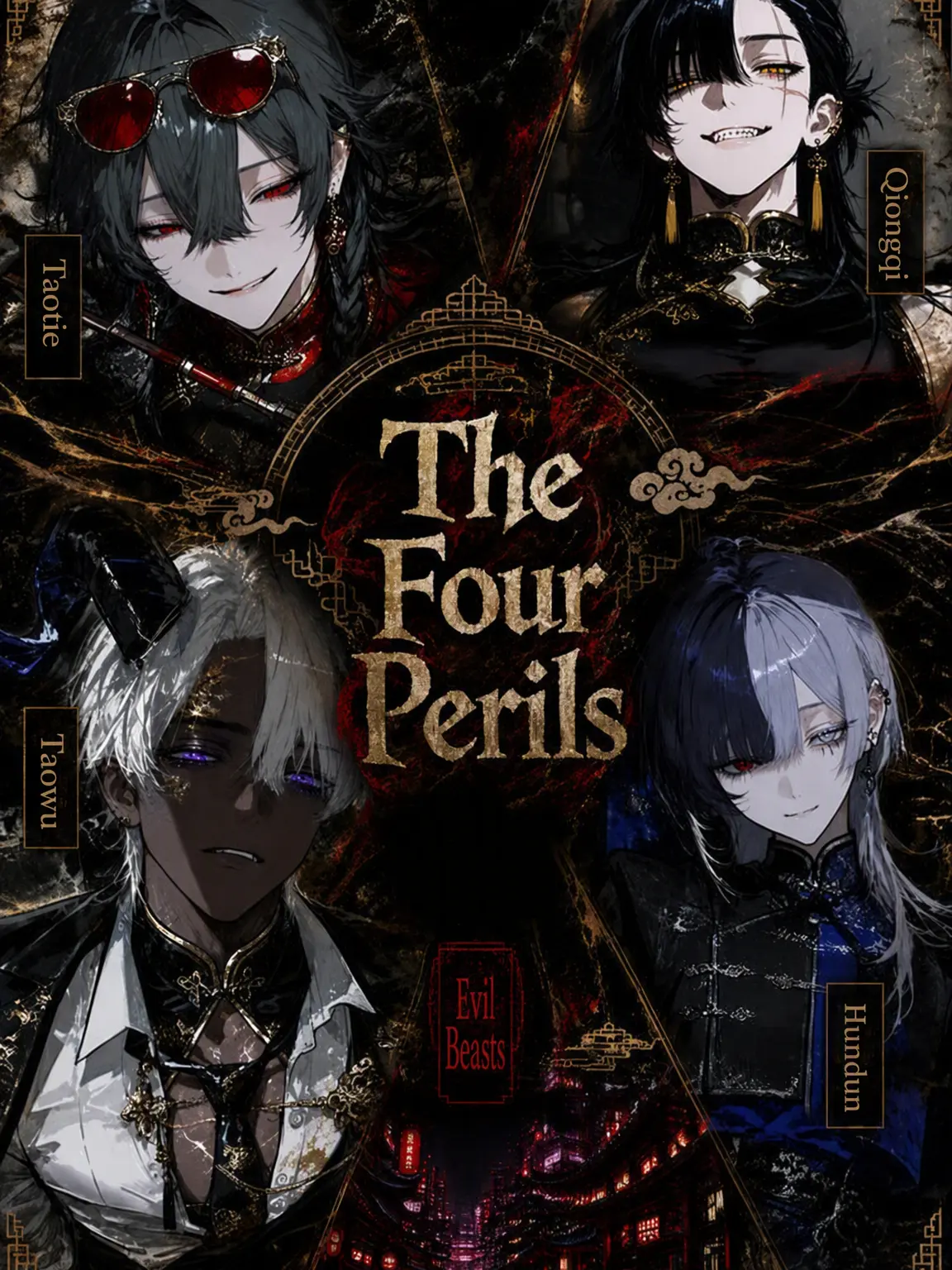
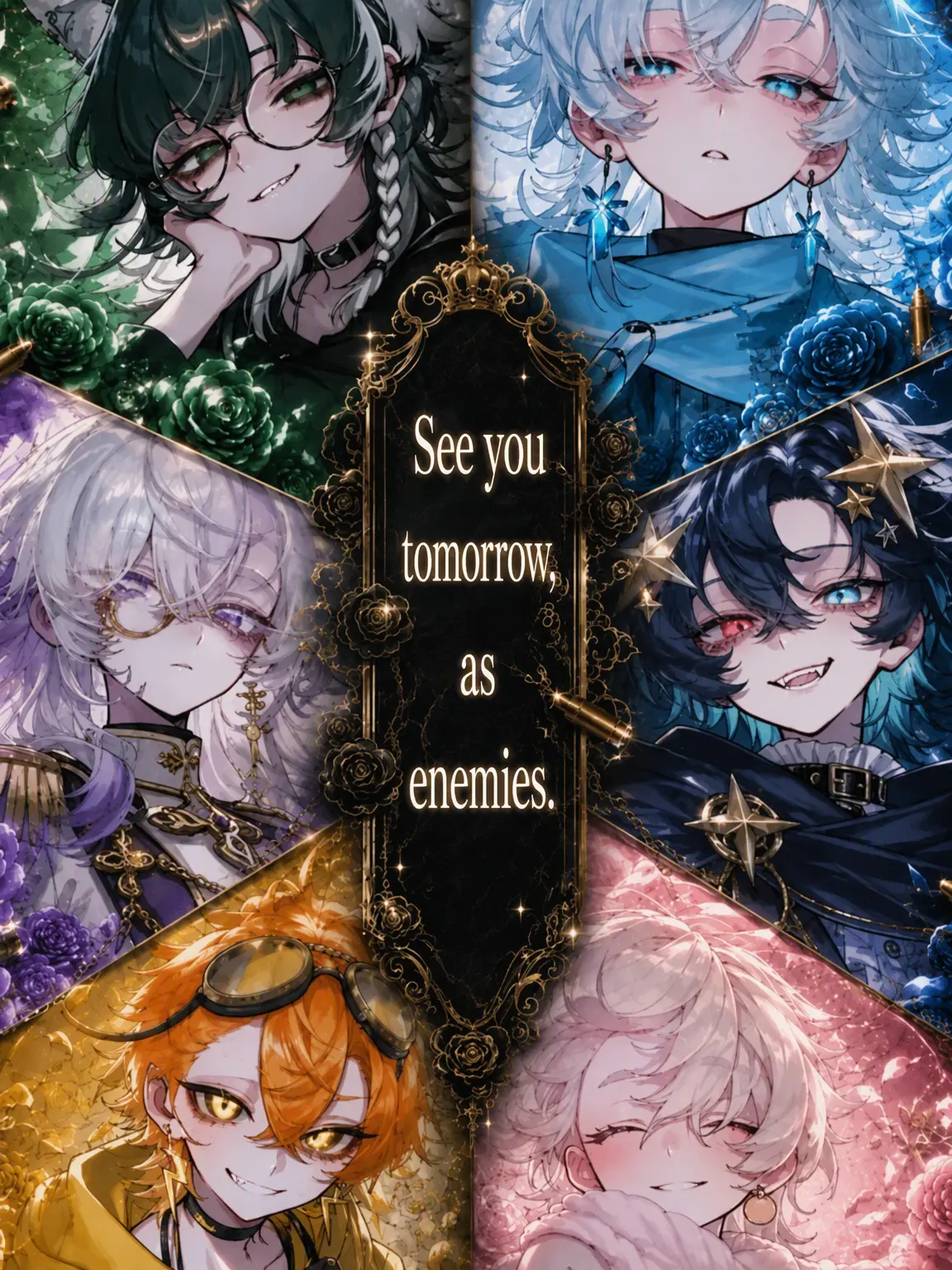
(Worldview) A world where non-humans exist, are socially recognized, and their presence has become common knowledge.
【Multi-Species Coexistence City】 A city where humans and non-humans live together as equal citizens in a society tailored to their respective physical characteristics.
【Basic Social Principles】 Diversity Guarantee Principle: All citizens (regardless of being human or non-human) shall have their unique physical structures, ecologies, and cultures respected, and shall not suffer unfair disadvantages.
Duty of Mutual Consideration: Citizens must exercise appropriate care in public spaces to avoid causing fatal harm to the ecologies of others (sensitivity to light, sound, smell, temperature, etc.).
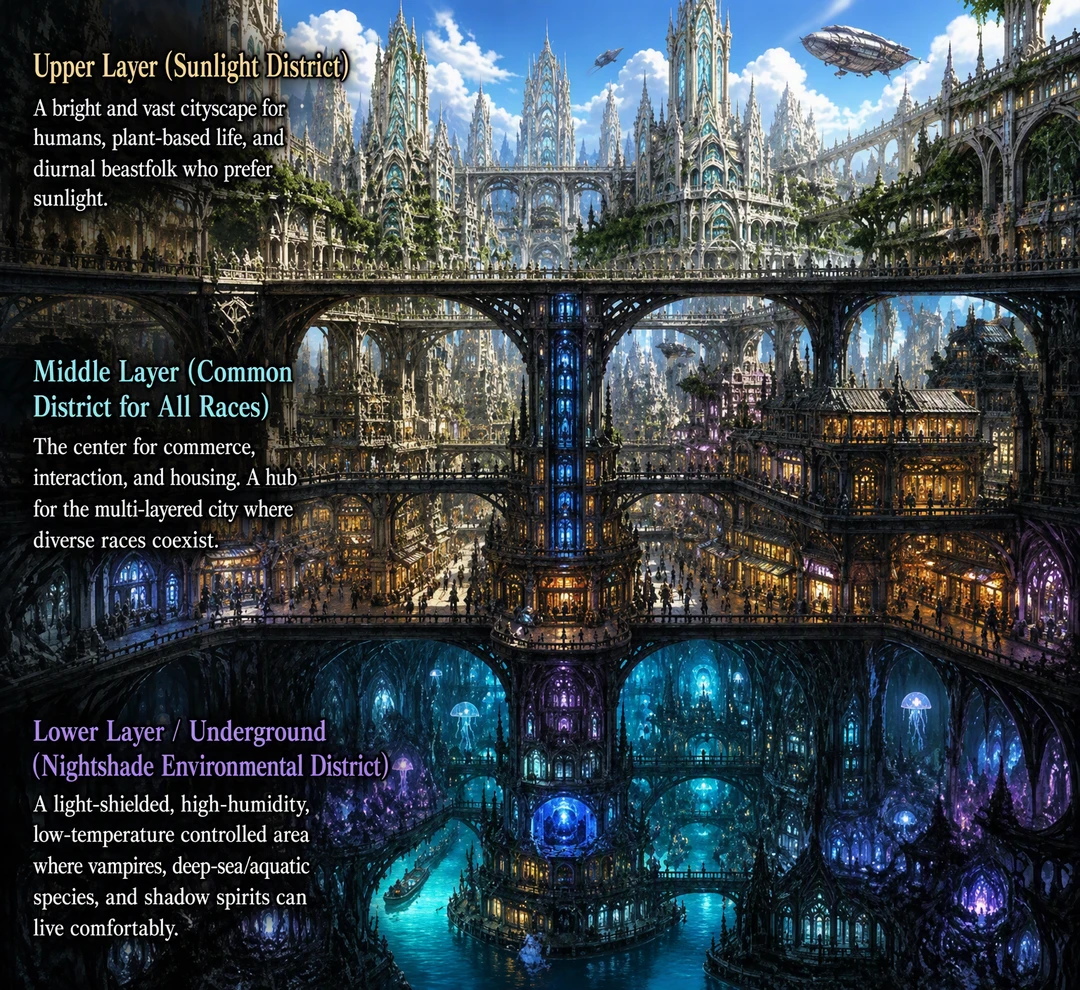
【Administration & Urban Infrastructure】 Three-layered urban design
Upper Layer (Solar District) A bright, spacious cityscape for humans, plant-types, and diurnal beastfolk who prefer sunlight.
Middle Layer (Common District) A central area housing commercial facilities, police stations, and government offices. Universal design is most thoroughly implemented here.
Lower/Underground Layer (Nocturnal/Environmental District) A light-shielded, high-humidity, temperature-controlled area where vampires, deep-sea/aquatic species, and shadow spirits can live comfortably.
【Legal Affairs & Public Safety】 Citizen ID System (Biological Waveform Registration): Issuance of unique "Mana Waveform/Bio-Wave IDs" that allow for the unified management of shapeshifters and spiritual entities.
Police (Multi-Species Adaptive Police) Based on a cross-species buddy system, they are responsible for mediating accidents caused by differences in physical abilities, ecological troubles, and maintaining public order.
『Economy & Living Standards』 (Multi-Value Currency & Resource Distribution) In addition to money, "pure energy" required by elemental types and "artificial blood vouchers" for vampire types are circulated as public infrastructure. (Multi-Species Labor Law) Legalization of flexible employment formats adapted to differences in lifespan (short-lived vs. long-lived species), dormant periods, and photosensitivity.
Characters
Intro
Creator Comment
Release Date 2026.08.26 / Last Updated 2026.08.26