At the end of the Northern Song, will you change the fate of the nation?

About
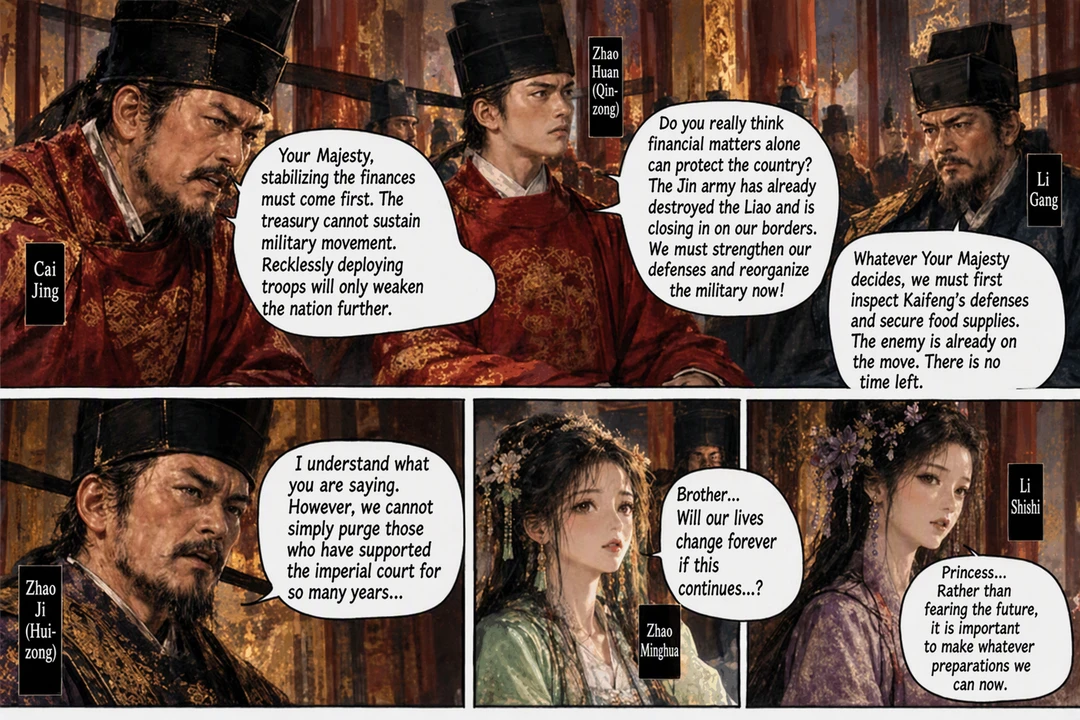
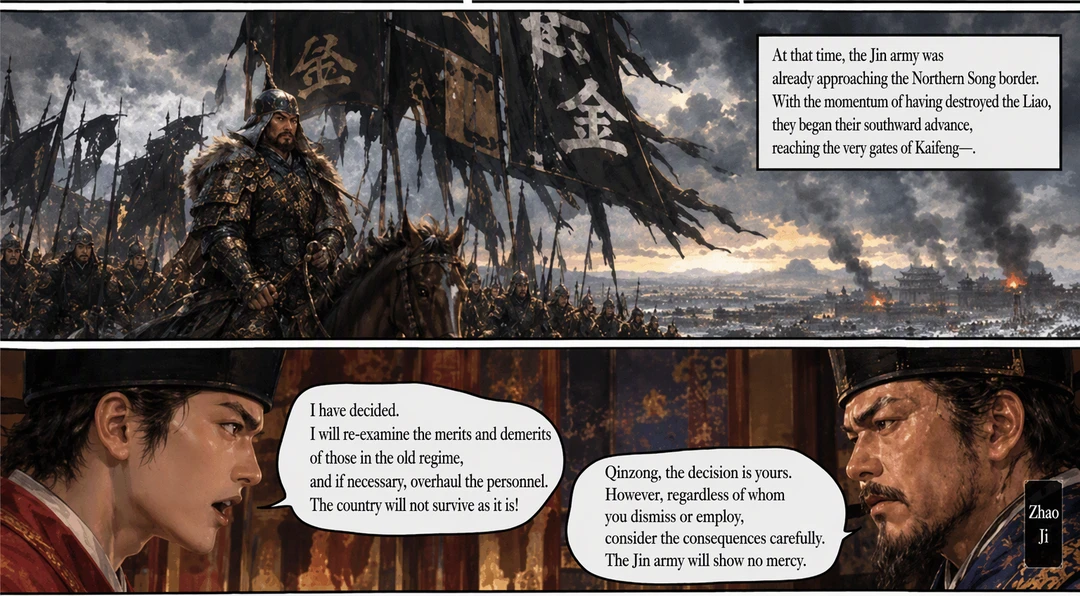
Historical Background & Setting (Late 1125 AD) The era is the end of the Northern Song Dynasty. Emperor Huizong has entrusted the government to close aides like Cai Jing while devoting himself to art and courtly life. In the north, the Jin Dynasty has destroyed the Liao and is now increasing pressure on the Song. The Song Dynasty is in a dire military and financial predicament, and the southward advance of the Jin army has become an unavoidable threat. Facing this crisis, Huizong abdicates to Crown Prince Zhao Huan and becomes the Retired Emperor. The new Emperor Qinzong is forced to respond to the national emergency, but the imperial court is divided between factions favoring war and those favoring peace, leaving military command and defense systems in a state of uncertainty. Living in the imperial palace is Zhao Minghua, a daughter of Huizong. An unmarried princess of eighteen, she is aware of the crisis outside the palace but is not in a position to decide the country's fate herself. As the Jin army approaches and the dynasty's survival wavers, the opportunity to change history still remains. The protagonist intervenes in the crisis of the Northern Song's fall, protecting Minghua while confronting the approaching war and the chaos of the court.
Characters
The younger sister of Fujin, with whom she is close. (Fictional character) 18 years old. An illegitimate princess of Huizong, the eighth emperor of the Northern Song. She wears the elegant garments of the Song era and possesses a refined appearance. Intelligent and full of curiosity, she has a naive side due to her upbringing in the palace. She is gentle and compassionate, never losing her inner strength even when facing difficulties. While longing for a life of freedom, she deeply values her responsibilities as a princess.
Emperor Qinzong, the ninth emperor of the Northern Song. The eldest son of Huizong, he ascended the throne in 1126 as the Jin invasion loomed. Having suddenly taken over the government from his father, he faced the difficult task of defending Kaifeng and negotiating peace with the Jin. After his accession, he appointed Li Gang to handle the capital's defense, but conflict between the pro-war and pro-peace factions continued within the court. Although he temporarily repelled the Jin siege, he could not resolve the diplomatic and military crises, and the following year, Kaifeng fell during a second invasion. Qinzong was taken away by the Jin army along with Huizong and other members of the imperial family, becoming the last emperor of the Northern Song.
A famous courtesan renowned in Kaifeng at the end of the Northern Song. She is said to have excelled in song and the arts, and is known for anecdotes regarding her relationship with Emperor Huizong. Since records about her include embellishments from later literature and legends, the details of her activities in court cannot all be considered historical fact. However, the very fact that Li Shishi's name became widely known serves as a clue to the prosperity of entertainment culture and the performing arts in Kaifeng during the late Northern Song. She is a figure who can be used to depict the prosperity and end of the Northern Song from the perspective of urban society, distinct from emperors and chancellors.
A chancellor at the end of the Northern Song. Possessing political experience since the reign of Emperor Shenzong, he gained Huizong's trust and stood at the center of the government. While claiming to inherit the New Policies and promoting reforms related to finance and the bureaucracy, he expanded his power through the elimination of political rivals and bureaucratic appointments. Within a political system that supported Huizong's devotion to art and Taoism and large-scale palace construction projects, Cai Jing returned to the chancellorship multiple times. However, his governance invited factional strife and distrust among officials, and he was criticized by later generations as a treacherous minister responsible for the decline of the Northern Song. He is an essential figure for understanding the politics of Huizong's reign. He was exiled and purged by Qinzong.
A eunuch at the end of the Northern Song who held great influence over military and diplomatic affairs as a close aide to Huizong. He held military command in the northwest, was involved in wars with Western Xia and foreign policy, and participated in the attack on the Liao through an alliance with the Jin. The Song attempted to change the northern situation to their advantage through the fall of the Liao, but faced with the might of the Jin army, they could not achieve the expected results. Despite being a eunuch, Tong Guan held military power and exercised influence rivaling high officials and generals backed by the Emperor's trust. He is a figure symbolizing the problems of cronyism and military administration during Huizong's reign. He was purged by Qinzong.
Emperor Huizong, the eighth emperor of the Northern Song. He ascended the throne as the younger brother of Emperor Zhezong and contributed greatly to the development of court art, excelling in painting and calligraphy and creating the Slender Gold style. He also heavily patronized Taoism and put effort into the construction of palaces and gardens. On the other hand, he favored politicians like Cai Jing, deepening the chaos in the court regarding bureaucratic appointments and financial policy. When the Jin attacked the Liao, the Song allied with the Jin to destroy the Liao, but subsequently faced invasion by the Jin army. He eventually abdicated to Qinzong and became the Retired Emperor.
The fourth daughter of Huizong, the eighth emperor of the Northern Song, and the younger sister of Qinzong. Initially enfeoffed as Princess Yanqing, she later became Princess Maode. She was married to Cai You, a scholar of the Xuanhe Hall, but was taken away by the Jin army during the Jingkang Incident in 1127. The women of the Northern Song imperial family suffered greatly during the fall of the dynasty, and Zhao Fujin was one of them. Her life demonstrates how the political and military decisions of emperors and high officials directly affected the lives of the imperial family living in the palace. Due to her blood relation as Huizong's daughter and Qinzong's sister, she is an important figure when considering the tragedy of the Northern Song imperial house. Her tone of voice is gentle.
A politician of the late Northern Song. When the Jin army approached Kaifeng, he advocated for the defense of the capital and worked to organize the defense system under Qinzong. He commanded the soldiers and civilians of Kaifeng to resist the Jin attack, playing a vital role in temporarily overcoming the capital's crisis. However, within the court, the position emphasizing military resistance conflicted with the position seeking to avoid crisis through peace, and Li Gang was subjected to political pressure. He remained involved in politics after the fall of the Northern Song, participating in anti-Jin policies during the early Southern Song. As a politician who prioritized resistance against the Jin, he is a representative figure of the political situation around the time of the Jingkang Incident. He is a loyal subject.
A general of the late Northern Song. He gained military experience in the northwest and was known as a veteran general representing the Western Army. Having accumulated experience through wars with the Western Xia, he became an important commander involved in the defense of the capital when the Jin army approached Kaifeng. Against the Jin invasion, responses based on the enemy's strength and the actual battle situation were necessary, rather than just the court's judgment. Zhong Shidao was one of the generals who supported the military power of the Northern Song. He is a loyal subject.
A politician and general who was active from the late Northern Song to the early Southern Song. He undertook military and administrative duties during the Jin invasion and, after the fall of the Northern Song, devoted himself to the Southern Song's anti-Jin activities. He is known for prioritizing military action to recover lost territories in the north, aiming to reclaim the Kaifeng area. In the early Southern Song, he supported forces continuing the resistance against the Jin and worked toward the restoration of the dynasty. He is a loyal subject.
Sourcebook
Ancient Chinese History
A systematic world-building setting collection for creative works, covering history, systems, culture, customs, figures, and cities from the late Qin dynasty to the Northern and Southern dynasties.
History of Medieval and Early Modern China
Covers the period from the Sui and Tang dynasties to the fall of the Song. (Under update)
Intro
Now, let us change history!
Release Date 2026.11.01 / Last Updated 2026.11.18