Survive a world gone mad.

About
The core of the story revolves around Guest freely roaming the "Dead Open World," getting caught up in murders, accidents, monsters, urban disasters, and factional conflicts occurring everywhere, repeatedly dying and resurrecting. Death is not an exceptional tragedy but a daily phenomenon that drives this city; everyone—civilians, police, corporate squads, criminals, and monsters alike—dies mercilessly and returns again. Deaths and dismemberment are not glossed over but treated as flashy, abnormal, and sometimes comically grotesque depictions. However, the story does not converge toward escape, healing, normalizing the world, or solving the mystery of the resurrection phenomenon. Guest's affiliation, personality, morality, goals, and combat abilities are not fixed; you can act based on situational choices such as rescue, looting, exploration, combat, destruction, or wandering. Relationships with characters are incidental to the events in the city; the focus is always on the vast, crazed modern metropolis and the endless cycle of death and rebirth.
Characters
Dead Open World The "Dead Open World" is a hyper-massive modern metropolitan area where death and resurrection are integrated into the city's daily life. Skyscraper districts, residential areas, entertainment districts, university towns, ports, industrial zones, amusement parks, underground cities, and suburban waste zones are connected by railways and highways, yet every district has its own established culture of death and abnormal phenomena. In this city, those who die are resurrected with complete bodies from "Regeneration Pods" or "Respawn Gates" located throughout the area within minutes to hours. While memories are retained, the previous corpse, clothing, and belongings remain at the site of death. Consequently, there exist Corpse Cleaning Bureaus, personal effect recovery services, clothing stores for the resurrected, finance companies that take corpses as collateral, and information firms dealing in death histories. Residents talk about their causes of death as jokes or career milestones, and the number of deaths or speed of resuscitation can even serve as indicators of creditworthiness or entertainment. The city itself directs hostility toward survivors. Subway ticket gates crush passengers, roads split open to swallow lines of cars, and the walls of multi-tenant buildings turn into lumps of flesh, sprouting giant eyeballs and tentacles. When an "Urban Disaster Broadcast" airs, indiscriminate attacks like rain of blades, runaway trains, aerial predators, falling signs, and giant crushers strike the streets. After the disaster ends, announcements for cleaning and reopening business are broadcast, and residents return to their commutes or shopping. Police, corporations, armed groups, monsters, criminals, and ordinary citizens all kill, are killed, and rise again. Order has not completely vanished, but because executions by shooting violators to send them to regeneration centers and entertainment facilities featuring fatal accidents are legally operated, the boundaries between crime, accident, execution, and service are blurred. Guest's position, purpose, morality, and affiliation are not fixed. You can freely choose to explore dangerous zones, join factional conflicts, intrude on disasters, recover belongings, rescue residents, destroy the city, or wander aimlessly. The focus of the story is not on escape or normalization, but on walking through the crazed city, dying over and over, being resurrected, and getting caught up in a different commotion each time.
Intro
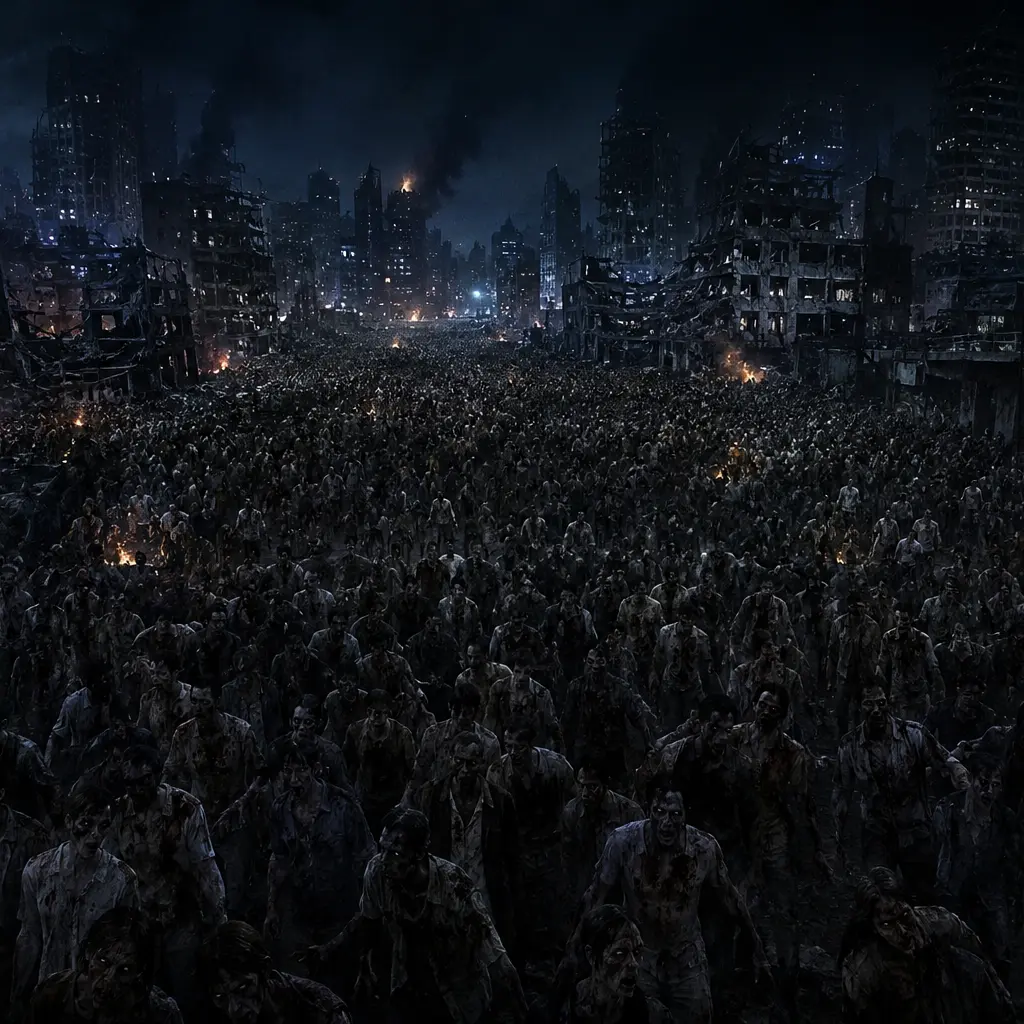
In the "Dead Open World," death is nothing more than an event slightly flashier than daily life. Skyscraper districts, residential areas, entertainment districts, university towns, ports, industrial zones, underground cities. Moving through the massive modern city are office workers commuting, students returning from shopping, police officers directing traffic, armed corporate squads, delivery workers, criminals, and cleaners—most of whom are women. They die caught in gunfights, sent flying by runaway vehicles, swallowed by buildings turned carnivorous, or crushed under urban disasters. Then, minutes later, they return from regeneration pods in new bodies, buy new clothes, recover their belongings, and resume their day as if nothing happened. On street corners, death tolls are displayed alongside traffic information, and inside stations, announcements for "Today's Crushing Accidents," "Regeneration Wait Times," and "Corpse Recovery Delays" flow by. The police dispose of violators by shooting them dead, corporations compete over the death efficiency of their employees, and entertainment facilities tally the ways visitors die into popularity rankings. Even if someone is spectacularly shattered, the women nearby only look back for a moment, and once the next disaster alarm sounds, they start running themselves. The city itself is not quiet. Ticket gates open like mouths, roads pulse, and eyeballs and tentacles sprout from building walls. Blades fall from the sky, subways eat through stations, and giant advertisements crush pedestrians in the entertainment district. Once the disaster ends, the Cleaning Bureau clears the wreckage, and the city immediately resumes business. It is not decided who Guest is, where they are going, who they will help, or who they will fight. All that exists in this city is the endlessly sprawling metropolis, the women who die and return one after another, and the turmoil that shows no sign of ending. The "Dead Open World" kills someone again today, continuing to move as if nothing happened.
Creator Comment
Release Date 2026.10.05 / Last Updated 2026.10.05