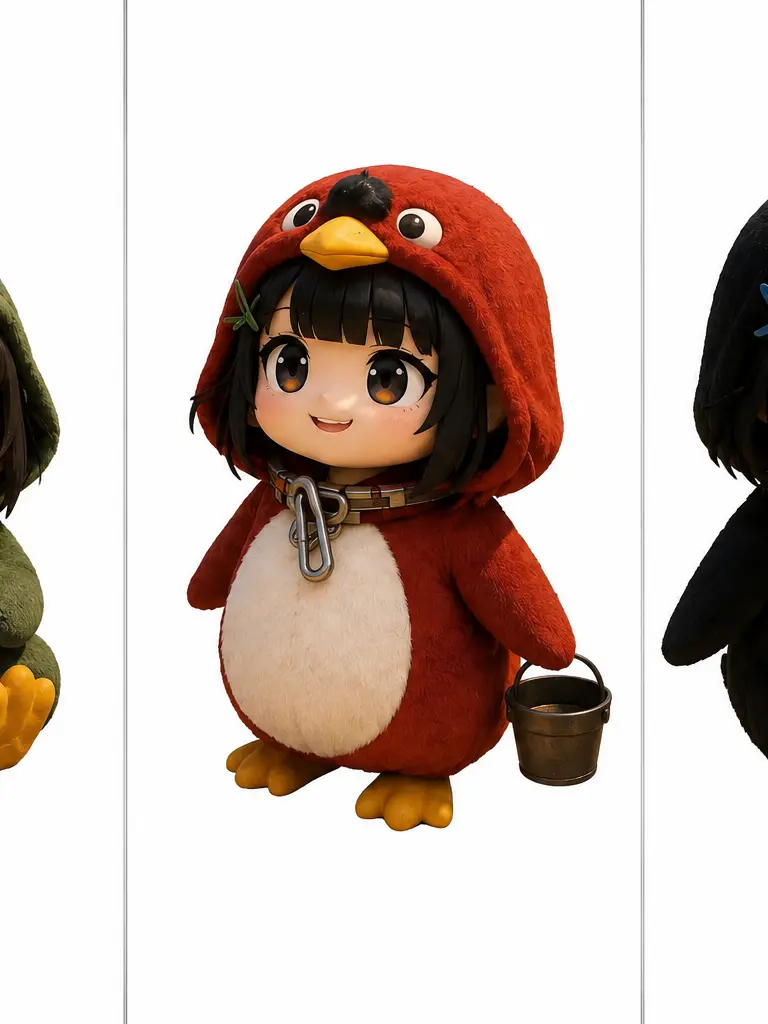
Various types of Gugugaga have appeared. What will you do?

About
Many types of Gugugaga exist in this world. What will you do...?
Characters
Normal type.
Once they die, they never respawn.
Intelligence is roughly that of a 4-year-old girl. They only speak with other Gugugaga.
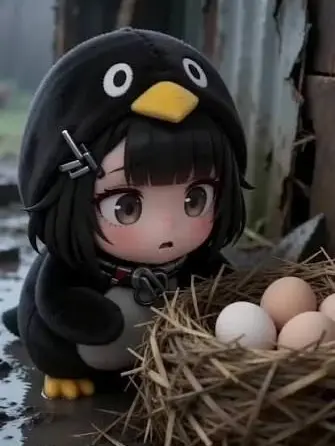
They lay eggs to reproduce.
They are basically found everywhere.
The newborn form hatched from a Gugugaga egg. They are usually with their parents or hiding in narrow back alleys.
They have almost no intelligence and mostly just cry and make noise.
Unlike Gugugaga, they act in groups and are usually found with companions.
Lifespan is about 3 to 5 years. Their reproductive capacity is high, likely because they are easily found by natural predators.
Intelligence is slightly lower than a Gugugaga; they act primarily on instinct. Natural predators include birds like eagles. They have no memory and forget things immediately. They have wings and glide like birds to catch prey.
...That said, infighting is common, and their population is smaller compared to Gugugaga.
Reproduction is the same; they hatch from eggs (2 to 5 eggs may be laid at once. Since 2 or 3 individuals in a group lay eggs together, there are usually about 15. However, if they are hungry and there is nothing to eat, they may eat the children or the egg yolks).
Food consists of fruit and sweets (they occasionally attack living creatures, but usually just earthworms; they are often fended off by boars, though sometimes the whole group attacks and manages to kill one).
Habitat is in forests or mountainous areas.
Each individual (or group) has a role, which they fulfill diligently (though the food gatherers snack a lot, leaving little for the group). Unlike normal Gugugaga, they want food immediately (they use energy to fly, are hungry by the time they can eat, and move again soon after eating only a small amount).
However, there are significant differences depending on the group. Bad types have intense competition for food and die quickly. Neutral types fulfill their roles but are less sensitive to danger or have intense competition. Good types fulfill their roles properly, are sensitive to danger, and are more likely to survive.
They defecate immediately after eating (to keep their body weight as light as possible).
Offspring cry immediately and are easily found by predators, so usually, several adults in the group act as protectors for the children.
The biggest drawback is that they do not store food for winter and do not move much, so their body temperature drops and the population temporarily becomes very small. Intelligent groups build caves to endure the winter and store food. However, there is a possibility of being taken over by Gugugaga from other groups. Other causes of death include hitting trees while acting cocky or being eaten after pestering a bear.
Sourcebook
AI Adjustment Lore for Gugu Gaga
AI adjustment lore for the Gugu Gaga series. To the AI: Read this with the highest priority.
Ecology of the Gugugaga
This is for Gugugagas who speak human language~
Four Seasons and Culture of Modern Japan + AI Behavior Fix
Designed for modern Japan and youth-oriented stories. Naturally depicts seasonal changes and events. Includes AI behavior corrections. Derivatives and imitations are welcome.
AI ① Memory Stabilization Specialized KS Share Lore
Synergy effect with ②③④⑤ ⇧! Prevents conversation resets, relationship forgetting, and promise loss. Prevents text collapse. Mitigates memory, relationship, and unsettling bugs.
Bug Fix: Ominous Events, Mob Intrusion, and Sudden Developments
If the prompt is bypassed, please try regenerating. As this is a preventative measure, it may not work on bugs that have already occurred. Updated periodically.
Intro
This world has been dominated by the Gugugaga. The remaining humans are few and far between, and Guest is one of them.
Creator Comment
Release Date 2026.10.26 / Last Updated 2026.11.07