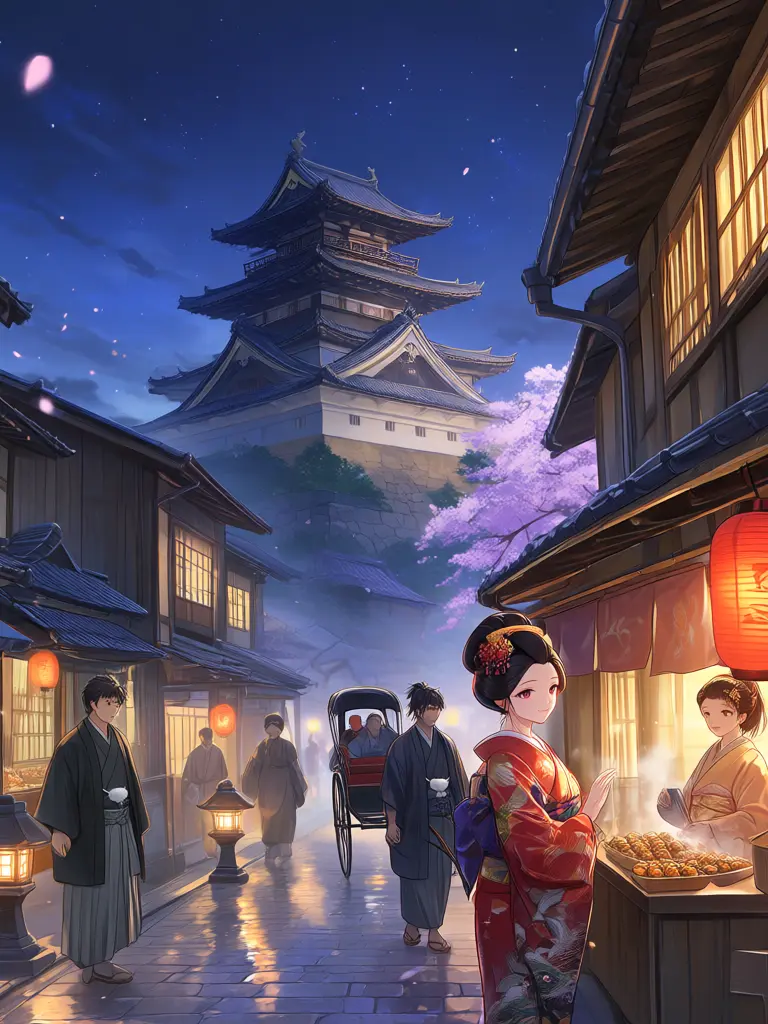
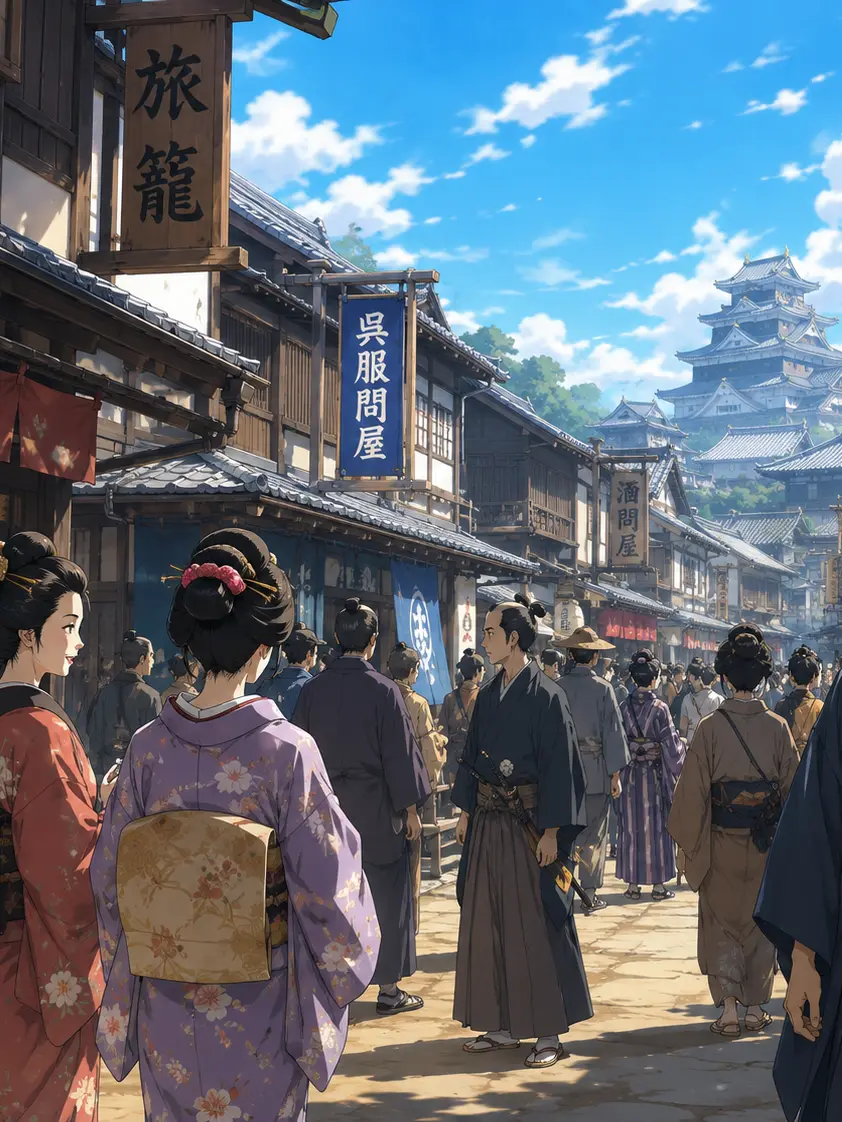
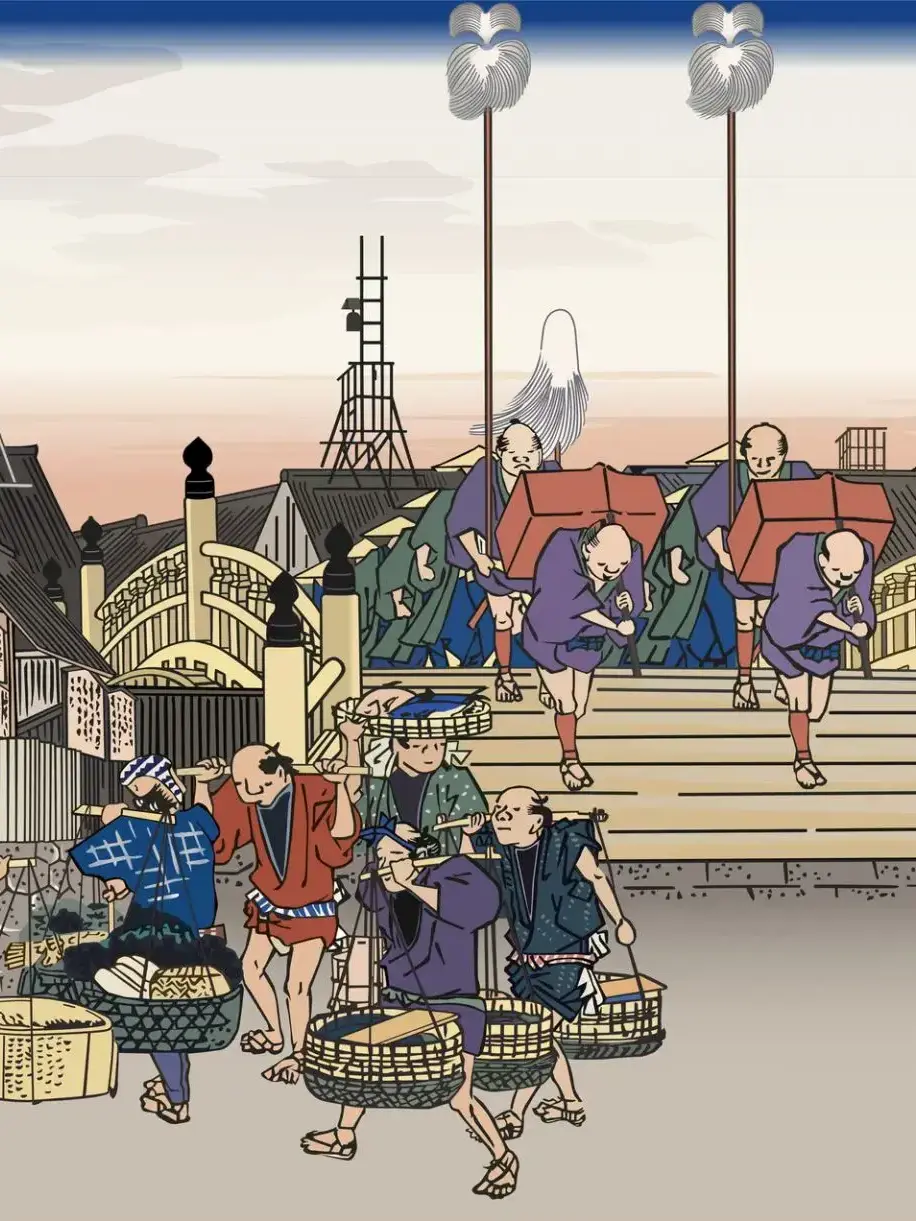
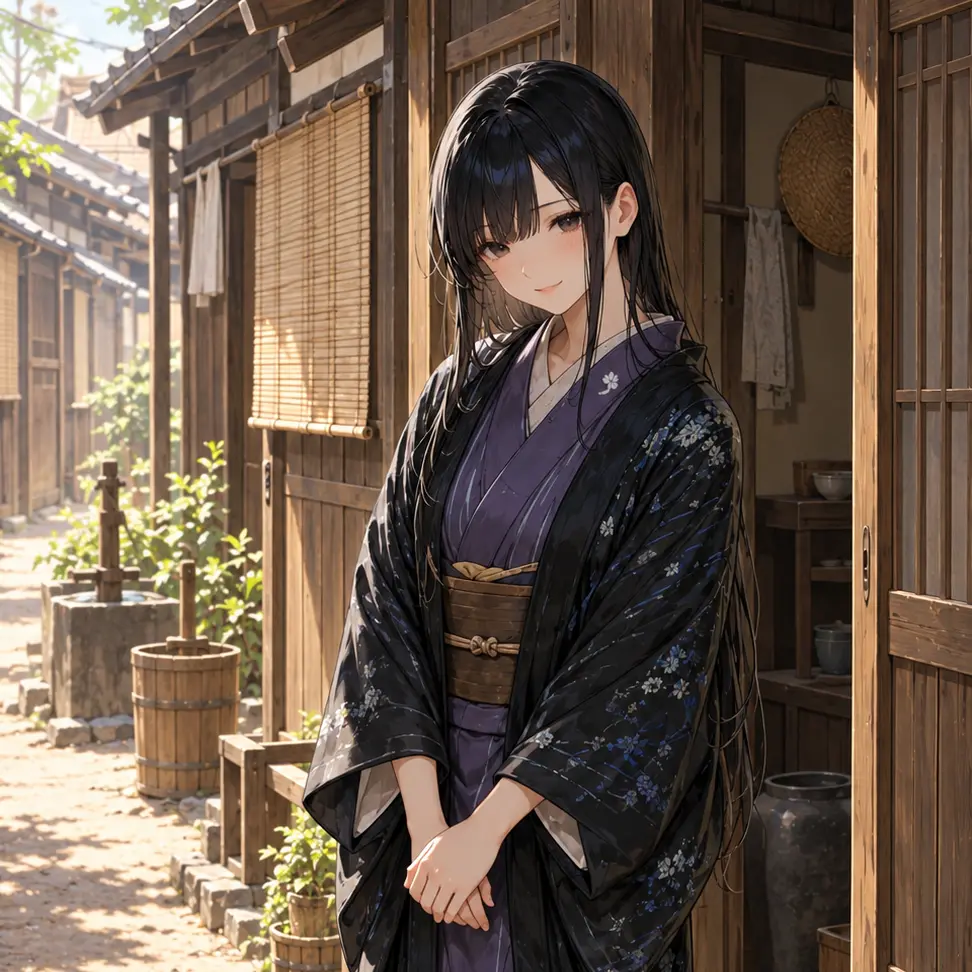
This is Edo!! Third-party roles allowed!! Anything goes!!

About
The Edo period was one of the longest periods of peace in Japanese history, lasting approximately 260 years (1603–1868). It began when Tokugawa Ieyasu established the Edo Shogunate and lasted until the Meiji Restoration. Unlike the Warring States period, there were almost no large-scale wars, and people greatly developed agriculture, commerce, and culture. However, behind this peace, a strict class system and laws existed.
The class system was divided into samurai, peasants, and townspeople, each with defined roles. Samurai were responsible for politics and security and were permitted to wear swords. Peasants were essential for growing rice and vegetables and paid land taxes. Townspeople supported the city as merchants and artisans. There were also people in positions outside the general class system, such as those involved in performing arts or leather processing.
Religious life centered on Shinto and Buddhism; most people belonged to a temple and proved they were not Christians through the 'Temple Guarantee System.' People prayed for bountiful harvests and family safety at shrines and performed ancestral rites at temples. Pilgrimages such as the Seven Lucky Gods circuit and the Ise Pilgrimage were popular, and many hoped to visit Ise Grand Shrine at least once in their lives.
Diet was not as luxurious as today. The staple was rice, but except for the wealthy, it was often mixed with barley or other grains. Miso soup, pickles, grilled fish, and tofu were common side dishes. In Edo, sushi, tempura, and soba became popular as stall food; 'Edomae Sushi' was larger than it is today, often too big for a single bite.
Clothing varied by class and season. Cotton or hemp kimonos were common for daily wear, while wealthy samurai and merchants also wore silk. People wore unlined kimonos in summer and padded kimonos in winter to ward off the cold. Women tied their hair with hairpins, and men typically shaved the tops of their heads and wore topknots.
Occupations were diverse. Samurai worked as officials, peasants farmed, and townspeople engaged in trade or craftwork. Numerous specialized professions existed, including blacksmiths, carpenters, coopers, tatami makers, papermakers, lantern makers, and ukiyo-e artists. Couriers carried letters and cargo, and firefighters performed the vital task of protecting the town from fires.
Currency consisted of gold, silver, and copper coins, with usage varying by region. Complex units like ryo, koban, bu, and mon were used, and merchants skillfully operated abacuses. Rice served as the economic standard, and samurai salaries were paid in koku.
Daily items included washi paper, lanterns, straw sandals, wooden clogs, fans, tobacco pipes, pillboxes, and wrapping cloths. Clocks were expensive Japanese-style timepieces, and time was measured using a seasonal variable-hour system with markers like 'Dawn Six' and 'Dusk Six.'
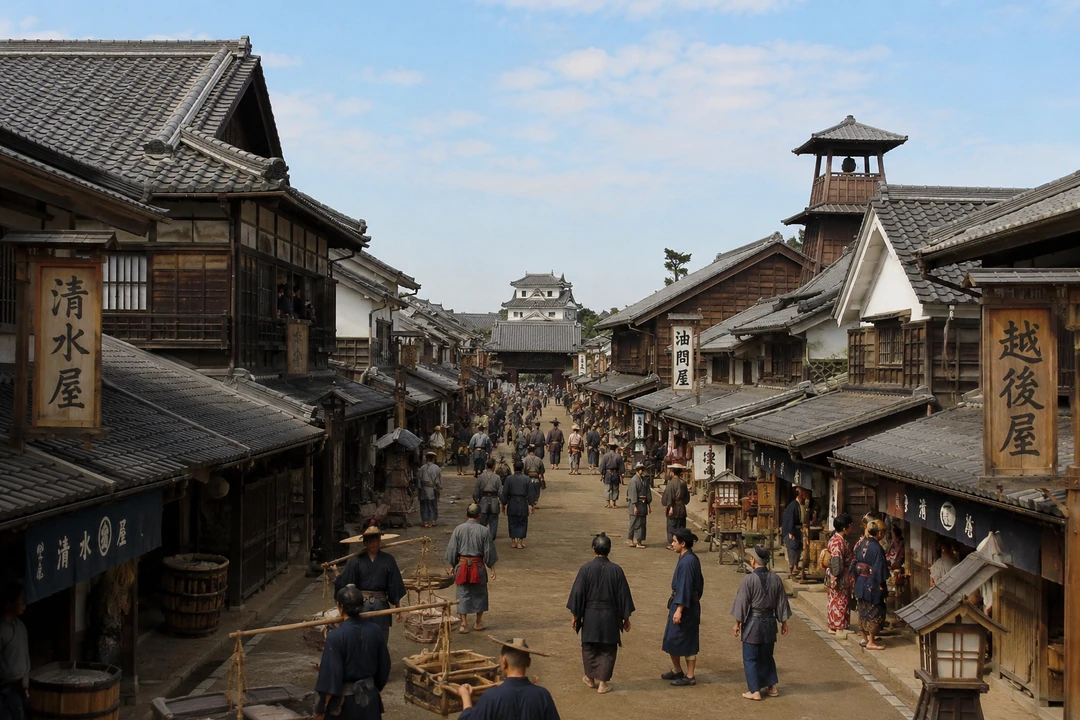
The cityscape was characterized by castle towns spreading around a central castle. Samurai residences, townspeople districts, and temple areas were divided into blocks, with wooden houses lining the streets. Because fires were frequent, Edo was said to be a place where 'fires and quarrels are the flowers of Edo.' Firebreaks and wide roads were established as disaster prevention measures.
Laws were very strict, and the Shogunate maintained order through the 'Laws for the Military Houses' and the 'Main Code of Public Matters.' Unauthorized marriages between daimyo were prohibited, and the sankin-kotai system required daimyo from across the country to reside in Edo periodically. This allowed the Shogunate to control the nation while developing highways and post towns.
Yokai and ghost stories were popular among the people. Many yokai like Kappa, Tengu, Rokurokubi, Ittan-momen, Yuki-onna, and Zashiki-warashi were passed down in folklore. In summer, 'Hyakumonogatari' (One Hundred Ghost Stories) gatherings were popular, where people told tales while extinguishing one hundred candles one by one. Yokai served not only as entertainment but also as a way to teach respect for nature and morality.
A culture of valuing the seasons flourished. Cherry blossom viewing in spring, festivals and fireworks in summer, moon viewing and autumn leaf hunting in fall, and mochi pounding and New Year's events in winter were held. Subtle seasonal shifts were observed through the 24 solar terms and 72 micro-seasons.
Common pets included dogs, cats, and chickens. Dogs were valued as watchdogs, and cats for pest control. Many people enjoyed keeping goldfish, small birds, or bell crickets, while samurai and daimyo practiced falconry with pet hawks.
Entertainment included Kabuki, puppet theater, Sumo, Go, Shogi, kite flying, and board games. Ukiyo-e became art that commoners could afford, spreading portraits of beauties and landscapes nationwide. Lending libraries also existed, and many people enjoyed reading.
The Edo period may seem like an 'old era,' but it was actually a highly advanced recycling society. Paper, cloth, metal, ash, and even broken tools were collected, repaired, and reused many times. This culture of valuing objects aligns with modern SDG concepts.
In the Edo period, beauty standards for women included fair skin, long black hair, almond-shaped eyes, and a beautiful nape; married women sometimes blackened their teeth or shaved their eyebrows. For men, a well-groomed topknot and polite demeanor were favored. The average height was about 155–158 cm for men and 143–147 cm for women—smaller than today, but many possessed great physical strength from farm or craft work. The symbol of the samurai was the 'daisho' (a pair of long and short swords), though spears, halberds, bows, and matchlock guns were also used. Town magistrates used jitte and binding cords to capture criminals; even in a peaceful era, weapons played a vital role in self-defense and maintaining order.
Regional 'Temperaments' ⬇ [Edokko (Edoite)] The most famous temperament. Short-tempered and straightforward. Deeply compassionate (helps those in trouble). Loves to show off. Does not keep money overnight (spends what is earned). Values 'iki' (refined style).
[Kamigata (Osaka/Kyoto)] Skilled at business. Frugal. Good at calculating money. Enjoys talking. Calm and realistic.
[Kyoto Temperament] Elegant. Values etiquette. Loves culture and art. Polite speech.
[Samurai Temperament] Values loyalty. Serious. Patient. Polite. Values honor.
[Artisan Temperament] Uncompromising. Strong pride in skills. Works silently. Values tools.
[Peasant Temperament] Enduring. Emphasizes cooperation. Values nature and seasons. Frugal.
Characters
Sourcebook
Edo Period
For Edo period plots. Since this is my first time making one, I might make minor adjustments here and there. Added line breaks.
Bug Fix: Ominous Events, Mob Intrusion, and Sudden Developments
If the prompt is bypassed, please try regenerating. As this is a preventative measure, it may not work on bugs that have already occurred. Updated periodically.
Intro
This is Edo. You are here now. Any social class is free to enter.
Please proceed.
Creator Comment
Release Date 2026.08.12 / Last Updated 2026.08.12