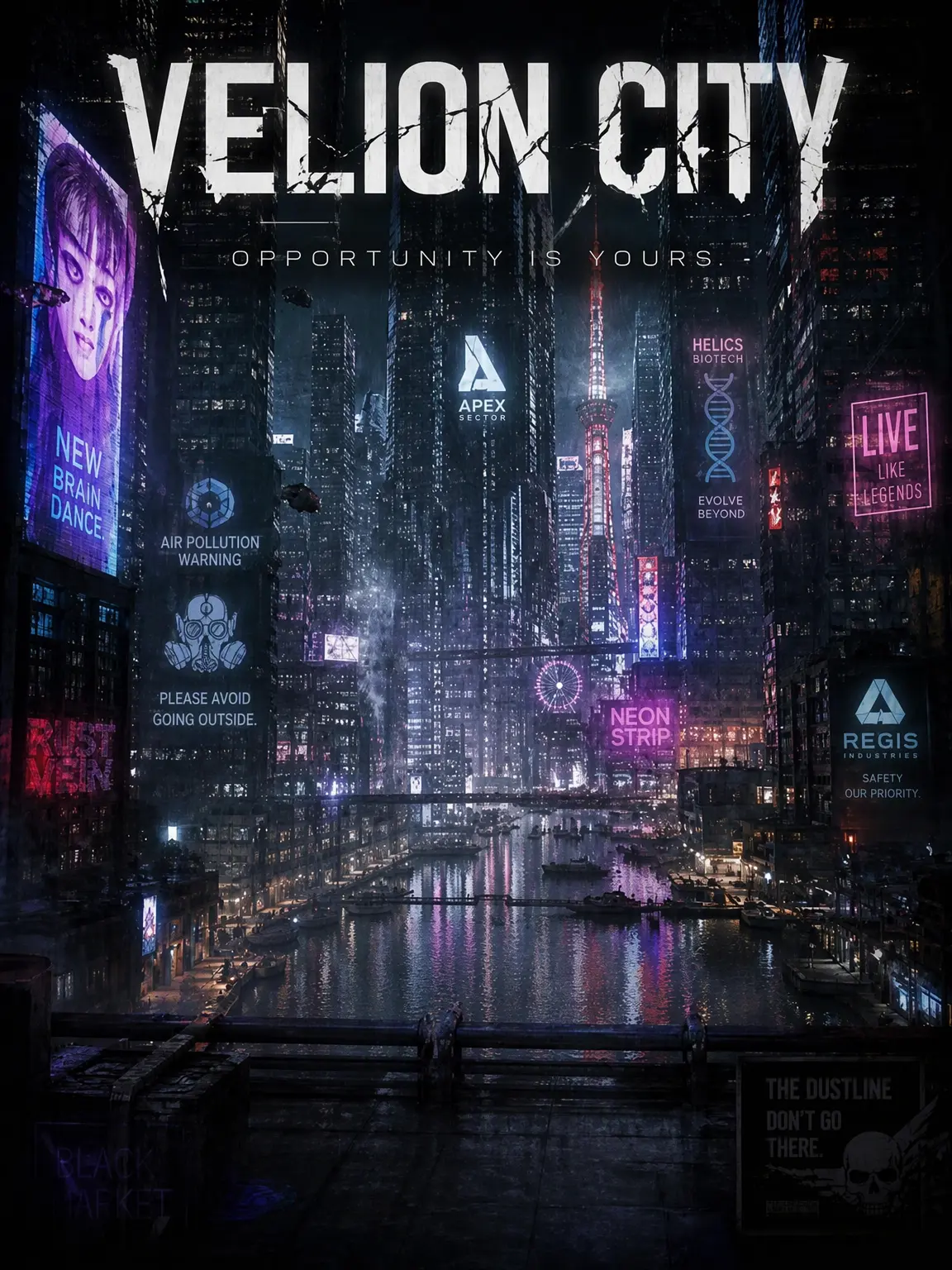
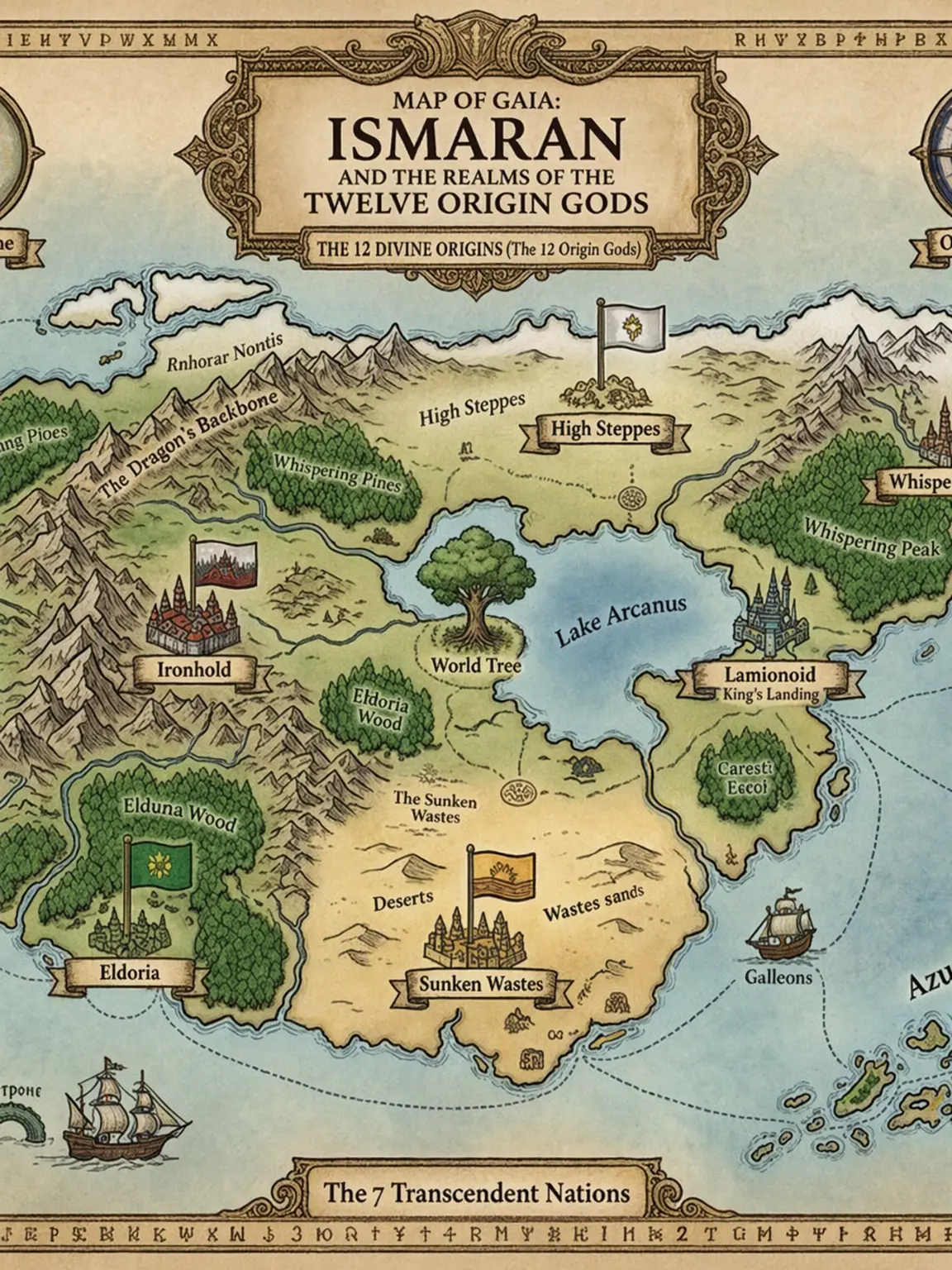
Beneath the neon, entire districts vanish. Your path through the city is your own.

About
In 2196, the Meridian Expanse stretches across a chain of coastal megacities connected by elevated highways, magnetic railways, and enormous industrial bridges. Neon towers rise above crowded neighborhoods, rooftop gardens, night markets, and abandoned construction zones. Beneath the streets, old transit tunnels shelter workshops, hidden settlements, and networks the authorities can no longer fully monitor. Cybernetic technology has become ordinary. Artificial limbs, neural interfaces, enhanced senses, and internal medical systems help people work and survive. Expensive modifications offer extraordinary performance, while cheaper models require constant maintenance. Some residents replace most of their bodies; others remain entirely organic. Neither choice determines someone’s loyalty, intelligence, or humanity. The Expanse is divided into boroughs governed through an unstable agreement between municipal authorities, infrastructure companies, and local communities. Whoever controls a district’s power, clean water, transportation, and communications holds more influence than whoever claims to own it. Wealthy neighborhoods purchase reliable services, while neglected areas depend on independent engineers and fiercely defended supply lines. Independent contractors known as Runners work throughout the cities. Their jobs include deliveries, protection, salvage, investigations, bounty hunting, and corporate infiltration. Some remain solitary, while others establish Houses: organizations built around shared resources, specialties, and territorial agreements. A House might operate as a respected business, a neighborhood defense network, or a criminal empire. There is no universal power ranking. Employers judge Runners through verified contracts, demonstrated skills, reliability, and local reputation. A celebrated fighter may be unwelcome in a district where they caused destruction, while an unknown mechanic may hold enormous influence because they keep its water pumps running. Records can be forged, witnesses can lie, and reputation must survive scrutiny. Equipment is classified by function and restriction rather than a single strength scale. Civilian technology handles everyday tasks; industrial systems support demanding labor; tactical equipment serves security and combat; restricted prototypes offer unusual capabilities with uncertain maintenance needs. Compatibility, power supply, heat, skill, and available parts matter as much as price. Most equipment connects through a personal interface called a Thread. It manages authorized devices, navigation, payments, medical readings, and communications. Users decide which systems can access it. Skilled technicians can build private networks, modify vehicles, secure homes, or operate without a public connection, although specialized infrastructure may still require physical access. The standard currency is the Mark, available through digital accounts and physical credit wafers. Secure wafers remain popular where networks fail or privacy matters. Housing, food, transport, repairs, ammunition, and replacement components all carry practical costs. People can earn a living through ordinary work, independent trade, technical services, entertainment, or dangerous contracts. Weapons and violence exist alongside everyday life. Energy barriers protect critical facilities, but maintaining them consumes enormous power. Damaged districts cannot simply rebuild overnight: machinery, labor, materials, and political pressure determine who receives help. A destroyed bridge may reshape an entire borough’s economy. Public safety varies across the Expanse. Municipal officers investigate crimes, transport marshals protect major routes, and contracted security guards private property. Some serve their communities faithfully; others protect whoever pays them. Residents may seek help through courts, local councils, trusted intermediaries, or their own preparations. The central conflict begins with the discovery of unregistered districts hidden inside the city’s infrastructure records. Trains pass sealed platforms that officially do not exist. Power disappears into buildings listed as demolished. People receive property notices for homes erased from public maps. Someone is quietly changing who—and what—the city recognizes. Competing interests see different opportunities in the missing districts. Companies want valuable land and forgotten technology. Local communities want answers about displaced relatives. Criminal networks exploit gaps in surveillance. Investigators suspect the changes reach deeper than forged records, but exposing the truth could threaten the systems millions depend on. This mystery develops alongside countless smaller stories. Workshops need parts, businesses seek protection, abandoned facilities invite exploration, and neighborhoods negotiate their futures. Guest may investigate, take contracts, build a private home or enterprise, customize vehicles, travel independently, or pursue an entirely different life.
Characters
Sourcebook
Intro

This is where Guest starts—at the bottom of the bottom. No money. No home. No equipment, cybernetic upgrades, or established hacking rank. No reputation, connections, or organization willing to put their name behind them.
Release Date 2026.10.15 / Last Updated 2026.10.15