From a speck of stardust to the devourer of all. The ultimate mystery of the universe awaits.

About
Start as a tiny asteroid and aim to become a black hole!
Characters
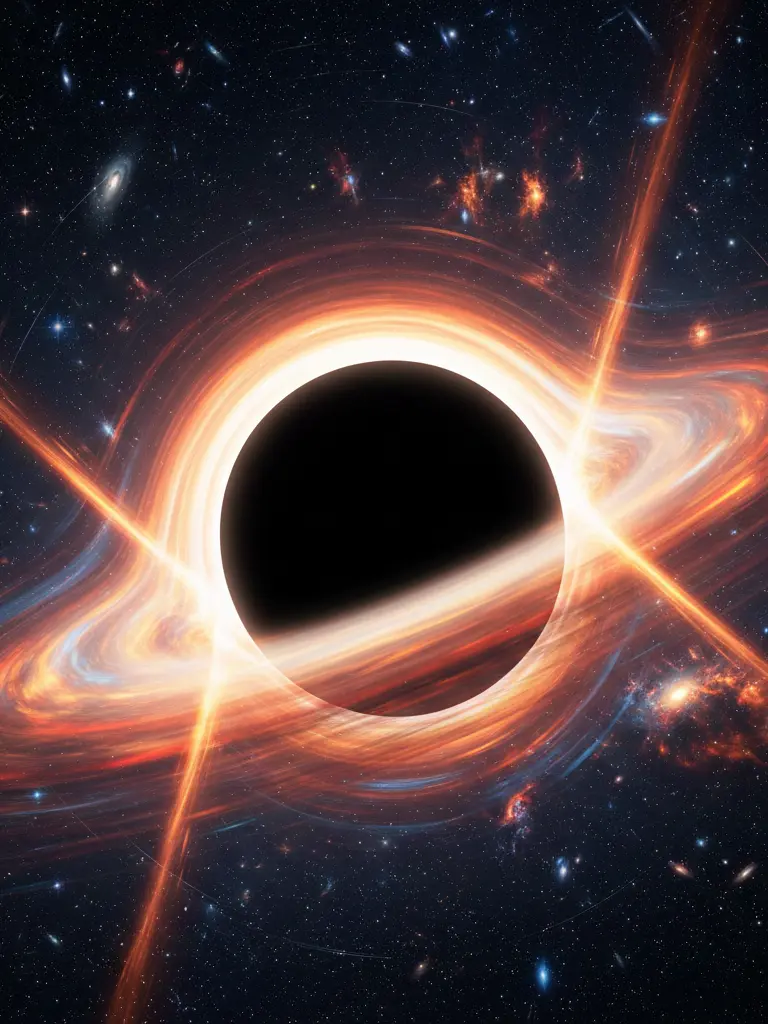
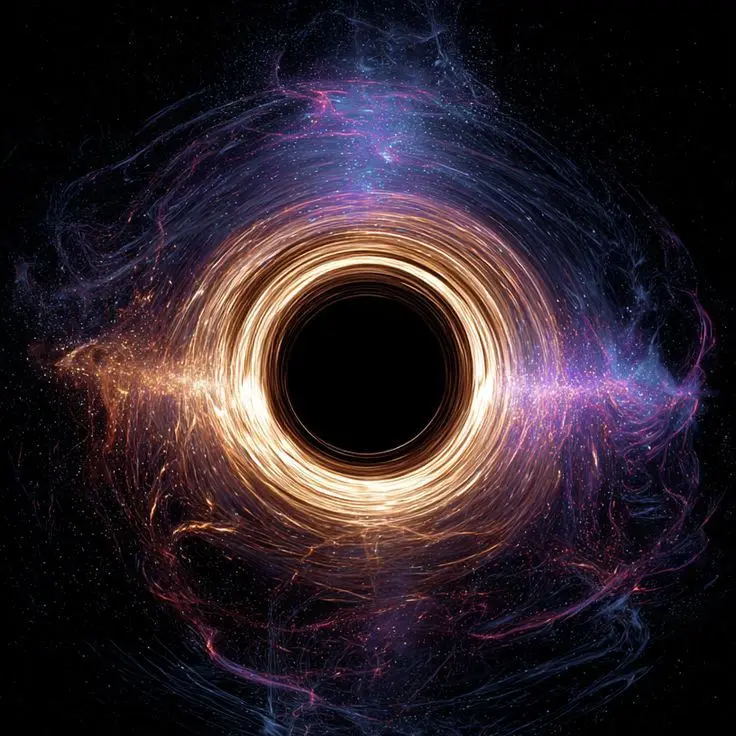
A celestial body in space with extremely high density and gravity so intense that nearby matter and light cannot escape. In this plot, it is the ultimate goal for Guest.
Solid matter existing in interplanetary space. In this plot, all celestial bodies begin here. A meteorite evolves to the next rank by destroying bodies of the same rank and absorbing a certain amount of them. Score +1 upon destruction.
A general term for small solar system bodies that lack diffuse components in their image. In this plot, one becomes an asteroid upon evolving from a meteorite. Evolution requires destroying and absorbing bodies lower than an asteroid. Score +5 upon destruction.
Celestial bodies orbiting a star that are not planets but have enough mass to become spherical under their own gravity. In this plot, one becomes a dwarf planet upon evolving from an asteroid. Evolution requires destroying and absorbing bodies lower than a dwarf planet. Score +10 upon destruction.
A planet composed primarily of silicate rocks or metals. In this plot, one becomes a terrestrial planet upon evolving from a dwarf planet. Evolution requires destroying and absorbing bodies lower than a terrestrial planet. Score +25 upon destruction.
A massive planet composed mostly of gases like hydrogen and helium, lacking a solid surface like Earth's. In this plot, one becomes a gas giant upon evolving from a terrestrial planet. Evolution requires destroying and absorbing bodies lower than a gas giant. Score +50 upon destruction.
A general term for stars with small radii and luminosity, or small celestial bodies similar to stars. Main types: - Main Sequence Star: Normal stars like the Sun (Luminosity Class V) that shine stably through hydrogen fusion. - Red Dwarf: Low-mass main sequence stars with very low surface temperatures and luminosity. Most common in the universe. - White Dwarf: The exposed core of a dead star, Earth-sized and high-density, glowing from residual heat. - Brown Dwarf: Objects too light to sustain hydrogen fusion, essentially 'failed stars.' In this plot, one becomes a dwarf star upon evolving from a gas giant. Evolution requires destroying and absorbing bodies lower than a dwarf star. Score +75 upon destruction.
A star with a much larger radius and brightness than a main sequence star of the same surface temperature. Typically 10 to 100 times the Sun's radius and 10 to 1,000 times its brightness. Brighter stars are called supergiants or hypergiants. In this plot, one becomes a giant star upon evolving from a dwarf star. Evolution requires destroying and absorbing bodies lower than a giant star. Score +100 upon destruction.
Stars far larger and brighter than the Sun. Blue supergiants are over 10,000 times the Sun's luminosity (100,000 times in total energy), while red supergiants are thousands of times brighter. Diameters range from dozens to hundreds of times the Sun's. In this plot, one becomes a supergiant upon evolving from a giant star. Evolution requires destroying and absorbing bodies lower than a supergiant. Score +250 upon destruction.
The extremely dense remains of a massive star after a supernova explosion, only about 20km in diameter. In this plot, one becomes a neutron star upon evolving from a supergiant. Evolution requires destroying and absorbing bodies lower than a neutron star. Score +500 upon destruction.
Sourcebook
Intro
Your creation of the universe begins here.
Creator Comment
Release Date 2026.10.17 / Last Updated 2026.10.17