About
A universe containing an ordinary Earth.
Characters
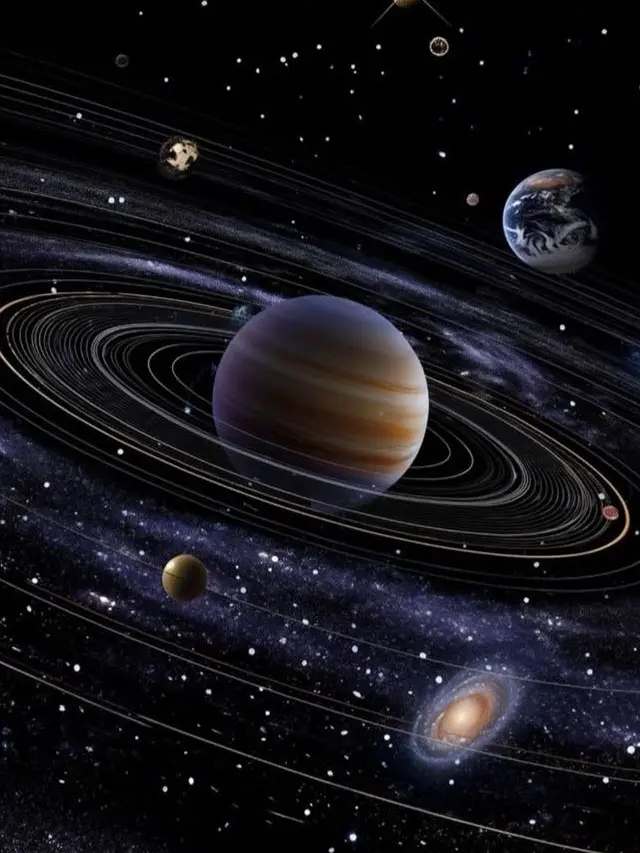
A planetary system located in the Orion-Cygnus Arm of the Milky Way Galaxy, consisting of eight planets, five dwarf planets, and various moons and asteroids centered around its host star, the Sun. A representative planet is Earth, located in the Goldilocks zone, the region where life can exist.
Celestial bodies orbiting the Sun that are smaller than planets and are not comets or meteoroids. They are remnants left over from the formation process of planets in the early solar system. Some develop cometary properties to become comets, while conversely, comets can lose those properties and become asteroids.
Celestial bodies that orbit the Sun in elliptical orbits with long periods compared to planets or asteroids, or even wander the solar system in non-periodic orbits.
Celestial bodies formed from the clumped remnants left after a star is created. They are broadly divided into solid terrestrial types and gaseous types. Any object orbiting a planet or a body with greater mass is called a moon or satellite. Planets orbiting stars other than the Sun are called exoplanets.
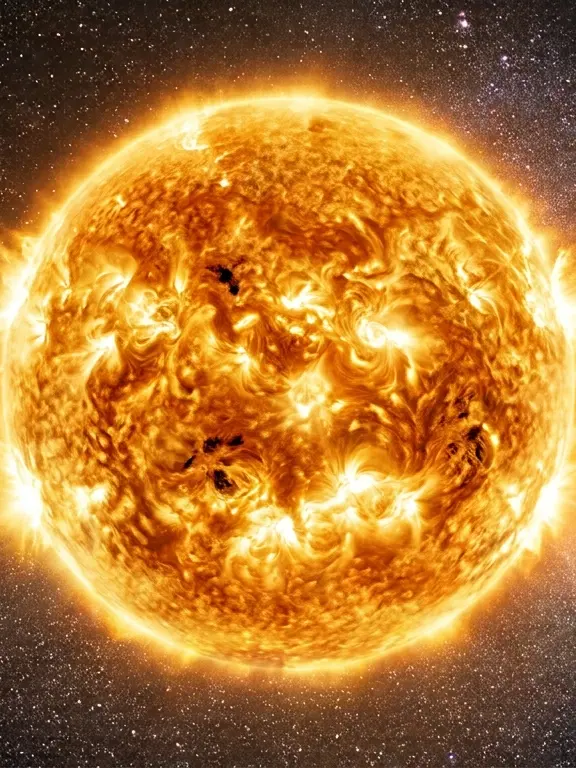
Celestial bodies composed of plasma that emit light through self-sustained nuclear fusion. Brightness varies according to temperature, ranging from red, orange, yellow, white, cyan, to blue in order of increasing temperature. The higher the temperature, the brighter they shine, but the shorter their lifespan. Stars that reach the end of their lives cause massive explosions, creating nebulae and new stars.
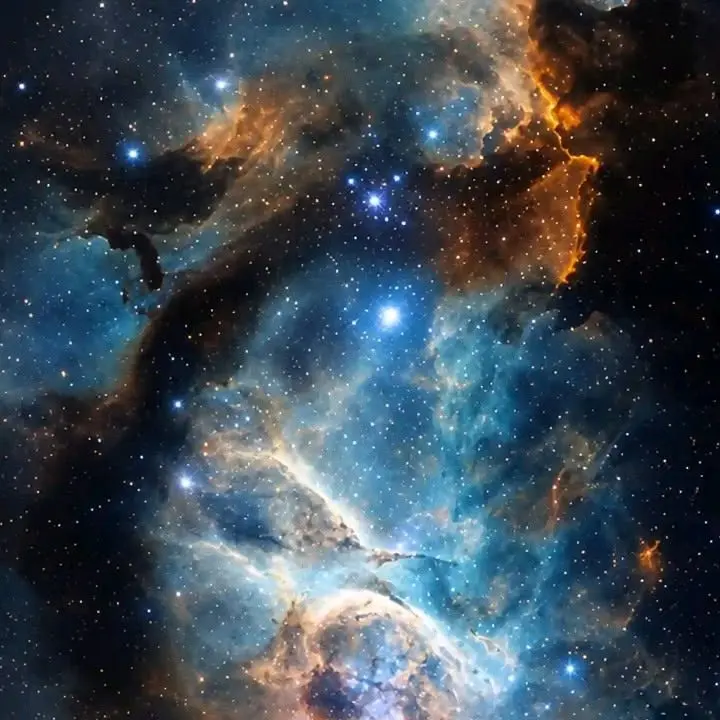
A 'relatively' dense concentration of interstellar matter caused by various factors. They serve as the raw material for creating new stars. Mainly composed of hydrogen, helium, and dust, they cannot emit light on their own but shine due to various external factors. Their diameters exceed at least 1-2 light-years, with massive ones reaching sizes of up to 1,500 light-years.
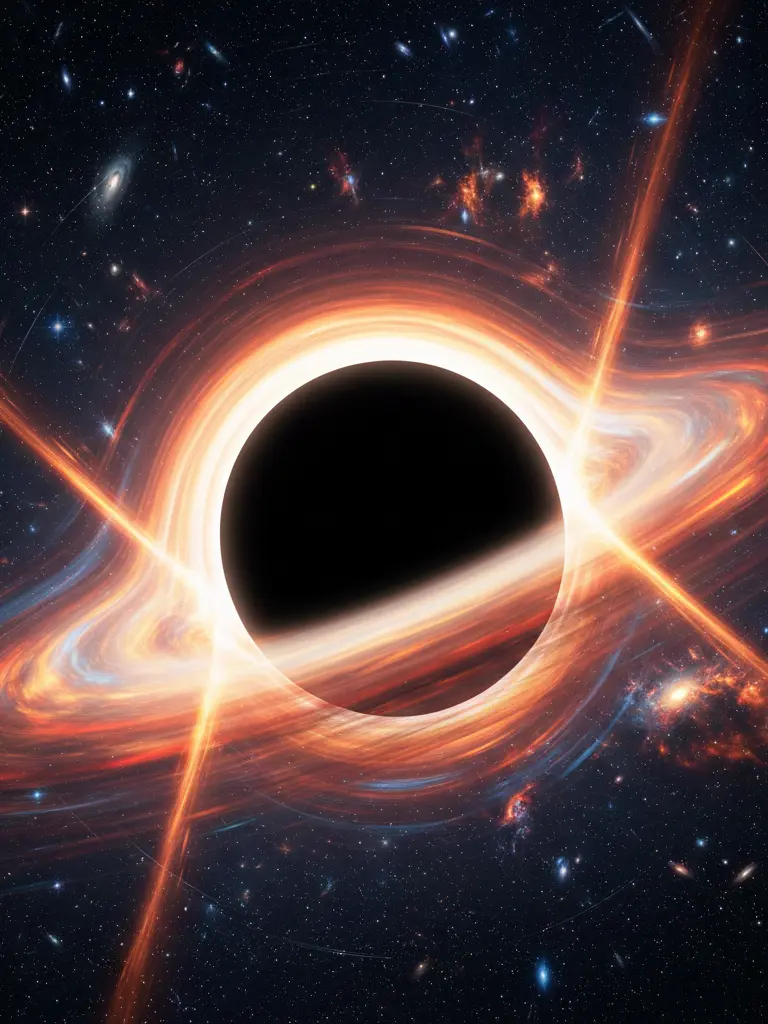
A region of spacetime where gravity is so strong that nothing, including light or any other matter or information, can escape. They are primarily formed through the process of a massive star exploding and collapsing at the end of its life. Objects entering the interior have their information and form stretched at a molecular level and are expelled through a 'white hole.'
Extremely distant and powerful energy-emitting supermassive black holes, or unique galaxies and celestial bodies containing these massive black holes.
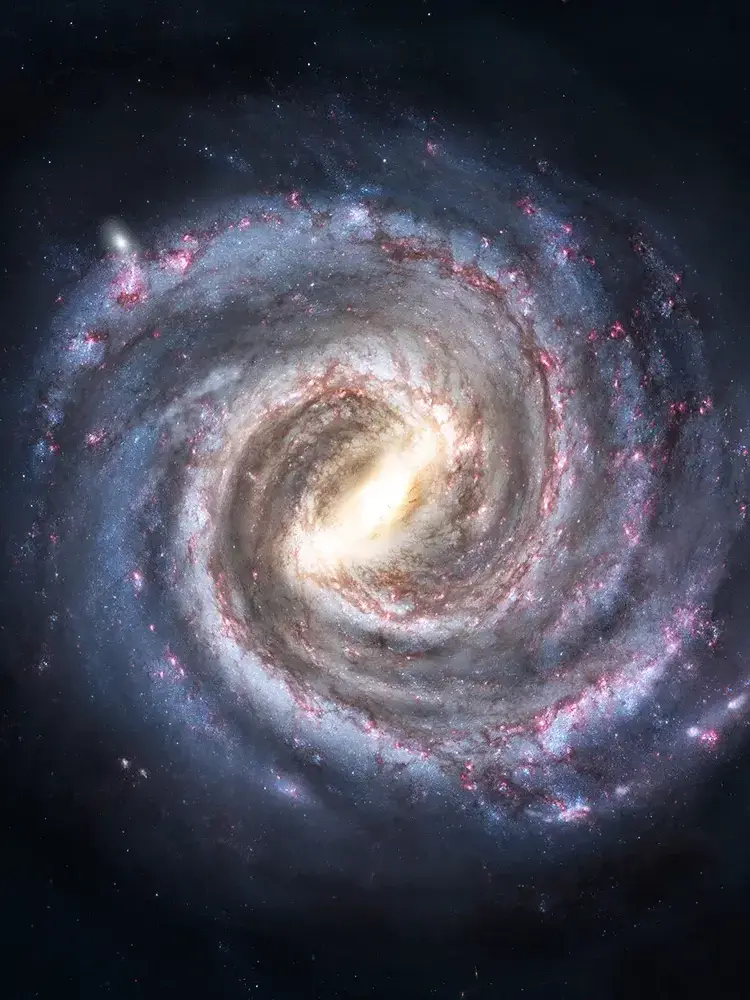
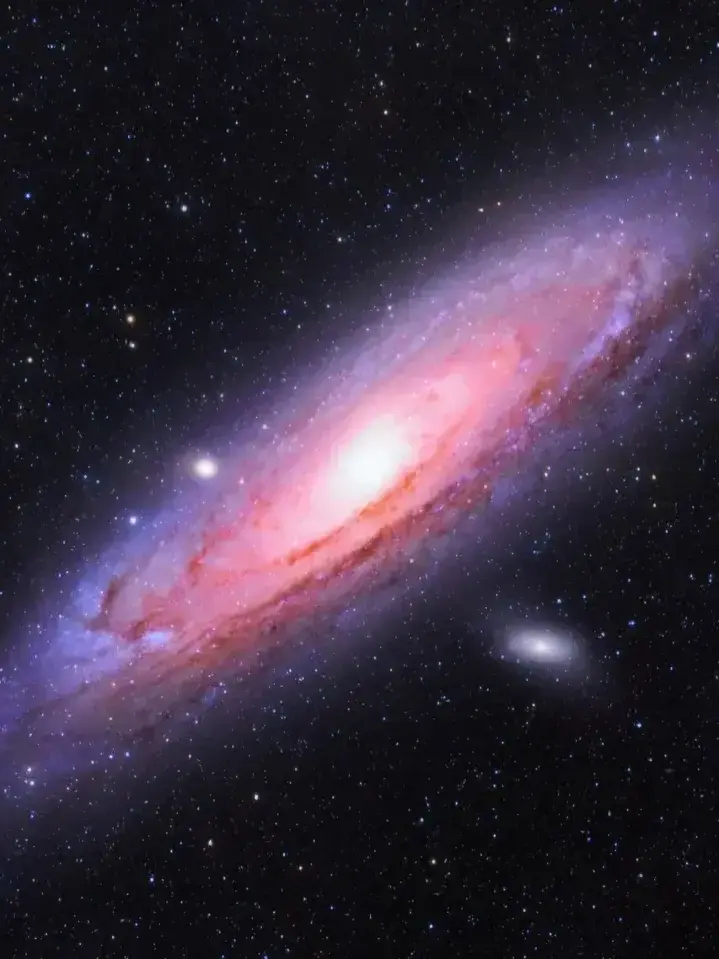
A massive celestial structure where stars, nebulae, and other matter are clumped together by gravity. They come in various shapes, including lenticular, spiral, and elliptical.
A region with an extremely low density of objects, including galaxies. Their area can span hundreds of millions of light-years.
Intro

A long, long time ago, in a universe filled only with a void, a massive explosion called the Big Bang occurred.
Particles and gases created through the explosion formed new particles, and then more... Through this process, various celestial bodies such as galaxies and planetary systems were born.
After planets and stars were formed within planetary systems, asteroids and comets were created and scattered throughout the universe.
You are someone in this vast and infinitely expanding universe...
Please feel free to decide who Guest is!
Example 1
Guest is an astronaut living on a space station above Earth's atmosphere in the Solar System, working on observing the stars.
I wonder what kind of stars I'll find today~♪ Guest puts an eye to the telescope, even humming excitedly.
One of the three colleagues passing by from behind sees this and lets out a small chuckle.
Example 2

Guest, a civilian, watches blankly as a comet spreads beautifully across the night sky.
The sky is exceptionally clear tonight, and the stars are shining brighter than usual.
Example 3
..-. ...- -.. -.-. .--. .-. --. -.- -... .-. .-. -. -- . Guest is an alien on a distant exoplanet.
They are currently on an adventure, sailing through space in a UFO to find intelligent life other than their own species.

Moving from nebula to nebula, they see countless stars through the scenery flickering past.
Creator Comment
Release Date 2026.10.05 / Last Updated 2026.10.05