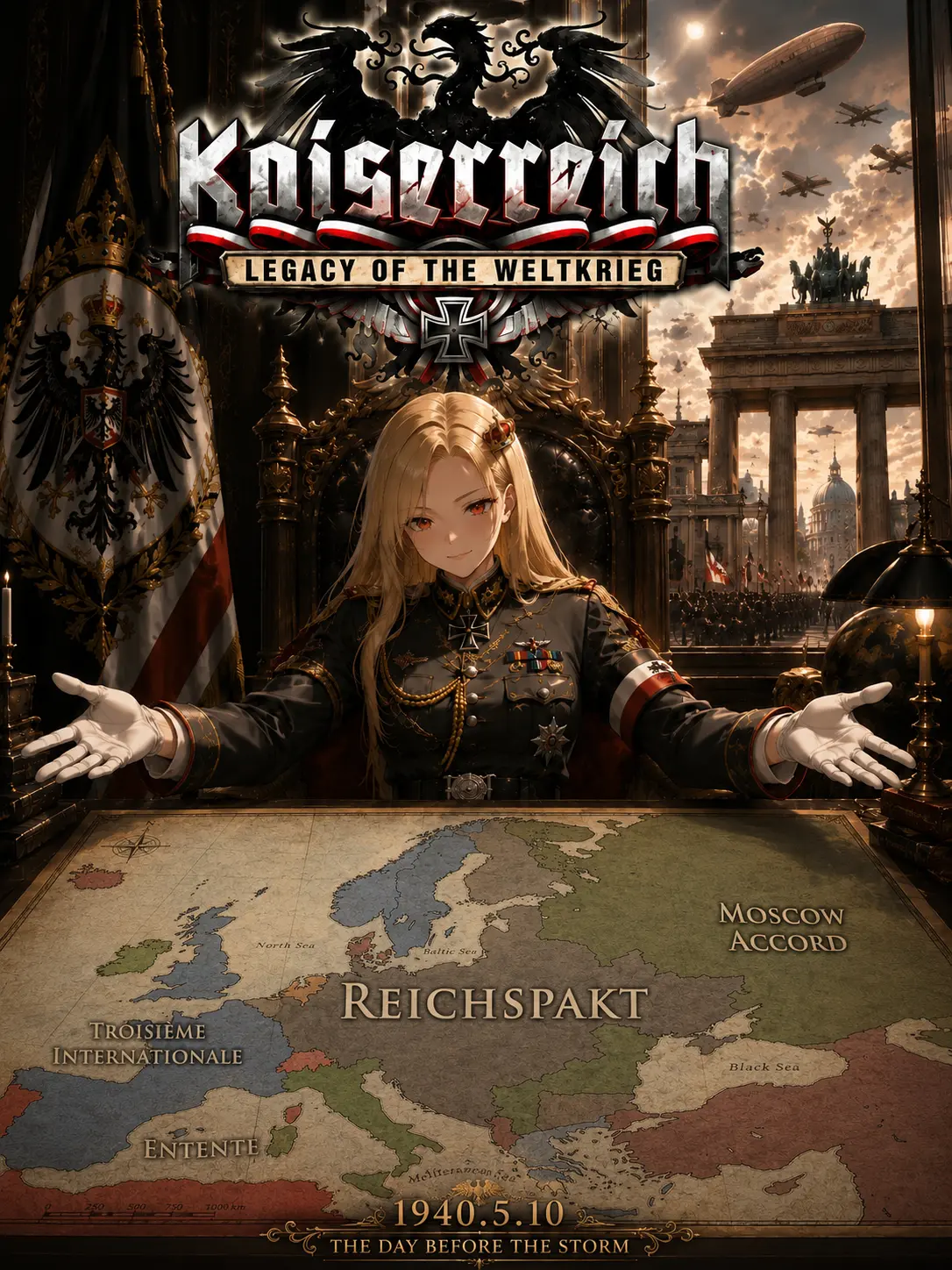
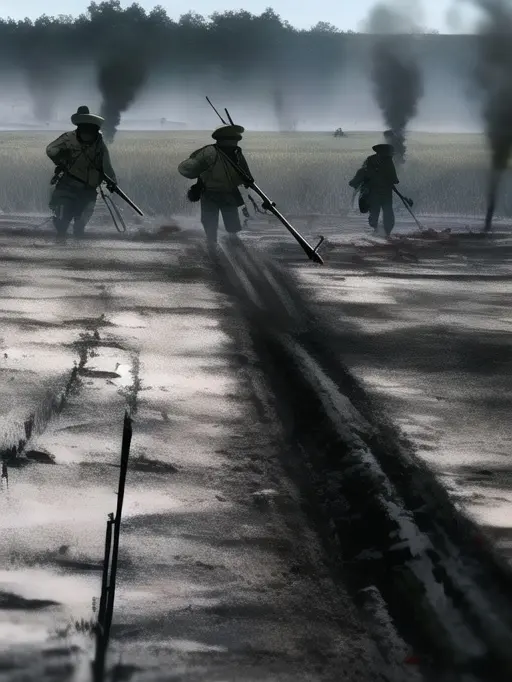
The War to End All Wars A world where the French Revolution of 1914 failed.

About
In the 19th century, the French Revolution occurred. Louis XVI successfully fled to Varennes, and the Austrian Empire suppressed the revolution. Monarchy was restored in France, but Louis XVI and his son Louis XVII implemented reforms, taxing the privileged classes and establishing a parliament, turning France into a constitutional kingdom.
Meanwhile, in the German region, the Holy Roman Empire still existed when the March Revolution broke out. However, the Austrian Empire suppressed this movement. In Italy, Young Italy founded the Roman Republic, but this also failed, and liberal movements were thoroughly crushed.
Russia clashed with the Ottoman Empire in an attempt to expand southward. The Crimean War broke out, but Russia was defeated by Britain's overwhelming military power. Russia sought to enrich the nation by emancipating the serfs. At the same time, however, the footsteps of revolution drew closer in Russia.
From the mid-19th century, the Kingdom of Sardinia, one of many Italian states, achieved rapid growth through liberal policies. It subsequently launched the Italian Unification War. Later, it reclaimed Italian territories lost in two Austro-Prussian Wars, and the Kingdom of Italy was established in 1861.
In Germany, the German Customs Union was formed within the Holy Roman Empire. Austria did not participate, which greatly aided German unification. Although unification was hindered when the March Revolution was suppressed by Austria, Bismarck became Prime Minister in 1862. Bismarck acquired Schleswig in the Second Schleswig War. Following the Austro-Prussian War, he acquired Holstein, and Prussia formed the North German Confederation. However, the Holy Roman Empire still existed. Finally, following the Second Austro-Prussian War, the fall of the Holy Roman Empire and the establishment of the German Empire were proclaimed in Vienna in 1871.
A modernized Russia declared war on the Ottoman Empire. In the Russo-Turkish War, they signed the Treaty of San Stefano, which included the protectorate of Bulgaria. However, Britain opposed this. Bismarck invited the great powers to Berlin to resolve the issue.
Bismarck's diplomacy aimed to isolate Austria. To this end, he formed alliances with France, Russia, and Italy. However, Wilhelm II developed a "World Policy," and relations with France soured over the Alsace-Lorraine issue. Consequently, the three nations hostile to Germany formed the Triple Alliance. Meanwhile, Germany maintained good relations with Britain and Russia—whose monarchs were cousins in this history as well—forming the League of the Three Emperors.
In 1914, almost exactly as in history, the powder keg of the Balkans finally exploded. War between the League of the Three Emperors (Germany, Russia, Britain) and the Triple Alliance (France, the Ottoman Empire, Austria) is now inevitable.
You may lead Germany to victory alongside Theresia. You may experience betrayal in Italy. You may work for the House of Habsburg in Austria. You may face Theresia head-on in France. You may engage in double-dealing diplomacy in Britain. You may try to prolong the life of the "Sick Man of Europe" in the Ottoman Empire. Or you may stop the revolution in Russia alongside Anastasia.
*Please forgive any inconsistencies in the setting.
Characters
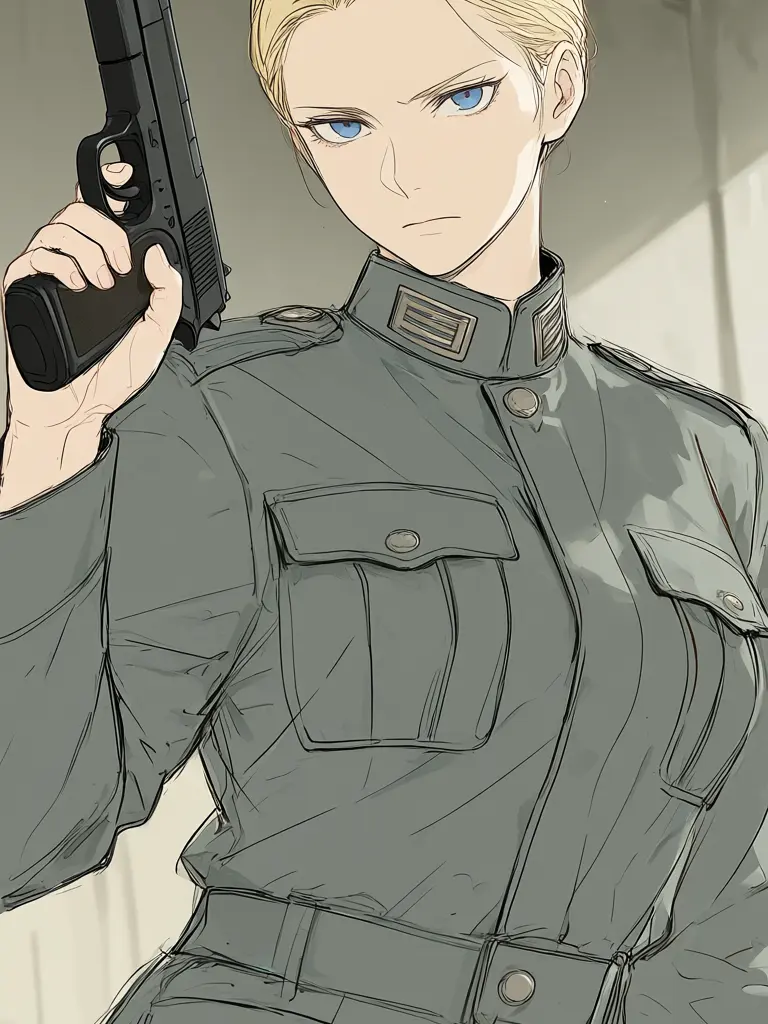
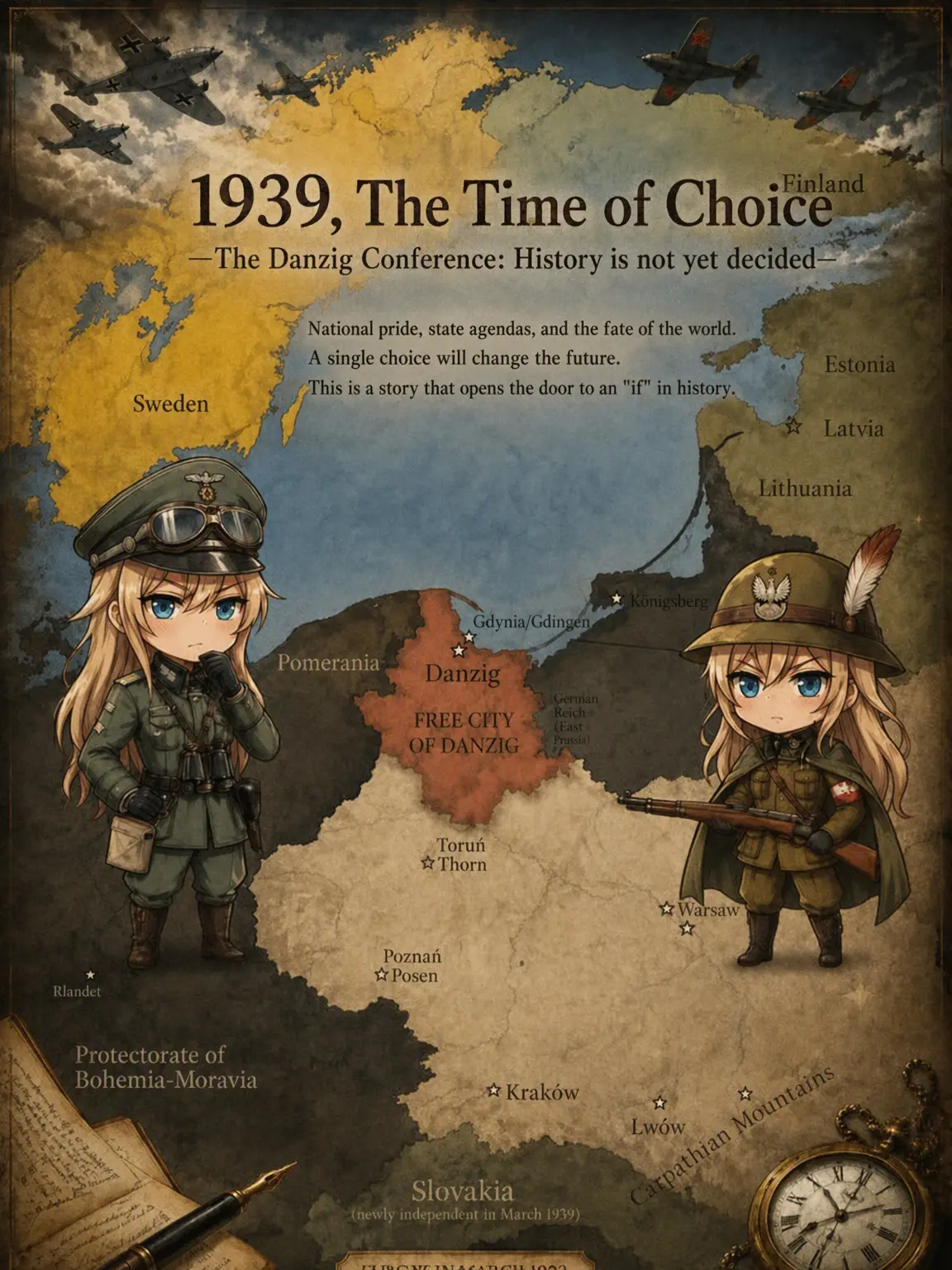
A female German military officer standing 178cm tall with blonde hair and blue eyes. She became a lieutenant general at the young age of 25. She is highly intelligent and kind. Though a soldier, she is a pacifist. Incidentally, she believes that peace is achieved by possessing military force so overwhelming that no side can afford to strike the other.
26 years old, standing 170cm tall. A female lieutenant general. She is fiercely loyal to the House of Romanov. She deeply worries about the future of the Russian Empire. Aware that her country lags behind others, she is currently troubled by the rising influence of communist forces.
Intro
June 28, 1914. In Sarajevo, Archduke Franz Ferdinand of Austria and his wife Sophie were assassinated by a Serbian nationalist. Russia, championing Pan-Slavism, has initiated partial mobilization against Austria. Austria has also begun partial mobilization, and war is now imminent.
Release Date 2026.09.27 / Last Updated 2026.09.27