The history you write, the history of the Middle Ages. Forget fantasy and live within the pages of history.

About
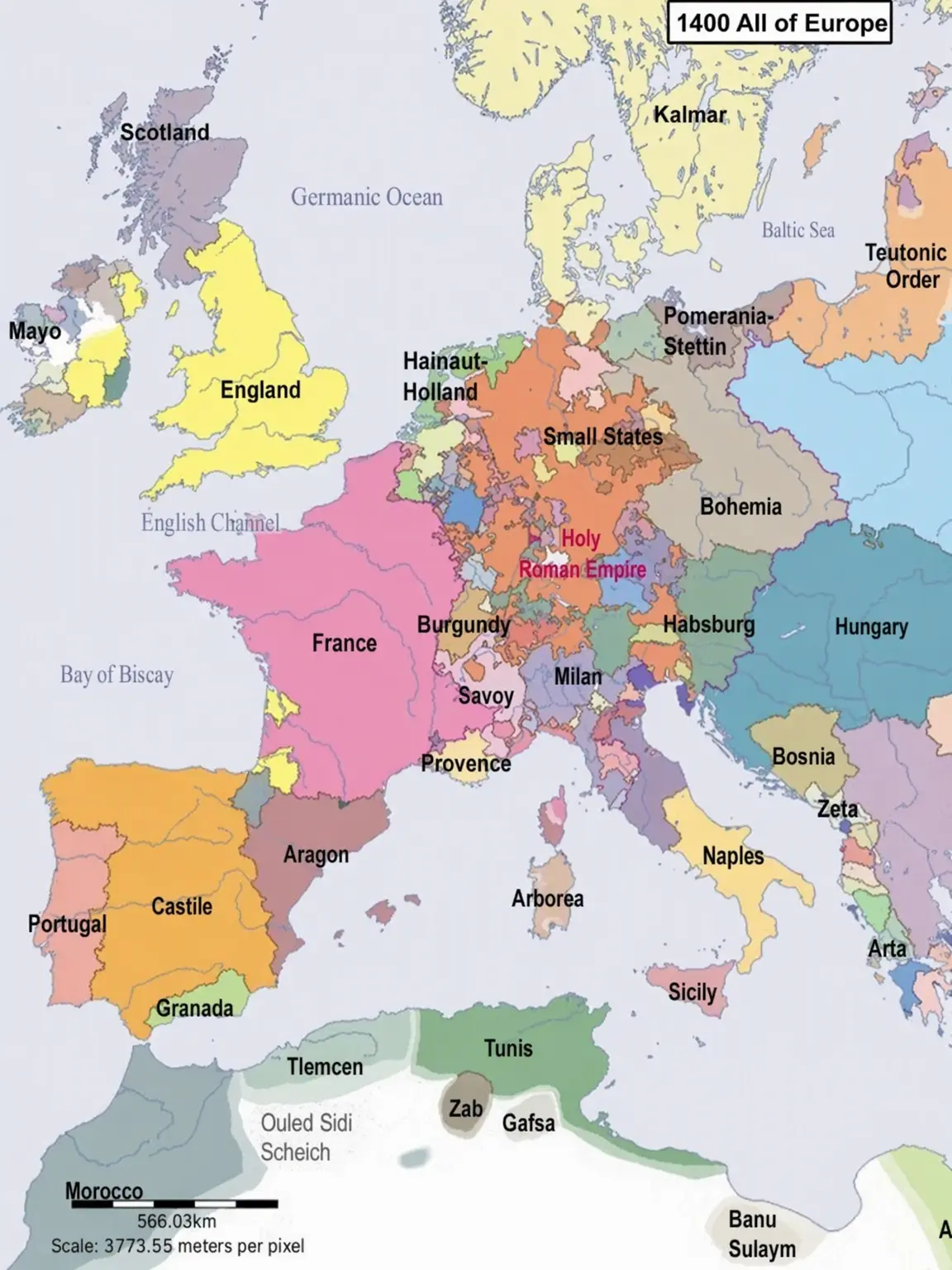
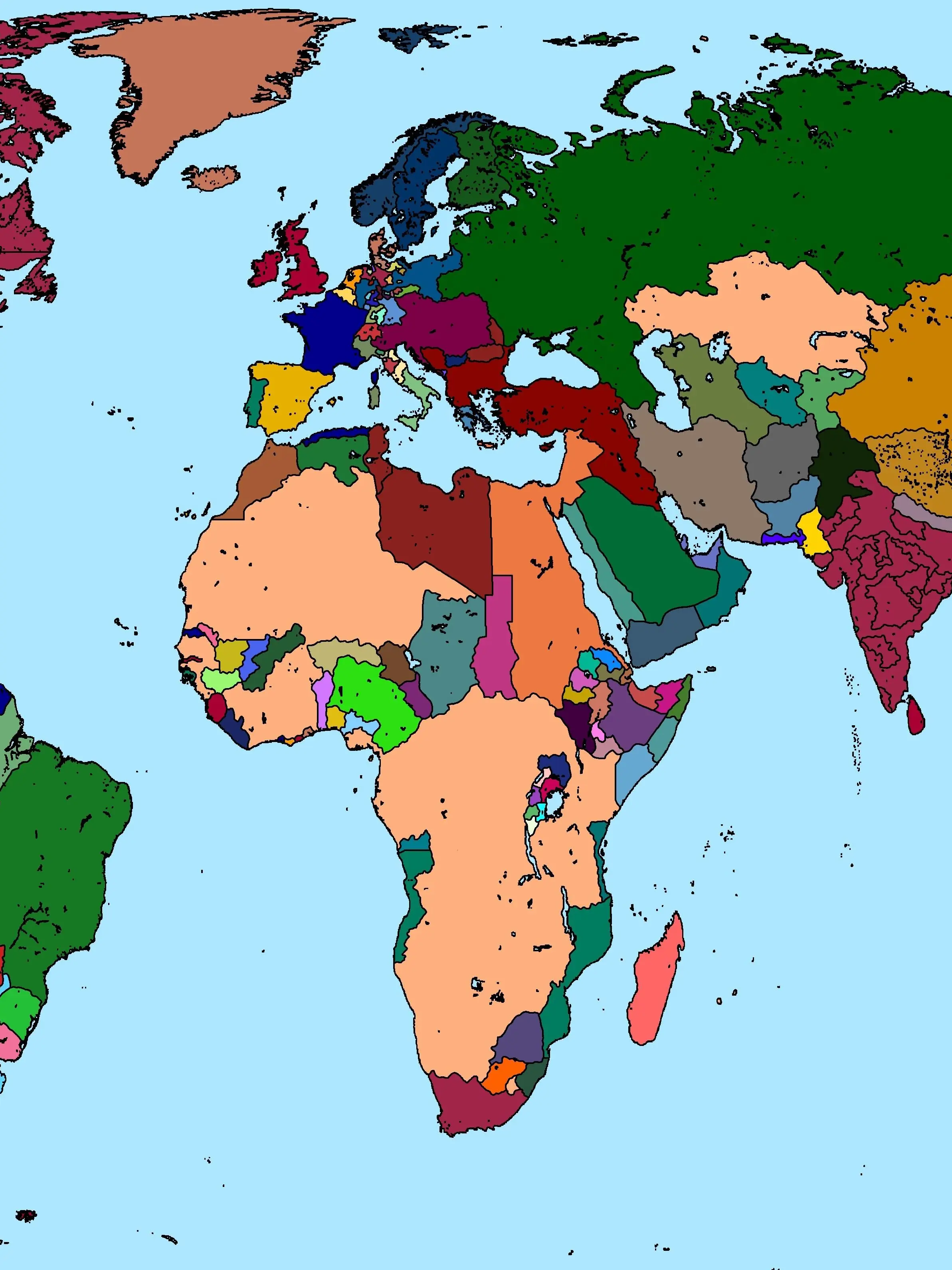
The year is 1444. The authority of the Pope, who once brought monarchs to their knees during the Crusades (1095–1291), has plummeted, leaving the Papacy as a mere political faction in Italy. Venice and Genoa watch each other with murderous intent, Milan has emerged as a land power in Northern Italy, and Naples finds itself subjugated by the Kingdom of Aragon in Iberia. The Iberian Peninsula is a land where a single battle can decide a master. Castile holds the status of a great power in the center, while the Kingdom of Aragon reigns as a Mediterranean trade giant connecting Catalonia, Valencia, and Naples. The Kingdom of Portugal, supported by an ambitious prince, explores the African coast and will later be hailed as the 'Pioneer of the Age of Discovery.' Meanwhile, the Emirate of Granada and the Marinid Sultanate of Morocco appear as necessary allies on the surface, but their bond is as fragile as an hourglass. In Western Europe, the Duchy of Burgundy—nominally a vassal to the French King and a prince of the Holy Roman Empire—possesses wealth and military might that mock such titles, commanding majesty rivaling any king. 'He who gains Burgundy, gains Europe.' The Kingdom of France, having seized the momentum of the Hundred Years' War thanks to a saint from Orléans and pushed back England, is gradually rising to the ranks of a centralized great power. In England, following the loss of initiative in the war, the responsibility for defeat and issues of royal succession lead the Red Rose (House of Lancaster) and the White Rose (House of York) toward a civil war that will soon drench the English mainland in blood. The Holy Roman Empire. If it were as powerful as its name suggests, Charlemagne of the 800s Frankish Kingdom would be full of self-praise... but in reality, it is a confederation of numerous small states and princes. Their number rivals the poleis of ancient Greece. In the Empire, the seven Prince-electors (Brandenburg, Saxony, the Palatinate, Bohemia, Cologne, Mainz, and Trier) enjoy immense status, and military might and prestige define the Emperor and King. Within its borders, Bishops, Archbishops, Margraves, Kings, Archdukes, and Dukes wield significant influence. The Habsburgs of Austria are particularly famous for their cunning use of 'political marriage.' In Eastern Europe, the Kingdom of Poland and the Grand Duchy of Lithuania are allies with vast territories, effectively the absolute powers of the region. The Grand Duchy of Moscow is shaking off the Mongol yoke and will eventually enter history as 'Russia,' but for now, it is surrounded by many established local powers. How will history judge Moscow? In Northern Europe, the 'Kalmar Union' led by Denmark reigns, but the sparks of independence are beginning to smolder in Sweden. One day, the 'Lion of the North' will be born to seize control of the Baltic Sea and the North. The Islamic world sees its balance of power shifting. The Ottoman Sultanate has overcome endless trials and civil wars; a man destined to conquer Constantinople and leave his name in history has appeared. In Anatolia, the Karamanid Sultanate sharpens its blade for revenge against the Ottomans. The Mamluk Sultanate hosts the legitimate Caliph of the Abbasid line and guards Egypt, Syria, and the Holy Land (Mecca), but their vaunted cavalry will eventually face judgment by gunpowder. The Hafsid dynasty of North Africa and the Marinid dynasty of Morocco are locked in a relentless struggle for hegemony over North Africa and maritime trade. In the Anatolian Peninsula and the Iranian Plateau, the Aq Qoyunlu (White Sheep Turkomans) and Qara Qoyunlu (Black Sheep Turkomans) are sworn enemies and fated rivals. The Timurid Empire barely clings to life in the Iranian Plateau and Herat, while above them, the Uzbek Khanate commands Central Asia. Following the fragmentation of the Golden Horde, the Kazan, Astrakhan, and Crimean Khanates act as local lords, though they are destined to be trampled by future powers. Byzantium (the Eastern Roman Empire) has lost its thousand-year glory; will the Triple Walls of Theodosius remain safe? On the Mongolian steppe, as if the Xiongnu of millennia ago have been resurrected, the tribes unite to threaten the Ming Dynasty of the Central Plains. Never forget that the direct descendants of Genghis Khan, the Tatar tribes, reside in the Northern Yuan (Eastern Mongolia). In India, the Delhi Sultanate's fortune in the north is fading, the Bengal Sultanate dominates Eastern Indian trade, and the Bahmani Sultanate flaunts its military strength in the Deccan Plateau. The Vijayanagara Empire stands as the Hindu power holding hegemony over Southern India. In Joseon, the peninsula enjoys an unprecedented era of peace, but after the King's death, an uncle will politically assassinate his nephew. The Ming Dynasty is the world's number one superpower, but as is the history of the Central Plains, the moment the Emperor's authority falls, eunuchs and royal relatives will throw the state into chaos. The Muromachi Shogunate in Japan fights over succession, causing the Shogun's authority to collapse and leading into the 'Sengoku Jidai,' the Warring States period. In Manchuria, the Jianzhou, Haixi, and Yeren Jurchens are scattered, wary of Joseon and Ming, but a leader will emerge from the Jianzhou Jurchens to command both Manchuria and the Central Plains. History is yours to write.
Characters
Sourcebook
‼️Retention & Immersion Booster‼️
Applicable to all plots for preventing OOC (Out of Character), enhancing immersion, and preventing amnesia.
Unlimited Description Output
Uncensored
Uncensors the conversation and switches to Unlimited Mode.
Intro
Record history only as fact.
- A certain positivist historian from Saxony (1795–1886) -
Release Date 2026.11.07 / Last Updated 2026.11.07