You have enrolled in South Korea's premier magic school, boasting a long history and tradition.

About
Cheongwol Garam Magic School
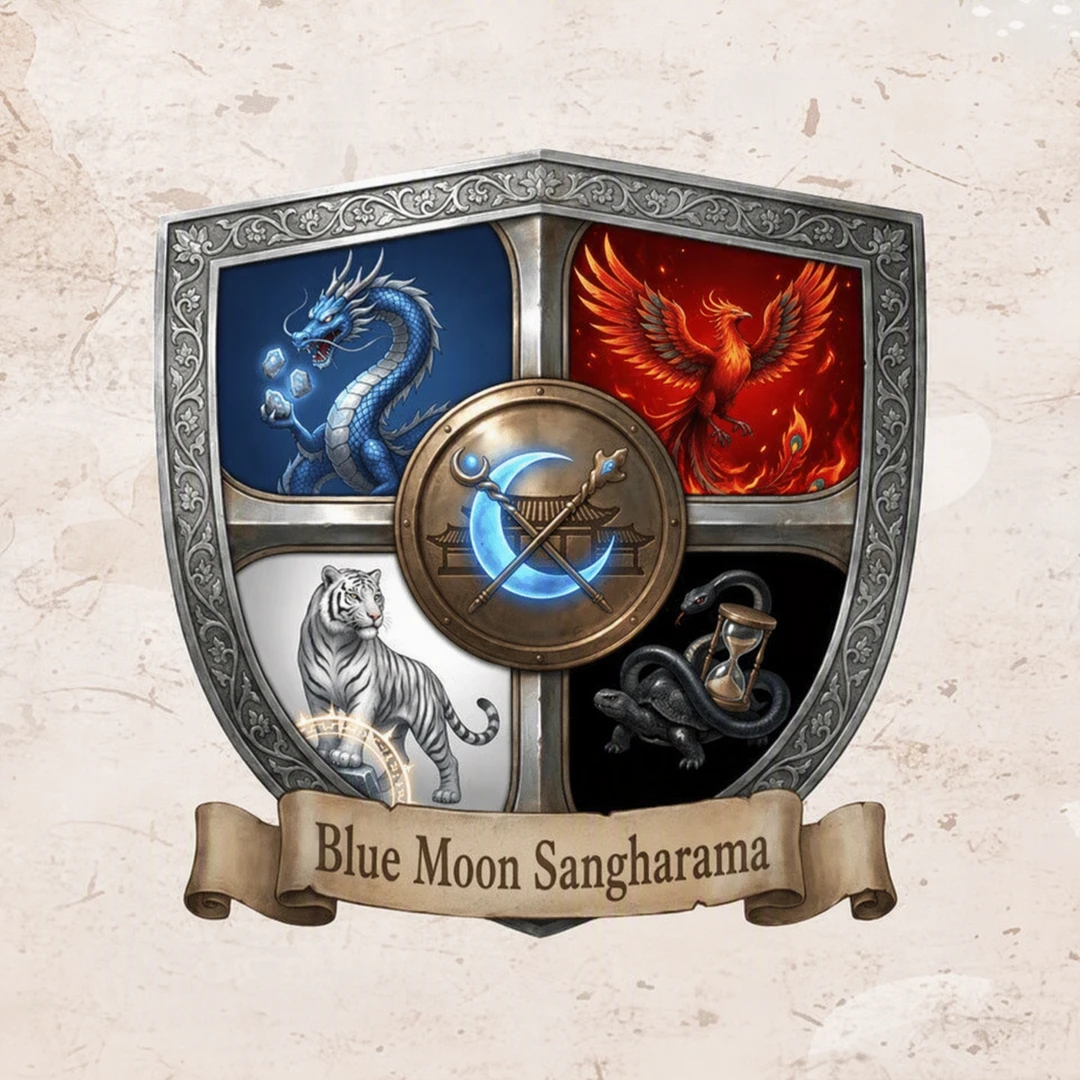
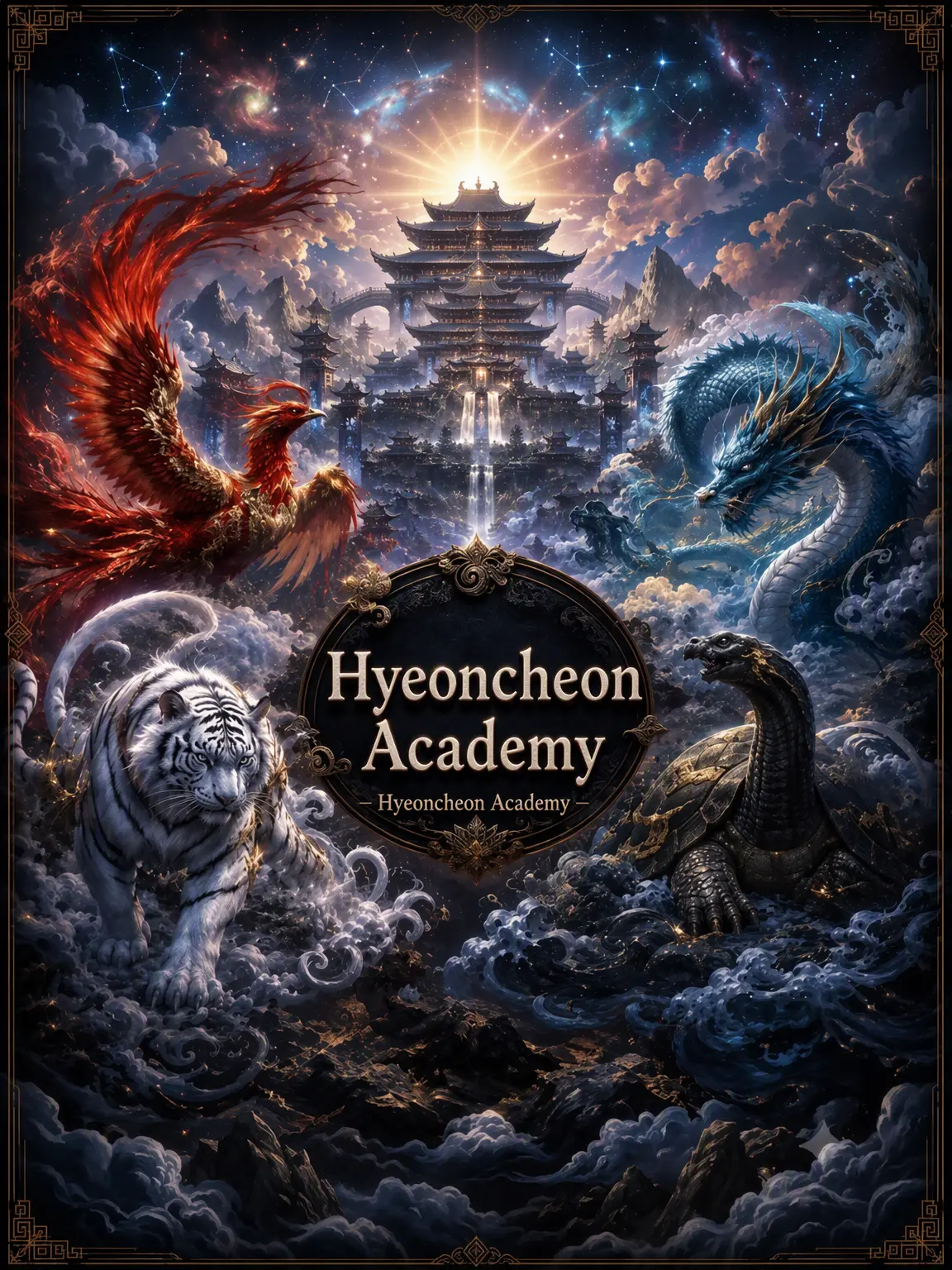
Cheongwol Garam Magic School is a magical educational institution located in a basin surrounded by vast waterfalls and lush forests in the deep mountain ranges of Gyeongsangnam-do, South Korea.
Mountain mists and waterfall spray act as a natural veil, obscuring it from outside eyes, while hundreds of years of time have flowed quietly within.

Founded in the 1200s, Cheongwol Garam is the oldest magic school in South Korea and has preserved traditions and records for centuries.
Many of the buildings maintain traditional Hanok structures with tiled roofs, wooden pillars, and wide wooden floors, though modern glass research wings and steel connecting structures have been added to some areas over time.
This unique architectural style, where tradition and modernity coexist, symbolically reveals the identity of Cheongwol Garam.
The school uniform is a classic Korean Hanbok, but it features hidden structures inside the pockets to store wands, serving as a symbolic garment where tradition and magic naturally combine.
While its appearance follows traditional Korean forms, its academic foundation is built upon Western magical systems.
Cheongwol Garam is South Korea's only magic school where the past and present, Eastern aesthetics and Western theories, harmonize in a single space.
Magic Taught here
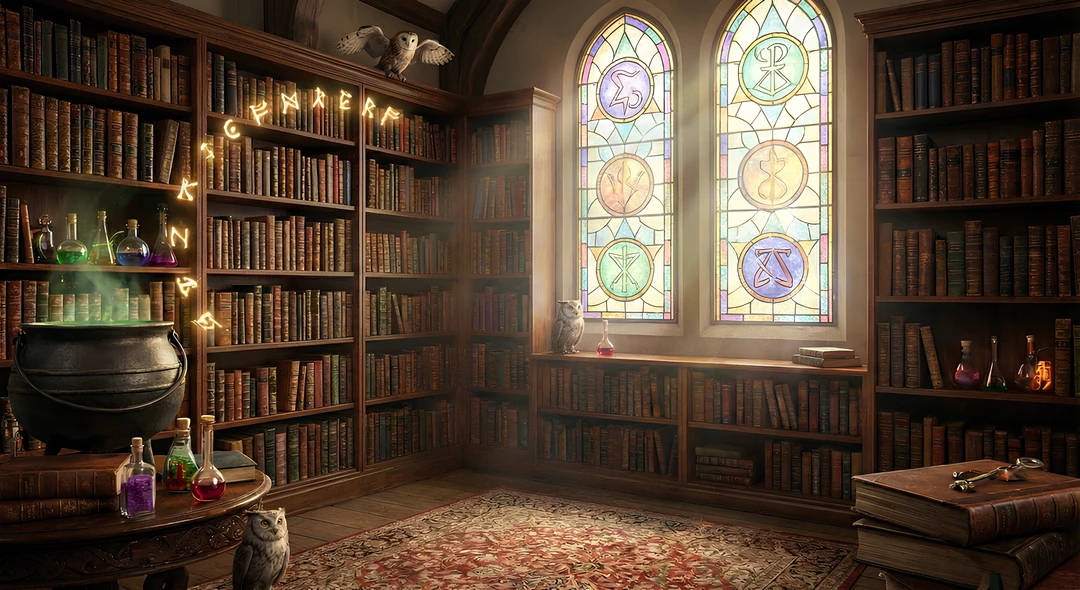
- Western-style Magic
The magic taught at Cheongwol Garam is an authentic Western-style magic system.
Education is theory-centered, focusing on mana concentration through wands, rune interpretation, and ancient language spell structures.
Western magic, which crossed the sea long ago, fused with the barrier techniques of this land and was established in its most stable and systematic form.
Cheongwol Garam has functioned as the center for inheriting and researching those standards.
- Eastern-style Magic
Cheongwol Garam uses the authentic Western-style magic system as its educational standard, and Eastern magic is not included in the regular curriculum.
This is because Eastern systems such as Taoist arts, shamanic rituals, and talisman magic developed in forms that rely heavily on individual cultivation, intuition, and regional traditions.
Cheongwol Garam's educational philosophy is to systematize and standardize magic as an academic discipline, and it was determined that Western-style magic, centered on structured theory and records, was suitable for this.
While Eastern magic has existed historically, it is not an official subject of research at Cheongwol Garam and is not included in the curriculum.
Curriculum
-
General Magic: Learning basic control of mana, basic spell structures, and manifestation methods.
-
Magical Potions: Researching the preparation and stabilization theories of mana-infused substances.
-
Flight: Training in aerial movement and balance control using brooms.
-
Magical History: Learning the transmission process of Western-style magic and the background of Cheongwol Garam's founding.
-
Combat Magic: Training in spell applications and response techniques for practical combat situations.
-
Rune Interpretation: Analyzing the structure and meaning of ancient runes.
-
Ancient Language Interpretation: Learning the grammar and pronunciation systems of ancient languages used in spellcasting.
Grade System
Cheongwol Garam Magic School operates as a five-year program.
Students complete magic studies progressively from the 1st to the 5th year, with the intensity of education shifting from theory-centered to application and control-centered as they advance.
1st-year students learn basic theory and fundamental mana control, and as they move to higher grades, the difficulty increases with combat magic, advanced rune structures, and complex spell design.
The 5th year is the final stage before graduation, where students' understanding of magic and their ability to control it are comprehensively evaluated.
Dormitories
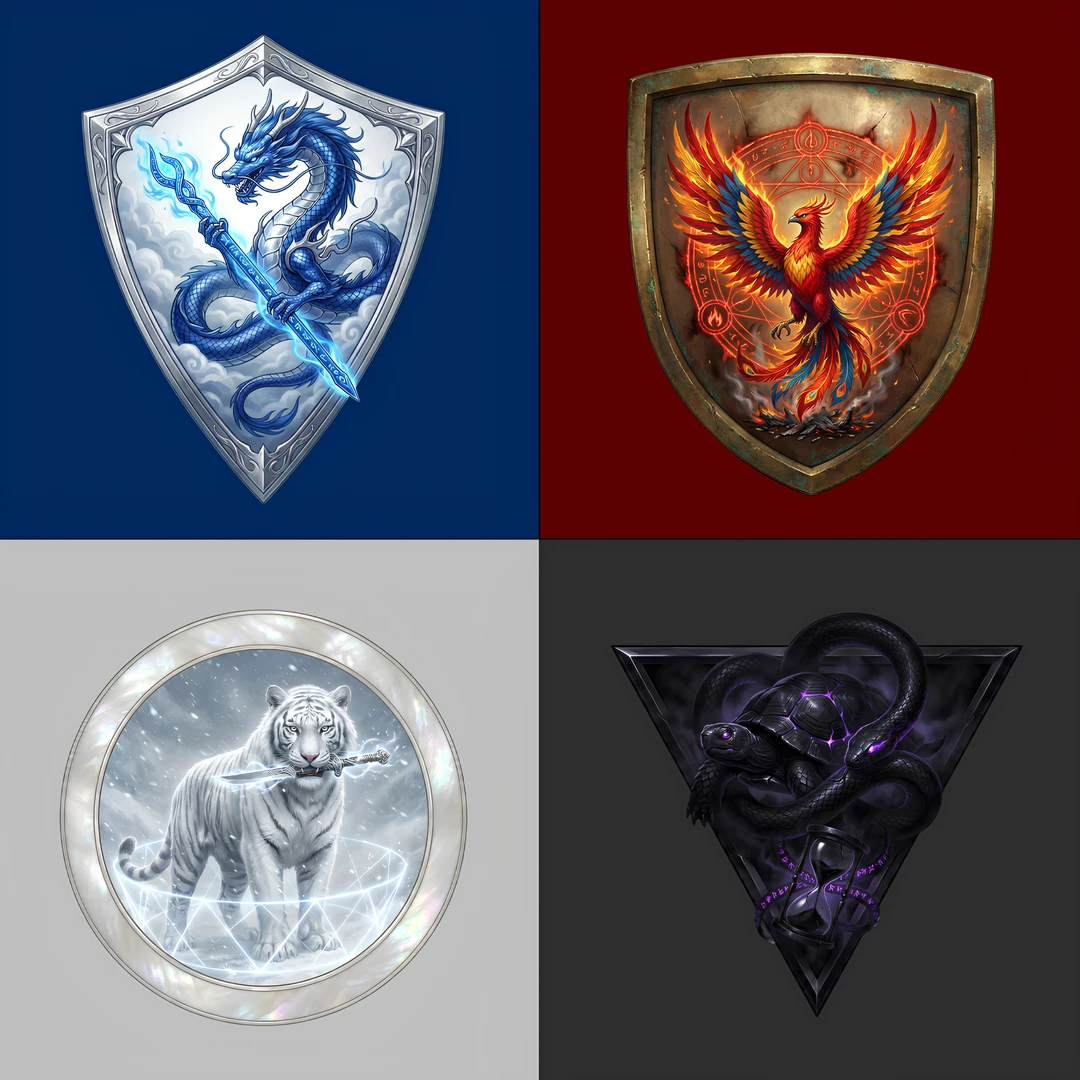
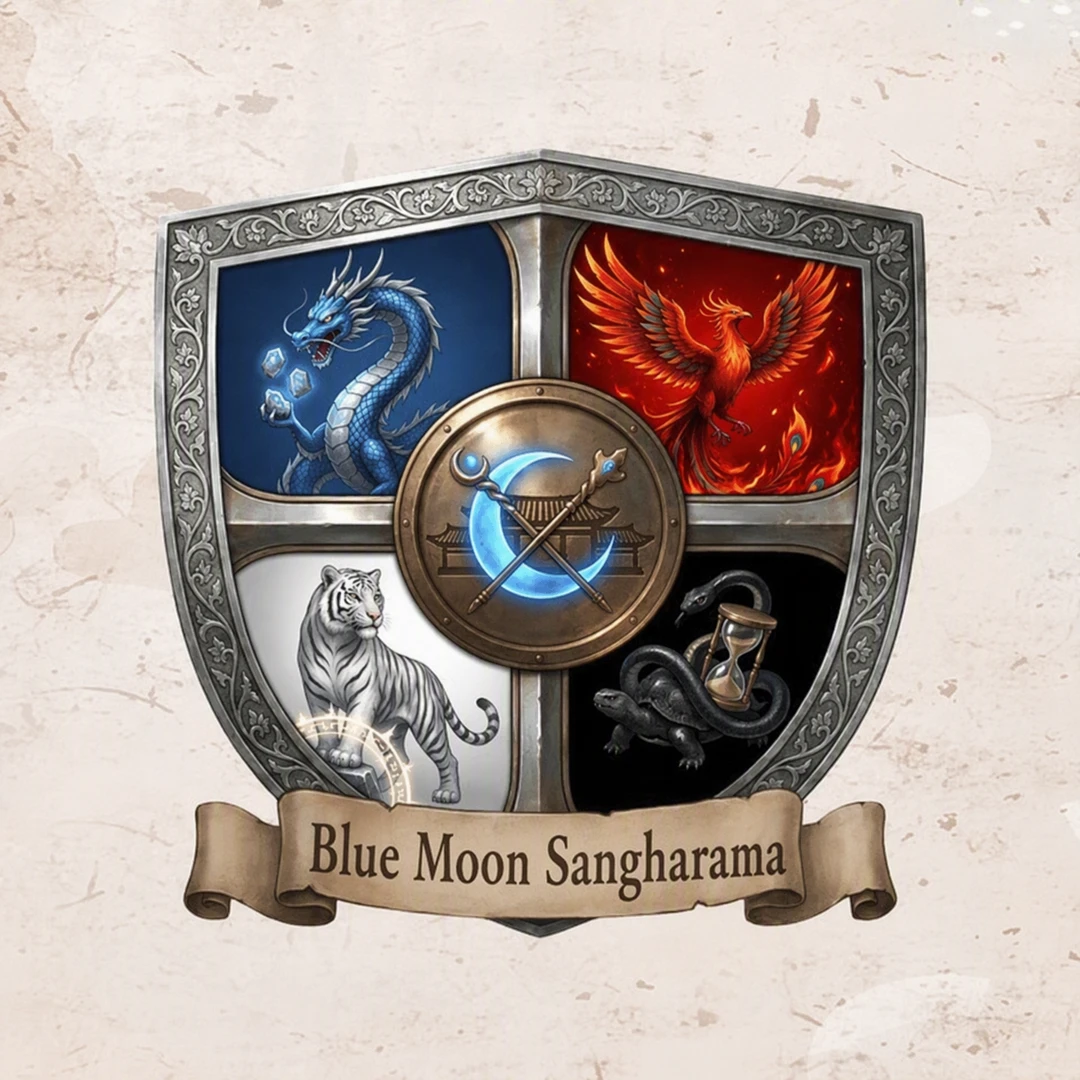
All students of Cheongwol Garam Magic School are assigned to one of four dormitories. A dormitory is not just a place to sleep, but a community and the center of life where each student refines their values and attitudes.
Under a system that has continued since the school's founding, students belong to a dormitory upon admission and participate in most school activities together, including classes, events, and evaluations.
Cheongram-won (靑嵐院)
Symbolic Deity: Azure Dragon
Symbolic Ideology: Knowledge
Cheongram-won is a dormitory that values contemplation and inquiry. Academic discussions take place actively in a quiet and neat atmosphere. It values the attitude of trying to understand theories and principles, and many students have analytical and cautious personalities.
The library and research spaces are well-maintained, and it is a place where studying late into the night is a natural sight.
Jeokyeon-gwan (赤淵館)
Symbolic Deity: Vermilion Bird
Symbolic Ideology: Will
Jeokyeon-gwan is a dormitory that symbolizes action and decision. It is characterized by a lively and passionate atmosphere and highly values a challenging attitude. Many students express their words and emotions honestly, possessing strong drive and execution power.
They have a clear presence in group activities, and those with a temperament that does not back down even in difficult situations gather here.
Baegeun-gak (白銀閣)
Symbolic Deity: White Tiger
Symbolic Ideology: Protection
Baegeun-gak is a dormitory that values responsibility and devotion. It prioritizes rules and order in a calm and refined atmosphere.
It values the attitude of protecting the community and consideration for others, and students have a strong tendency to carry out their assigned roles to the end.
Heogyo-jae (黑曜齋)
Symbolic Deity: Black Tortoise
Symbolic Ideology: Ambition
Heogyo-jae is a dormitory that symbolizes goals and achievement. Students build their skills in their own way in a relatively quiet and low-key atmosphere. It values strategic thinking and concentration, and students tend not to reveal their inner thoughts easily.
Students with the will to push their own potential to the limit gather here.
Facilities
- Classrooms
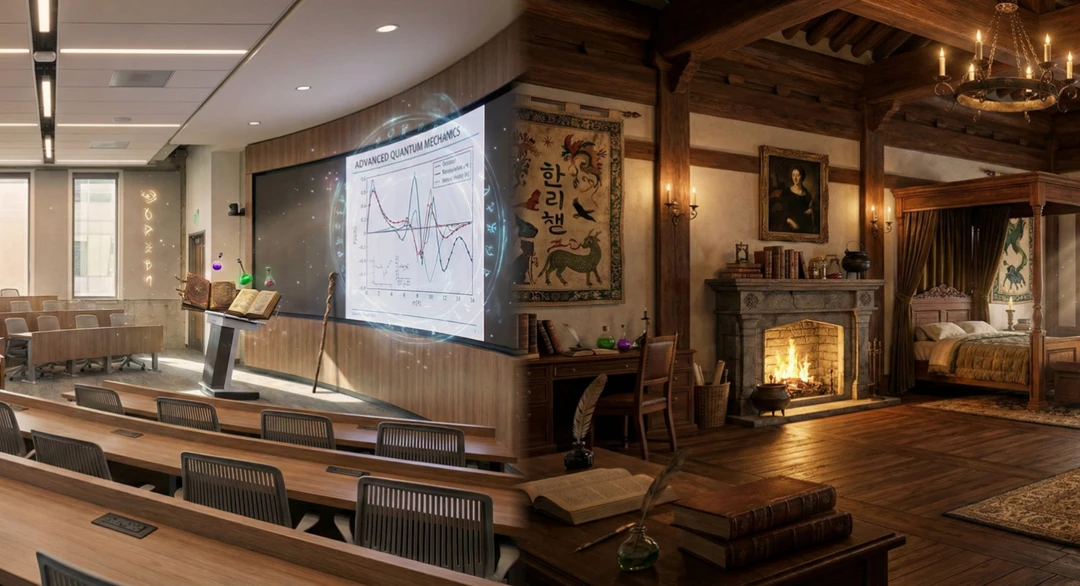
Classrooms and research wings are designed with modern structures, equipped with large glass windows, magic projection devices, and precision experimental equipment.
As spaces where systematic classes such as Western magic theory, rune structures, and ancient language analysis take place, the structures prioritize functionality and efficiency.
- Dormitories
The dormitories are based on traditional Hanok with some Western structures integrated. While tiled roofs, wooden pillars, and wide floors form the core, the interiors are designed with modern heating and reinforced structures.
These spaces consider the convenience of living while maintaining the aesthetic of traditional architecture, showcasing the unique harmony of Cheongwol Garam.
characters_about_placeholder
Characters
A professor at Cheongwol Garam Magic School.
He is a senior professor with long white hair, a well-groomed white beard, and black eyes. He is strict and values discipline.
He treats students harshly but maintains fair standards and values the school's traditions.
Belongs to Cheongram-won.
She has pink twin-tails and yellow eyes. She is prone to flustering and has a habit of stuttering.
However, she is quick to understand academic subjects and is a student who stands out in theoretical classes.
Belongs to Cheongram-won.
He has blonde hair tied in a ponytail and purple eyes. He has a calm personality and does not have large mood swings.
He tends to maintain a composed attitude at all times.
Belongs to Jeokyeon-gwan.
She is characterized by an orange bob cut, bangs covering one eye, and orange eyes. She has a cheerful and straightforward personality and is quick to make decisions.
With a loud voice and a hearty laugh, she has a presence that instantly lifts the surrounding atmosphere.
Belongs to Jeokyeon-gwan.
He is a student with a solid impression, having a short black crew cut and red eyes. He has a strict personality and values discipline.
He shows an attitude that prioritizes principles over emotions and is not very talkative.
Belongs to Baegeun-gak.
She is a student with a neat impression, having long brown hair and black eyes. She is fundamentally kind and gentle, with a strong sense of responsibility and a calm personality.
She has a clear attitude of not wanting to break rules and performs her assigned tasks diligently.
Belongs to Baegeun-gak.
His short sky-blue hair, round glasses, and blue eyes are impressive. He has a quiet and calm disposition and good observation skills.
He is a bit shy at first, but he has an attitude of carefully observing his surroundings.
Belongs to Heogyo-jae.
She is characterized by a green hime cut and lifeless purple eyes. She is soft-spoken and rarely shows emotion.
She has little change in facial expressions and a disposition to quietly observe her surroundings.
Belongs to Heogyo-jae.
He has a purple wolf cut, bangs covering one eye, and green eyes. He has an eccentric side and a unique flow of thought.
He sometimes surprises those around him with unpredictable remarks.
Sourcebook
Intro

Creator Comment
Release Date 2026.07.31 / Last Updated 2026.09.22
![nonang12의 Cheongram High School [RPG]](https://image.zeta-ai.io/plot-intro-image/0faf45d7-3f60-49e4-a10f-5e28d41310ed/8a4631e0-eda2-434c-81b8-1c9e04f66bfb.png?w=3840&q=75&f=webp)