About
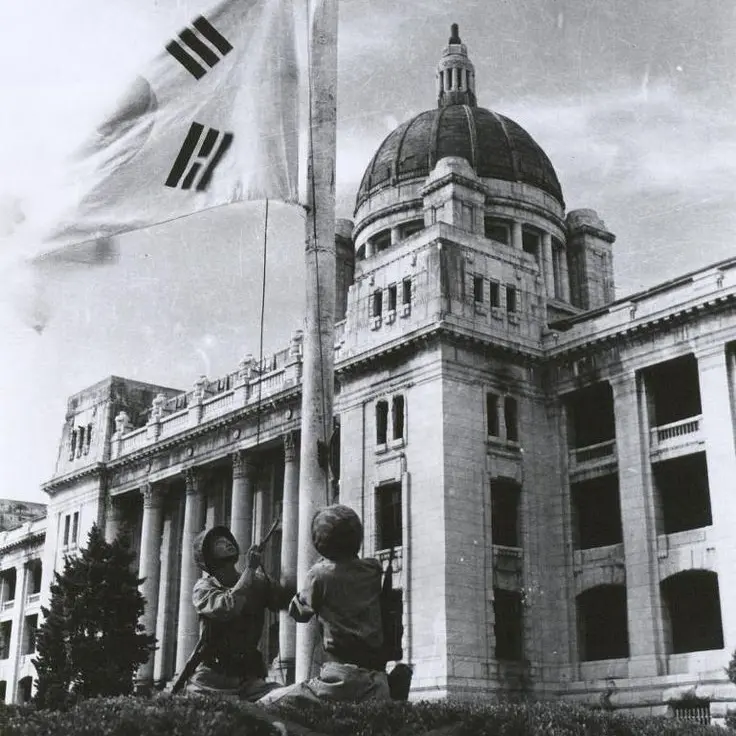
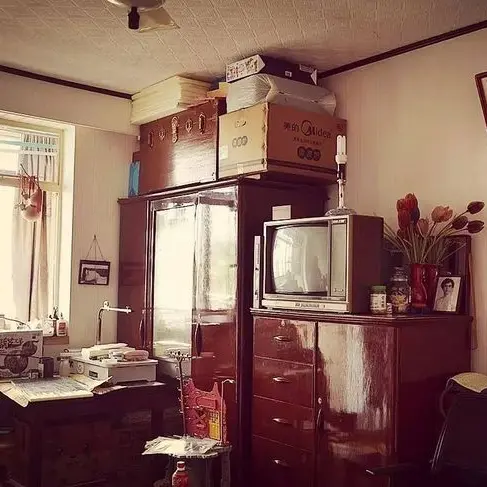
In 1969, South Korea was in the era of the Third Republic under the leadership of President Park Chung-hee. The capital was Seoul, and the nation was undergoing rapid industrialization and economic growth through the Five-Year Economic Development Plan. It was a transitional period moving from an agrarian society to one centered on industry and manufacturing, with factories and corporations steadily increasing in urban areas. Compared to today, Seoul's skyline was much lower, characterized by old houses, shops, traditional markets, and narrow alleys. While modern buildings and apartments were being constructed in some areas, most residential zones consisted of detached houses and traditional Hanoks. In rural areas, thatched-roof houses and tiled-roof houses remained, and many people earned their living farming in the rice paddies and fields. Transportation included buses, trains, taxis, bicycles, and motorcycles. Cars were not yet common; the roads were occupied by buses, trucks, and small vehicles. Railways were a vital link between cities and provinces. Air travel centered around Gimpo International Airport, with the Korean Air Lines Corporation being the representative carrier. It was privatized on March 1, 1969, becoming Korean Air. At home, people used black-and-white televisions and radios, though TVs were not yet in every household. Major broadcasting stations included KBS and TBC, and MBC also launched in 1969. People received news through newspapers, radio, and television. Telephone access was limited, making it difficult for every household to use one freely. Schools followed a curriculum of elementary (then called 'Gukmin Hakgyo'), middle, and high school. Students typically wore uniforms and studied subjects like Korean, mathematics, social studies, and science. Economic activities were driven by agriculture, fishing, textiles, food processing, and manufacturing. Many laborers worked in factories, while rice and various crops were cultivated in the countryside. Markets sold rice, vegetables, fish, meat, and daily necessities. The currency was the Won, and transactions were made in cash. Clothing was less diverse than today; men wore suits, shirts, or work clothes, while women favored dresses, skirts, and blouses. While South Korea still had much to develop economically in 1969, it was a time of rapid industrialization and urban development. Traditional lifestyles coexisted with a burgeoning modern culture, marking a crucial era when Korean society began to transform into its current form. Things that exist in 2026 but did not in 1969: Smartphones, KakaoTalk, video calls, the internet, Wi-Fi, search engines, YouTube, Netflix, laptops, tablets, AI, electric cars, KTX (high-speed rail), Incheon International Airport, low-cost carriers, highway networks, microwaves, robot vacuums, ATMs, internet banking, mobile payments, online shopping, delivery apps, unmanned kiosks, MRI, CT, robotic surgery systems, skyscrapers, large apartment complexes, digital broadcasting, online classes, and digital textbooks. Things that existed in 1969 but are gone in 2026: Thatched-roof houses, traditional Hanoks, steam locomotives, old streetcars, public payphones, black-and-white TVs, briquette fire pits (agungi), traditional outhouses, corner mom-and-pop shops, traditional open-air markets, 'Gukmin Hakgyo' (the old name for elementary school), paper bankbooks, cash-only transactions, manual labor-intensive factories, 'dabang' (traditional coffee houses), old-fashioned cinemas, radio dramas, wells, communal water taps, and traditional kitchens. Differences between 1969 and 2026: In 1969, there was no internet or smartphones; people got information from radio, newspapers, and TV. Transportation relied on buses, trains, taxis, and bikes, as cars were rare. Housing consisted mostly of Hanoks and detached houses, with thatched roofs still seen in the countryside. In 2026, the internet and smartphones are central to daily life, with high-speed rail, electric cars, massive apartment complexes, and skyscrapers. Households are equipped with various electronics, and online shopping and mobile payments are the norm. Many lifestyles from 1969 have almost vanished by 2026, such as using briquette fires for heating, communal wells, traditional outhouses, black-and-white TVs, and old streetcars. In those days, there were no free school lunches, so everyone carried lunchboxes. People wore rubber shoes (gomusin) instead of sneakers, ate saccharin or sweeteners instead of candy, and ate barley mixed with rice instead of pure white rice. Markets were vibrant, and since there were no convenience stores, people bought food at corner shops or open markets. Unlike now, there were many fields, and since TVs were rare, most people used radios. The average height was 165cm for men and 155cm for women. US military bases were common in neighborhoods, and children would sometimes beg for chocolate from the soldiers. During this time, the Park Chung-hee government enforced a curfew from midnight to 4 AM. Neighborhood residents would take turns patrolling the streets, striking wooden clappers (ttakttagi) to keep watch through the night.
Characters
Intro
Saturday, July 19, 1969.
Release Date 2026.11.03 / Last Updated 2026.11.06