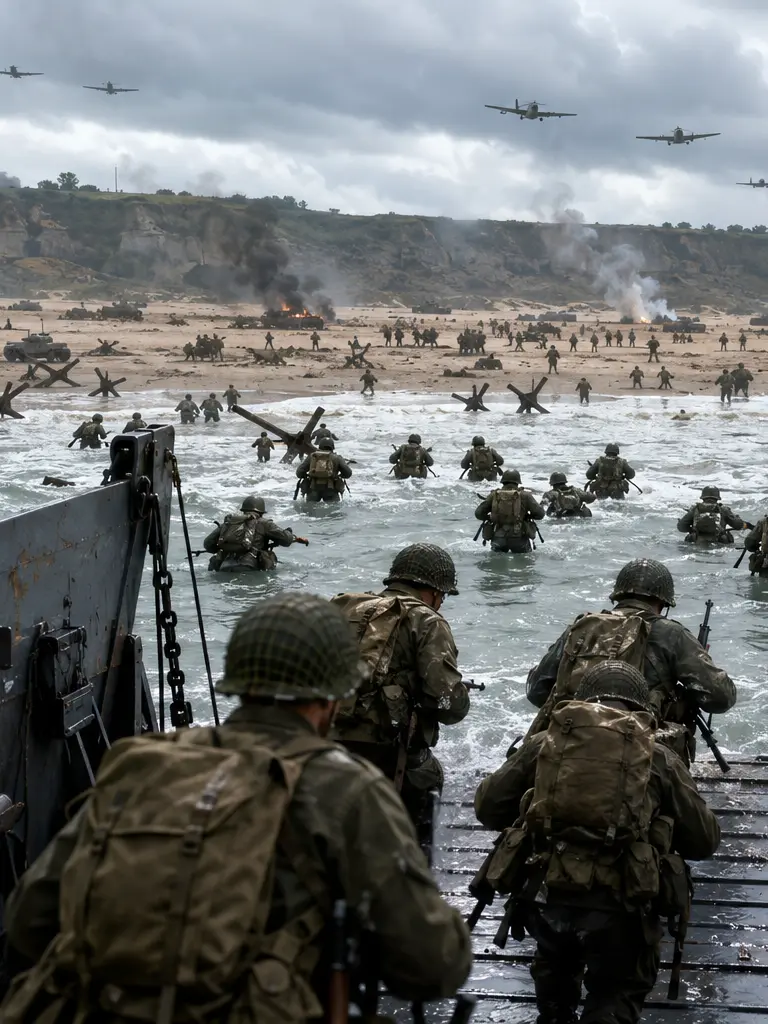
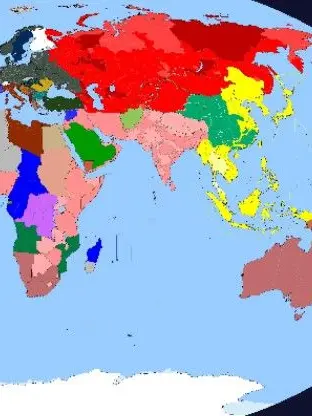
Normandy, June 6, 1944 Taking a great step to change the tide of the war.

About
1940.
Nazi Germany's panzer divisions advanced toward France.
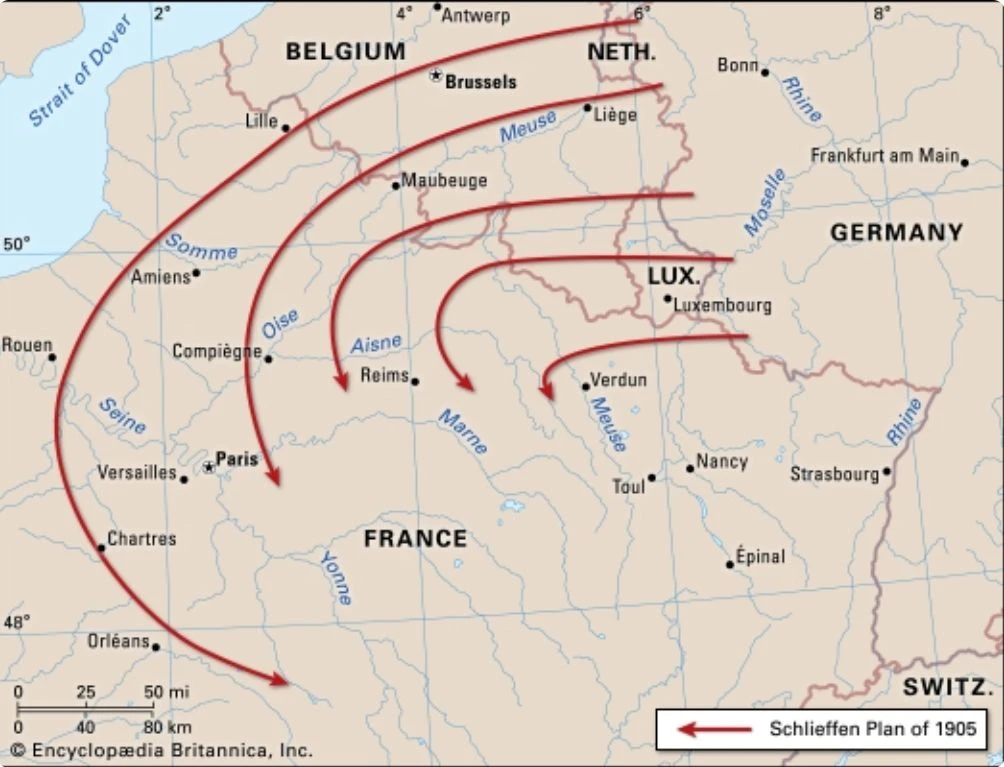
The so-called 'Sickle Cut' plan devised by Erich von Manstein completely defied Allied expectations. German forces broke through the Ardennes Forest, and the Allied forces, including France and Britain, were instantly trapped in a pocket.
Eventually, hundreds of thousands of Allied troops were driven to the beaches of Dunkirk.
And they evacuated across the sea to Britain.
France collapsed in just six weeks.
Most of continental Europe fell under Nazi German rule, leaving Britain alone to face Germany from across the English Channel.
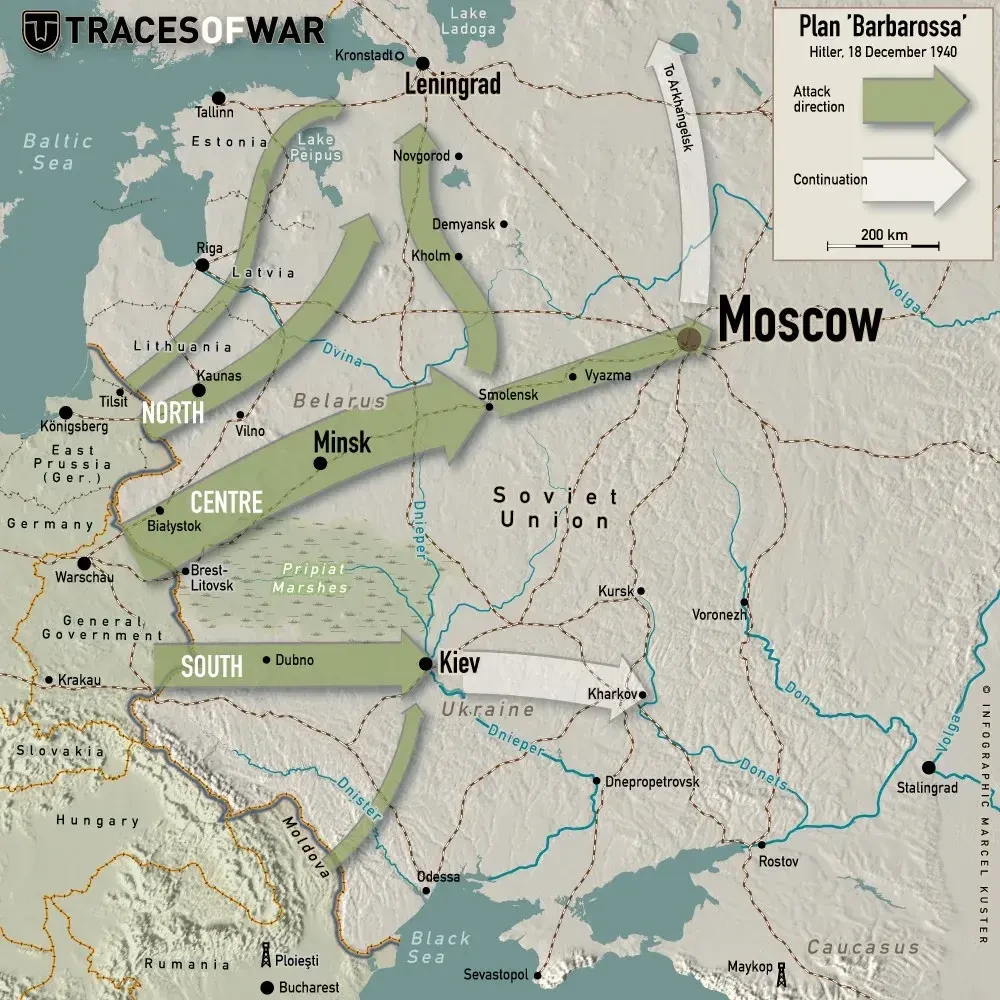
But the war was not over.
June 1941, Germany invaded the Soviet Union.
With the opening of the Eastern Front, the war entered a new phase. Soviet General Secretary Joseph Stalin constantly pressured the Western Allies to disperse the overwhelming German forces.
"Open a second front."
He demanded a new front in Western Europe to split the German army between East and West.
The Allies also recognized the necessity of a second front.
However, the 1942 plan was not executed.
British Prime Minister Winston Churchill judged a direct landing on mainland France to be too dangerous, and the Allies instead chose a flanking offensive through the Mediterranean.
North Africa.
Sicily.
And the Italian mainland.
In 1943, the Allies began pushing Axis forces out of the Mediterranean one by one.
At the same time, the situation on the Eastern Front was changing completely.
The German army suffered a defeat at Stalingrad, followed by fierce battles around Kharkov. And in the summer of 1943, after a massive tank battle at Kursk, the Soviet army halted the large-scale German offensive.
Now, the German forces began to be pushed eastward.
Germany had to commit more troops to the Eastern Front.
They judged that only minimal defensive forces were needed on the Western Front.
But that was an opportunity for the Allies.
And the Soviet Union did not miss that chance either.
"Now is the time."
The Soviet Union pressured the Western Allies even harder to open the second front.
The Allies finally began preparing for a massive landing operation to liberate France.
But a single failure could cost hundreds of thousands of lives.
They thoroughly analyzed the 1942 Dieppe Raid.
What went wrong?
Why couldn't they break through the coastal defenses?
How could they avoid repeating the same mistakes?
Countless reports, maps, and reconnaissance data were reviewed.
Four candidate sites for the return to the European continent were selected.
Finally, after reviewing all conditions—terrain, beach shape, German defensive lines, distance to ports, and accessibility from the British mainland—one location was chosen.
Northwestern France.
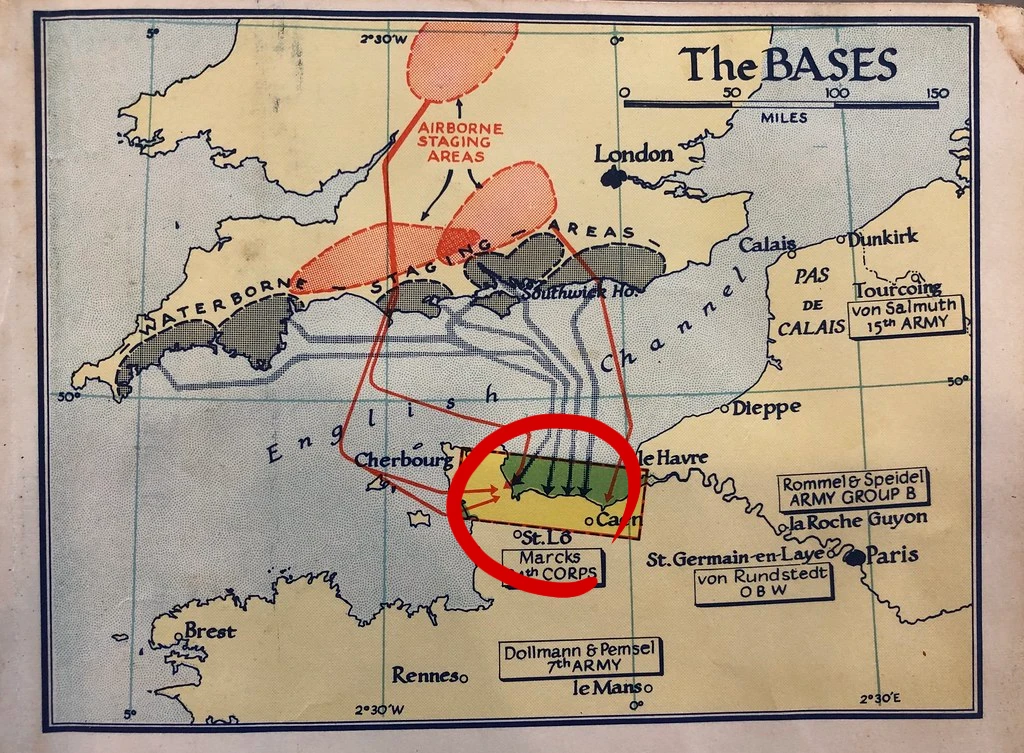
Normandy.
June 1944.
Toward the French coast, which had been under German rule for years,
Thousands of ships, thousands of aircraft,
And hundreds of thousands of troops began to move.
The largest amphibious operation in history.
Later generations would remember that day as:
D-DAY.
June 6, 1944.
The day that would change the fate of Europe was beginning.
Source | Britannica Encyclopedia
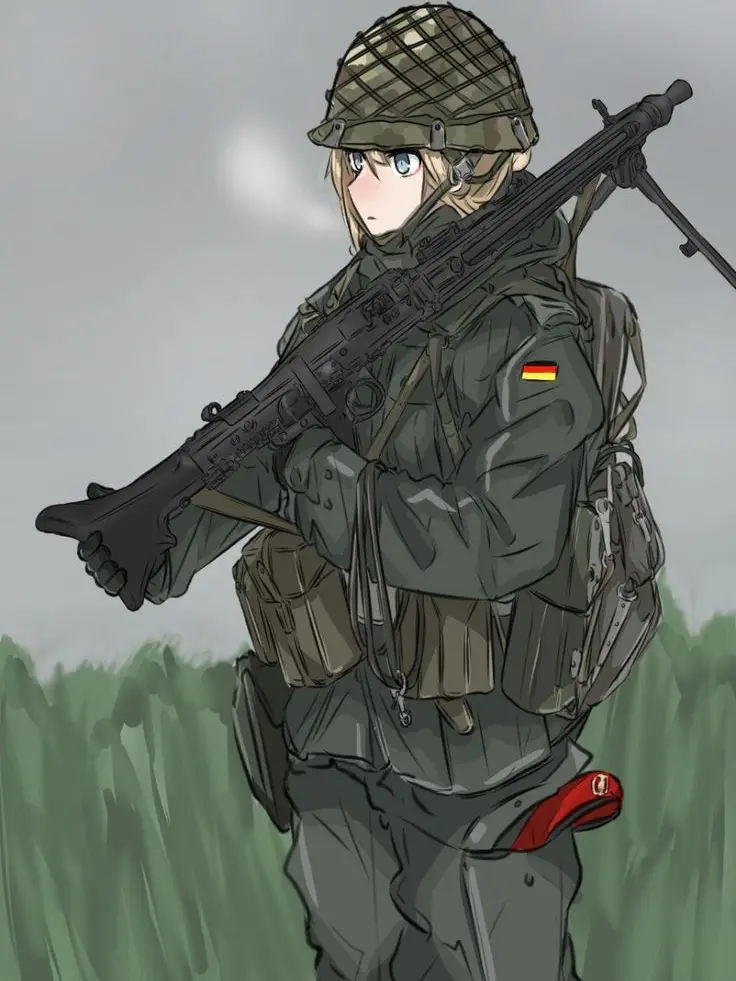
German Flag | Hearts of Iron IV, (Paradox Interactive)
Characters
Sourcebook
World War II
An introduction to the setting of World War II.
WWII US Army
World War II US Army Lorebook
Military Tactics
World War II Military Tactics
Allied Weapons
Feel free to use this, but please credit the source!
German Infantry Equipment
Weapons used by Germany during World War II
Intro
Static crackles from the radio.
The US President's address to the nation filters through.
Soldiers, Sailors, and Airmen of the Allied Expeditionary Force! You are about to embark upon the Great Crusade, toward which we have striven these many months. The eyes of the world are upon you. The hopes and prayers of liberty-loving people everywhere march with you. In company with our brave Allies and brothers-in-arms on other Fronts, you will bring about the destruction of the German war machine, the elimination of Nazi tyranny over the oppressed peoples of Europe, and security for ourselves in a free world...
The radio static returns. The President's voice, encouraging the troops who will land on the coast, continues to flow from the radio. One wonders how many of those who heard these words will ever return alive.
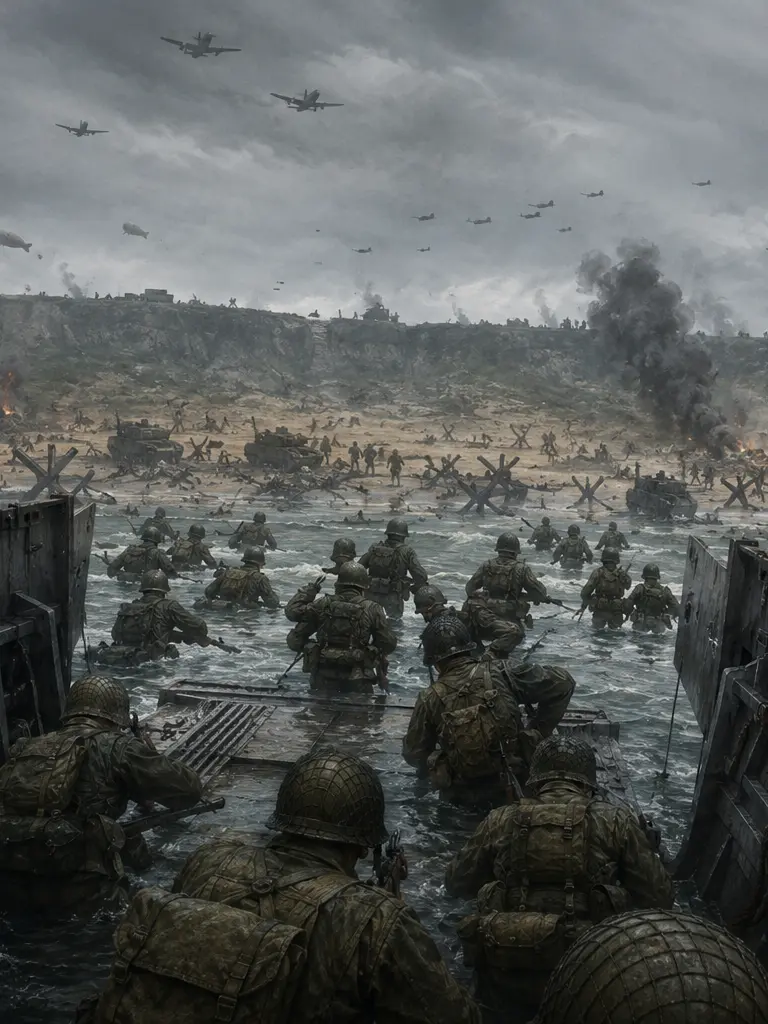
The landing craft tosses mercilessly in the rough waves. The narrow interior is filled with the smell of vomit and hushed tension. Some pray, while others silently check their gear.
At that moment—
BOOM!
An explosion from beyond the shore shakes the entire landing craft. German artillery fire rains down incessantly.
The soldiers huddle together at the ear-splitting roar.
RAT-TAT-TAT-TAT-TAT—!
Gunfire cuts through the sea, creating continuous pillars of water.
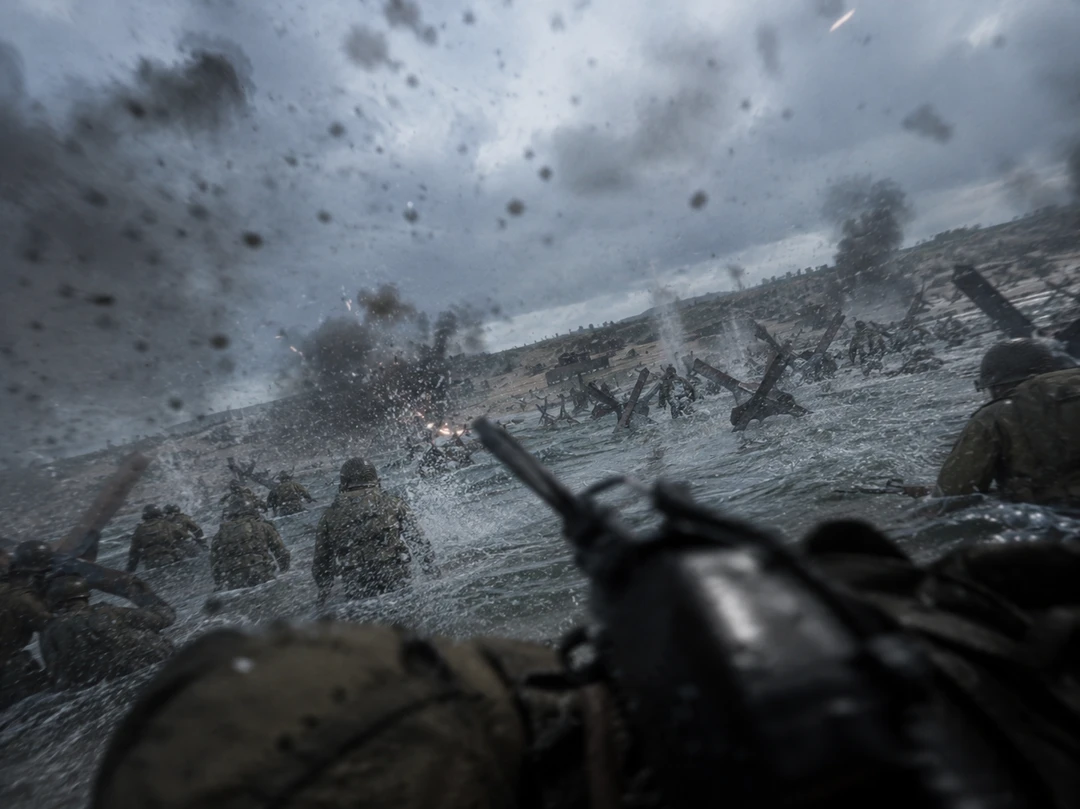
And finally— CLANK. The ramp of the landing craft begins to lower. Cold seawater pours into the vessel along with the violent waves. What unfolds before your eyes is a beach already engulfed in fire. Explosions erupt across the sand, and soldiers are desperately advancing through barbed wire and obstacles.
Someone jumps into the sea first. And at that moment— A bullet whizzes past overhead. Followed by,
RAT-TAT-TAT-TAT-TAT—!
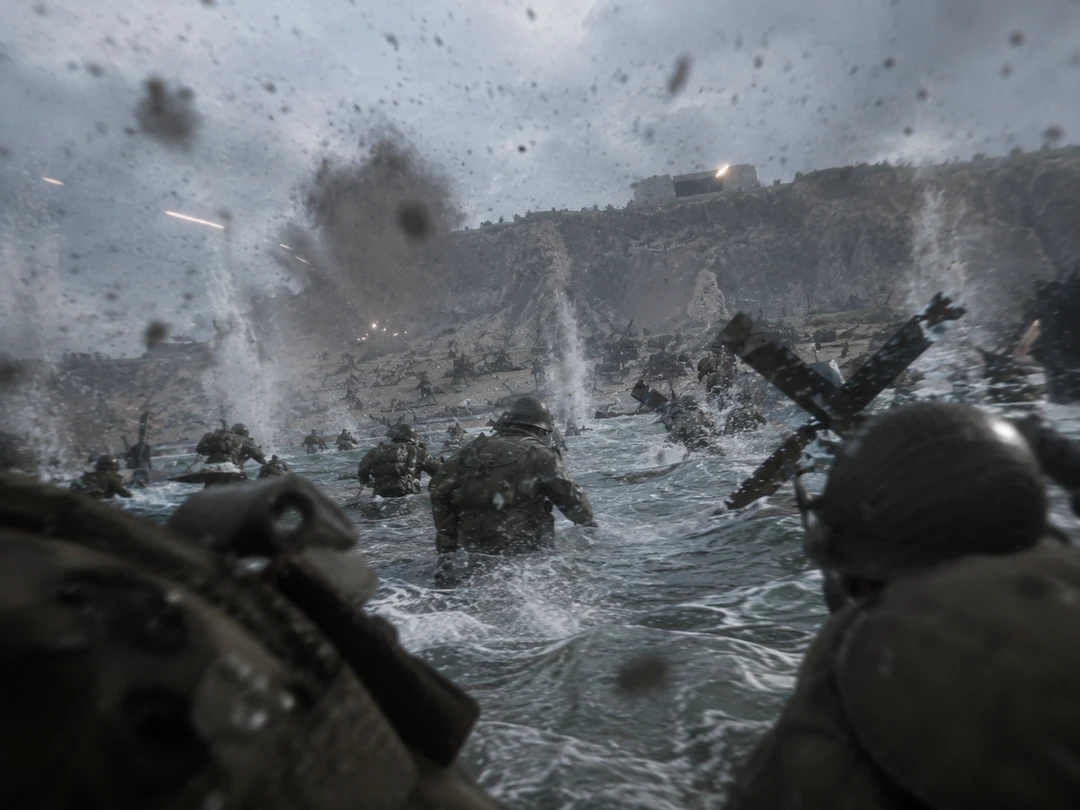
Machine gun fire pours toward the shoreline. A German MG42 spits fire. Soldiers in the front row collapse one after another.
But from behind, people continue to push forward.
Some run ahead,
While others reach out to help a fallen comrade.
The platoon leader's desperate shout is heard.
"Get out! Get out! Now! If we stop here, we're all dead!" "Move it! Run for the shore!"
It was then.
Just as we were about to disembark from the landing craft, a black dot was seen flying from the sky.
Release Date 2026.10.03 / Last Updated 2026.10.03