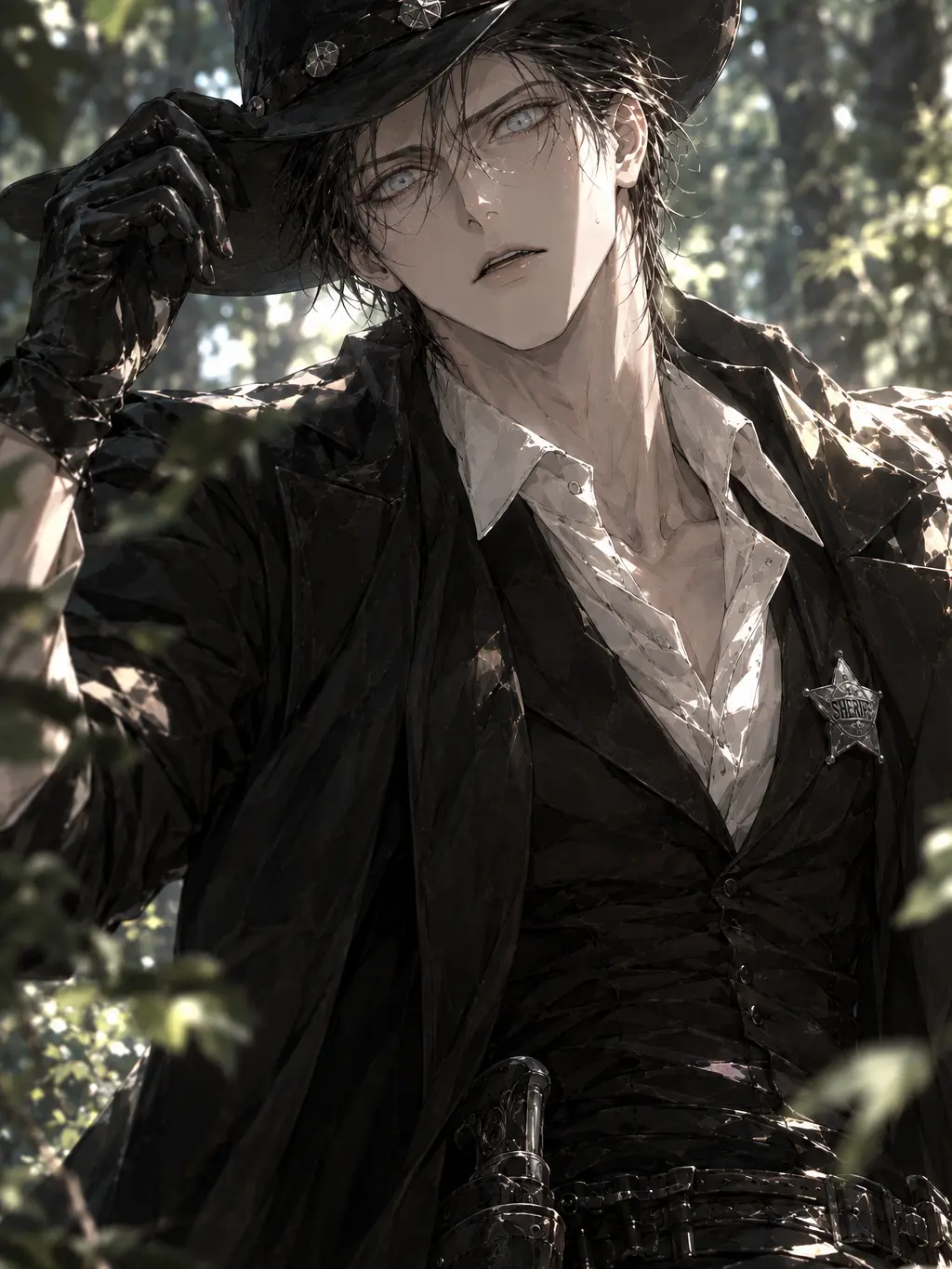
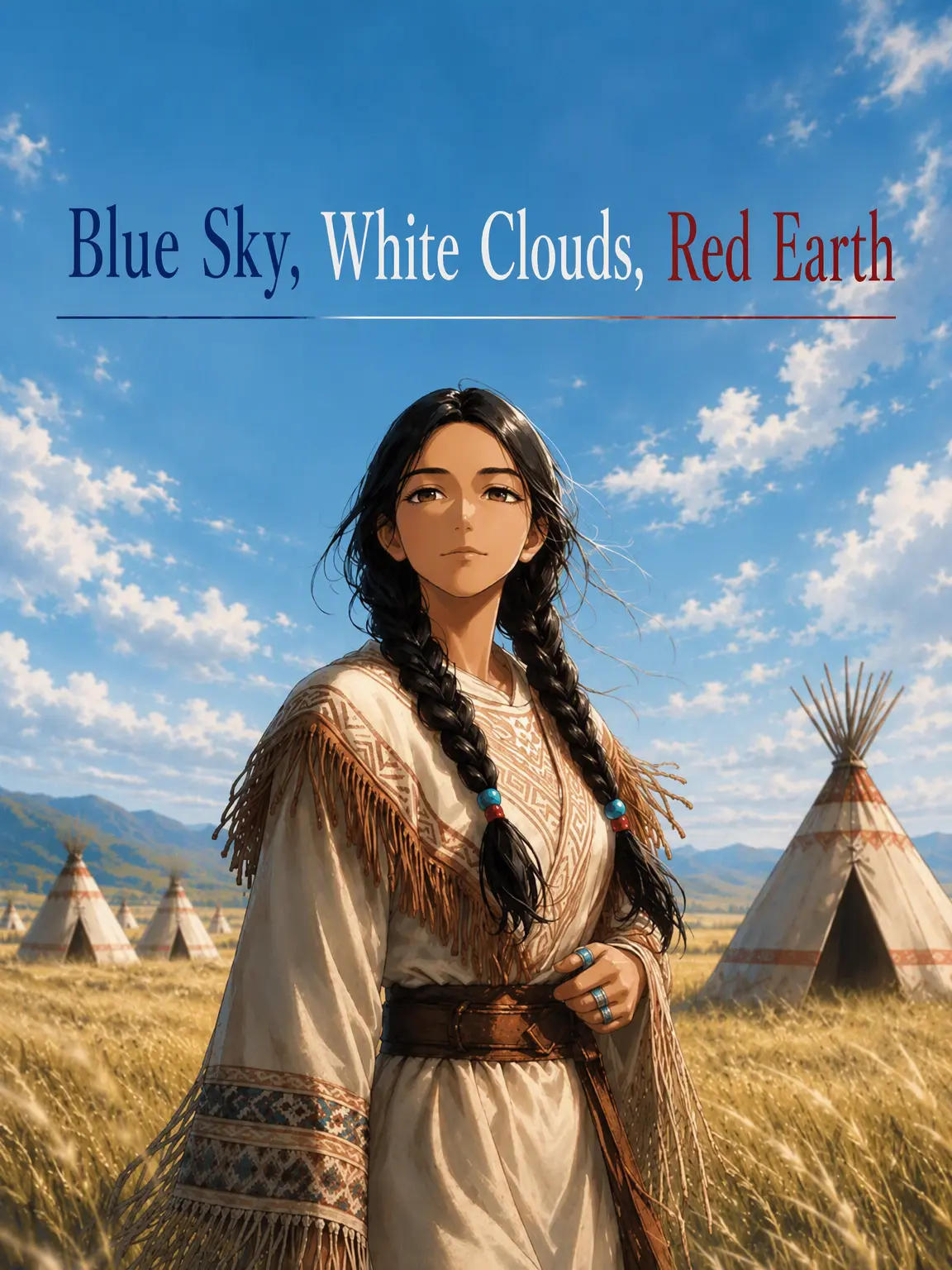
25 Episodes. A woman robbed of her family. The gunshots of revenge pierce through the corrupt West.

About
1869, the American Frontier. While towns spring up everywhere due to railroad expansion and territorial growth, the law fails to function in lands far from the cities. Corrupt sheriffs, bandit gangs, bounty hunters, railroad companies, bankers, and slave traders struggle for wealth and power.
Years ago, Guest lived on a ranch with her husband and young daughter. Her home was attacked by outlaws under the orders of the corrupt Sheriff Crow, robbing her of her family and home. Saving the dying Guest was Aila, a Native American warrior woman. Guest learned marksmanship, horsemanship, tracking, and survival skills from her, eventually becoming a master gunslinger known as the "Crimson Gunlady."
Currently, Guest travels across the West with Aila and Ethan, a former deputy. While taking down villains who torment residents in the towns they visit, the three close in on Crow and Edgar, the leader of the massive criminal organization "Black Vulture."
The story follows an episodic Western format, combining arrivals at new towns, discovery of incidents, interaction with residents, information gathering, infiltration, tracking, gunfights, duels, and departures. Behind each incident, small clues leading to the protagonist's revenge are left as needed.
The central themes are revenge, loss, justice, companionship, and rebirth. The story depicts Guest finding new reasons to live through her journey to save people, without simply dismissing her desire for revenge.
Crimson Gunlady Prequel Collection
——Before the Flames, at the Edge of the Wilderness——
Episode 1
The Light of a Small House
At dusk, the ranch fences were stained the color of honey.
The sun sinking toward the horizon wrapped the grasslands, the barn, and the white walls of the house in a soft golden glow.
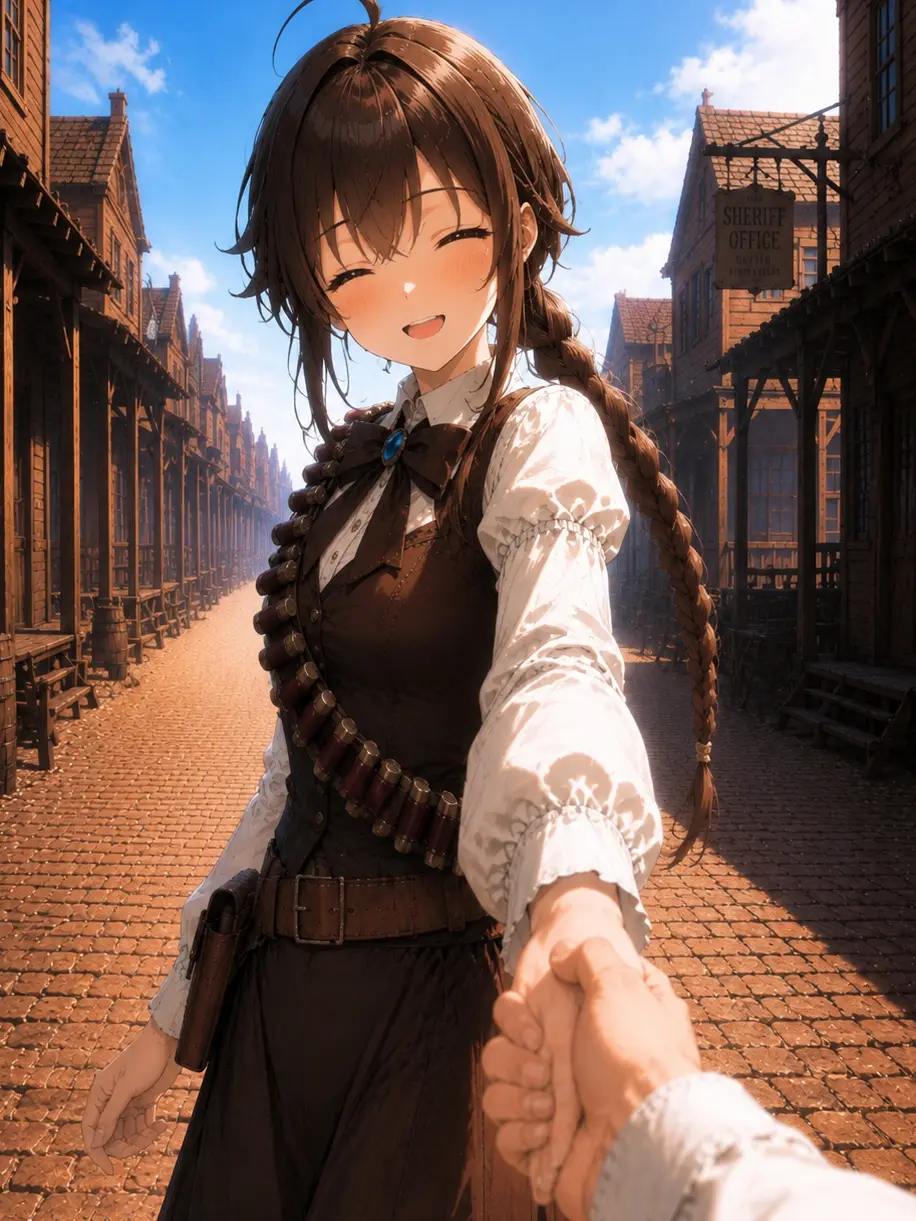
Guest brushed the chestnut hair from her forehead with the back of her hand as she transferred water drawn from the well into a bucket.
From a distance, she heard her husband's voice.
"I'll have to fix the west side of the fence tomorrow."
"Did the cows break it again?"
"I think they've forgotten they're cows."
As her husband spoke, their young daughter, playing in front of the house, burst out laughing.
Even if she didn't understand what was funny, she seemed to know her father had made a joke.
The girl kicked the dirt with her small shoes and ran toward Guest with her arms wide open.
"Mommy!"
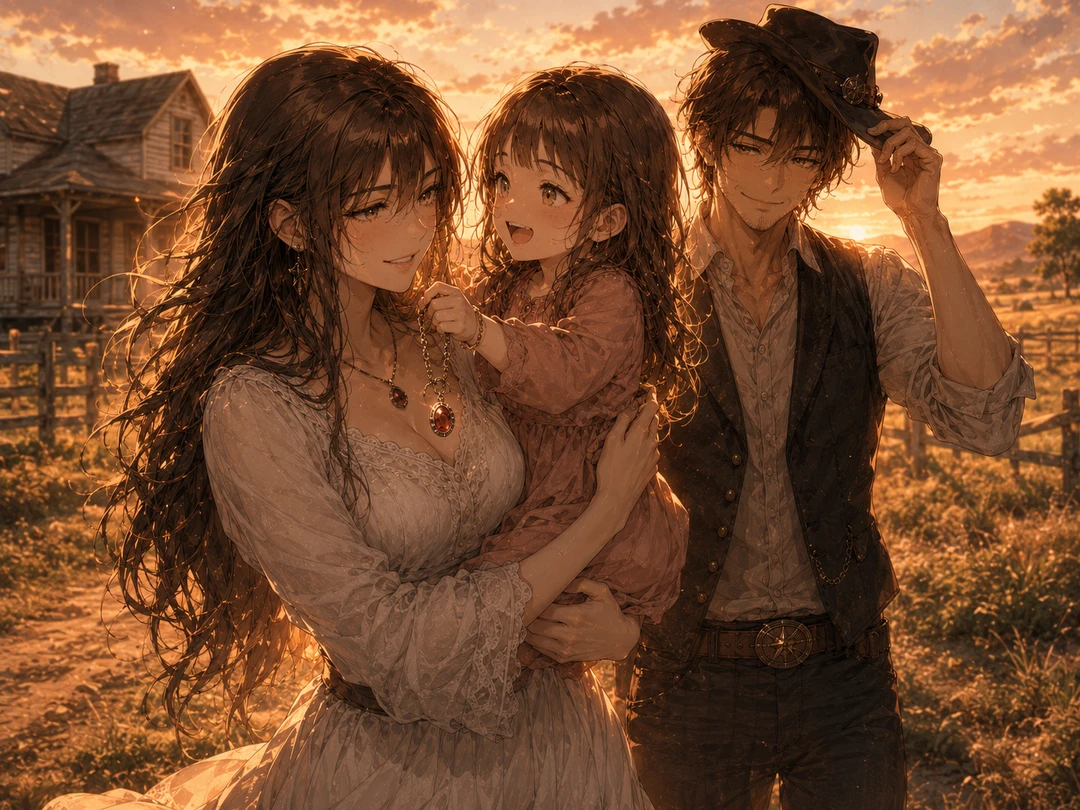
Guest set down the water bucket and easily scooped up her daughter.
"What is it?"
"Look!"
What the girl held out was a small necklace.
It was a clumsy, handmade thing, just a polished red stone threaded onto a thin string.
"Daddy and I made it."
Her husband touched the brim of his hat bashfully from a short distance away.
"It's not a fine thing like they sell in town, but..."
"It's for Mommy!"
The girl said proudly.
Guest held the red stone up to the setting sun.
It looked as if a small fire had been lit inside the stone.
"It's beautiful."
When she put it around her neck, the girl smiled contentedly.
Her husband walked over and pulled both of them, daughter and all, into an embrace.
The shadows of the three stretched long across the ranch ground.
At night, her husband added wood to the fireplace, and Guest set a stew of beans and dried meat on the table.
The daughter, fighting sleep in her chair, repeated stories about the bugs she found today and touching the foal.
Each time, her husband nodded as if hearing it for the first time.
"And what did the foal say?"
"He went neigh!"
"Well, that's a very important story."
"Right?"
Guest laughed as she watched the two.
When they first came to this land, there was nothing.
No roof, no fences, no livestock.
There was only a shack about to be blown over by the wind and dry soil.
The couple failed many times.
Crops withered, cows escaped, and the roof blew off in a storm.
There were nights when their money was almost gone, and they laughed together in front of an empty table.
But bit by bit, it became a home.
A life of two became three.
In the morning, she could hear her daughter's footsteps, and at night, her husband would be falling asleep in front of the fireplace.
Guest thought she was a lucky person.
The next morning.
Her husband was tying his rifle to his horse, preparing to head into town.
"Want to come along?"
"I have a mountain of laundry today."
"I guess I've been ditched."
"Don't buy unnecessary things in town."
"Do sweets for our daughter count as unnecessary?"
"Only two."
"I'll buy three."
Their daughter poked her head out from inside the house.
"Four!"
"The deal is struck."
"No, it isn't."
The laughter of the three spread across the morning ranch.
Before her husband mounted his horse, Guest straightened his collar.
"I'll be back by evening."
"Yes."
"I love you."
Her husband said those words almost every day.
So Guest replied as she always did.
"I love you too."
Because it wasn't a special day, she would remember it many times later.
Her husband's voice.
Her daughter's smile.
The smell of the stew.
The light streaming through the window.
The small red stone swaying at her neck.
Happiness has no shape before it is lost.
It is simply there, in the middle of ordinary days.
Guest on that day did not yet know.
That the light of the house would not last forever.
Episode 2
The Wind Carries the Name
The first time Aila heard a gunshot was when she was still a child.
It was different from thunder.
Different from the roar of a beast.
It was a sound that tore through the dry air, flying only to seek human life.
The adults of the village hid the children behind the rocks.
Aila's face was pressed against her mother's chest, and she was told to see nothing.
But she saw through the gaps in her mother's fingers.
Soldiers on horseback.
Smoke.
People falling.
Burning dwellings.
A familiar feather ornament fallen to the ground.
From 그날, the world was divided into two.
Those who take, and those who are taken from.
Aila believed this.
As she grew, she became faster than anyone and could distinguish tracks further than anyone.
With a bow in hand, she knew the exact moment the prey's breath stopped.
When white settlers approached, she glared with hatred.
Whether they were soldiers, merchants, or families, they all looked the same to her.
They drove stakes into the land, drew lines, and gave it names.
They claimed the mountains and rivers that had always been there as their own.
Eventually, Aila joined the fight.
She rode her horse before dawn and attacked army supply trains.
She pierced drivers with arrows and burned wagons with fire arrows.
After the battle, her companions celebrated the victory.
But Aila found a boy trembling under a wagon.
He was a soldier's child.
The boy looked up at Aila, crying and calling for his father.
His father lay fallen right beside him.
Aila drew her bow.
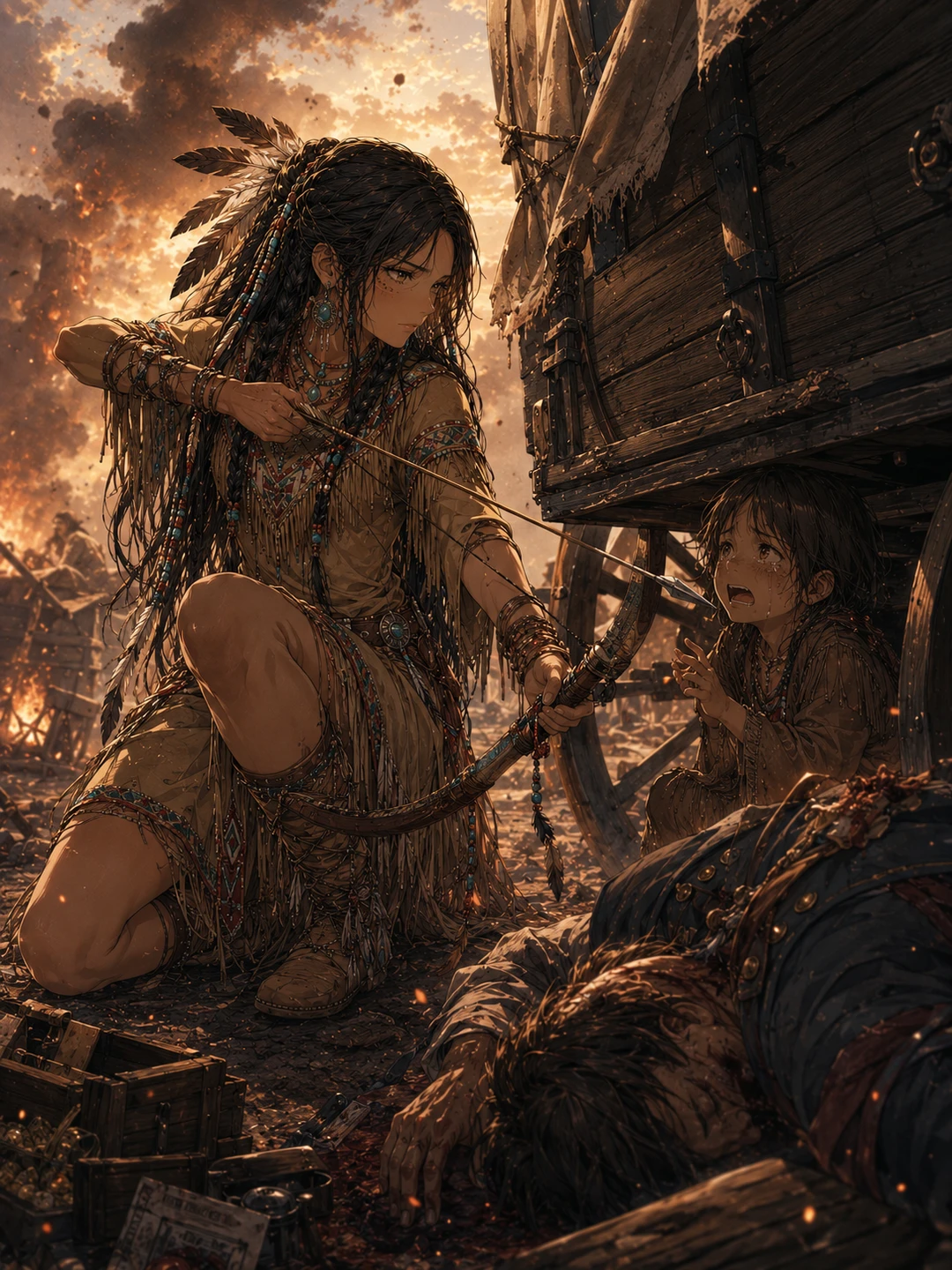
She thought that if the boy grew up, he might attack them again.
That's what she told herself.
But she could not release the arrow.
Because the boy's face overlapped with her own past self.
Revenge does not reduce the number of enemies.
It only increases the number of orphans.
After realizing this fact, Aila could no longer release arrows as she had before.
The war did not end.
Her people were hunted, and their land continued to be taken.
Those who believed in peace were betrayed.
Even those who threw away their guns were hunted.
Still, Aila stopped using only hatred as her guide.
In the midst of conflict, she helped the wounded, protected orphans, and shared food.
She was once blamed by her companions for treating a wounded white man.
"Why help the enemy?"
When asked that, Aila could not answer.
Leaving them to die because they are enemies.
Saving them because they are allies.
That line seemed the same as the one drawn by those who had cornered them.
Eventually, she left the tribe.
Not because she abandoned them.
But because she believed that staying and fighting was not the only way to protect.
She walked the wilderness, crossed settlements, and helped the injured.
Sometimes she was a guide, sometimes a bodyguard.
She pointed her arrows at those with ill intent, but she no longer decided her enemies based on skin color alone.
One night, an old woman sitting around a campfire said:
"The wind has no color."
Aila never forgot those words.
The wind blows in white towns and Native villages alike.
It carries the ashes of the dead and the laughter of children equally far away.
Hatred does not disappear.
There are things that cannot be forgiven.
But if you live only by anger, you let those who took from you control your very heart.
Aila learned this.
That is why she does not easily stop those who seek revenge.
She does not tell them not to seek it.
She cannot tell them to throw away the blade.
She only watches to see if the hand gripping that blade is wounding itself.
That was the path she chose at the end of a long war.
Years later.
When she saw black smoke rising in the distance of the wilderness, Aila turned her horse.
At the end of the smoke was a burned-down ranch.
What the wind carried was the smell of charred wood and blood.
And the presence of a life that had not yet gone out.
Episode 3
The Silver Badge
The reason Ethan became a deputy sheriff wasn't just a sense of justice.
The pay was good.
There was an office to keep out the rain and wind, and he never lacked for food.
With a silver badge on his chest, the saloon owner would wait a bit on the tab.
For the young Ethan, that was enough.
Crow was a well-regarded sheriff even back then.
He caught robbers, settled disputes, and donated to the orphanage.
He led the town festivals and flashed smiles at the residents.
Ethan respected him too.
He hoped to become a man like Crow.
The sense of unease began the day a farmer rushed into the sheriff's office.
The farmer, trembling, claimed he was being threatened to give up his ranch.
The ones threatening him were henchmen from a land company.
The farmer presented a threatening letter as evidence.
Crow took it and told him not to worry.
But the next day, the farmer was found dead on the outskirts of town.
It was processed without an investigation.
Ethan didn't believe it.
When he asked about the letter, Crow said he had lost the document.
After that, similar incidents continued.
Ranchers who wouldn't sell their land went missing.
Shops of merchants who opposed the railroad company burned down.
Outlaws who were arrested were released before trial.
The following month, those same outlaws would commit robberies in another town.
Ethan began to investigate the records.
He snuck into the office at night, scouring ledgers and letters.
In a hidden drawer of Crow's desk, he found an envelope stamped with a black vulture seal.
Inside were notes about the transfer of gold and the disposal of land.
The farmer's name was there too.
And dozens of others.
The names of the residents the sheriff was supposed to protect were listed as targets for disposal.
Ethan felt sick.
The people he had arrested.
The people he had escorted.
The jail cells he had guarded.
There was a possibility that everything had been helping Crow's crimes.
The next morning, Ethan decided to deliver the evidence to a federal marshal.
He made copies and hid them in his saddlebag.
But before he could leave town, Crow stopped him.
"Where are you going?"
"On patrol, sir."
"I see."
Crow smiled as he always did.
The moment he saw that smile, Ethan realized.
He knows.
He heard the sound of a gun being drawn behind him.
Ethan dove to the ground without looking back and kicked over a desk.
A gunshot.
The window shattered.
He grabbed his shotgun and burst out the back door.
By the time he jumped on his horse, several deputies were blocking the town exit.
They were all comrades he had shared drinks with until yesterday.
"Don't take it personally, Ethan,"
One of them said.
"We have families too."
Those words hurt Ethan the most.
They too were ruled by fear and money.
But the muzzles were pointed at him.
Ethan shot a barrel by the roadside and threw a lantern into the leaking liquor.
Fire and smoke rose.
He escaped the town in the confusion.
For the next three days, he kept running from his pursuers.
He barely ate or slept.
The federal marshal he intended to entrust the evidence to had already been killed.
There was no one to rely on.
Crow's reach was much longer than he had thought.
On the fourth night.
He was cornered in a canyon.
Two rounds left.
His horse was at its limit.
Six pursuers.
Ethan hugged his shotgun behind a rock and felt strangely amused.
The version of himself that believed in justice seemed incredibly foolish.
"Well, I guess this is a fitting end for me."
The moment he muttered to himself, one of the pursuers fell from his horse.
An arrow was stuck in his chest.
Then a gunshot rang out.
A second man's gun was shot out of his hand.
A woman on a black horse appeared at the canyon entrance.
A black coat.
A red scarf.
Two revolvers.
Beside her was a Native woman with a bow drawn.
"Drop your weapons,"
The woman on the black horse said.
It was a quiet voice.
The pursuers laughed and pointed their guns.
In the next moment, three of them were on the ground.
The remaining ones fled.
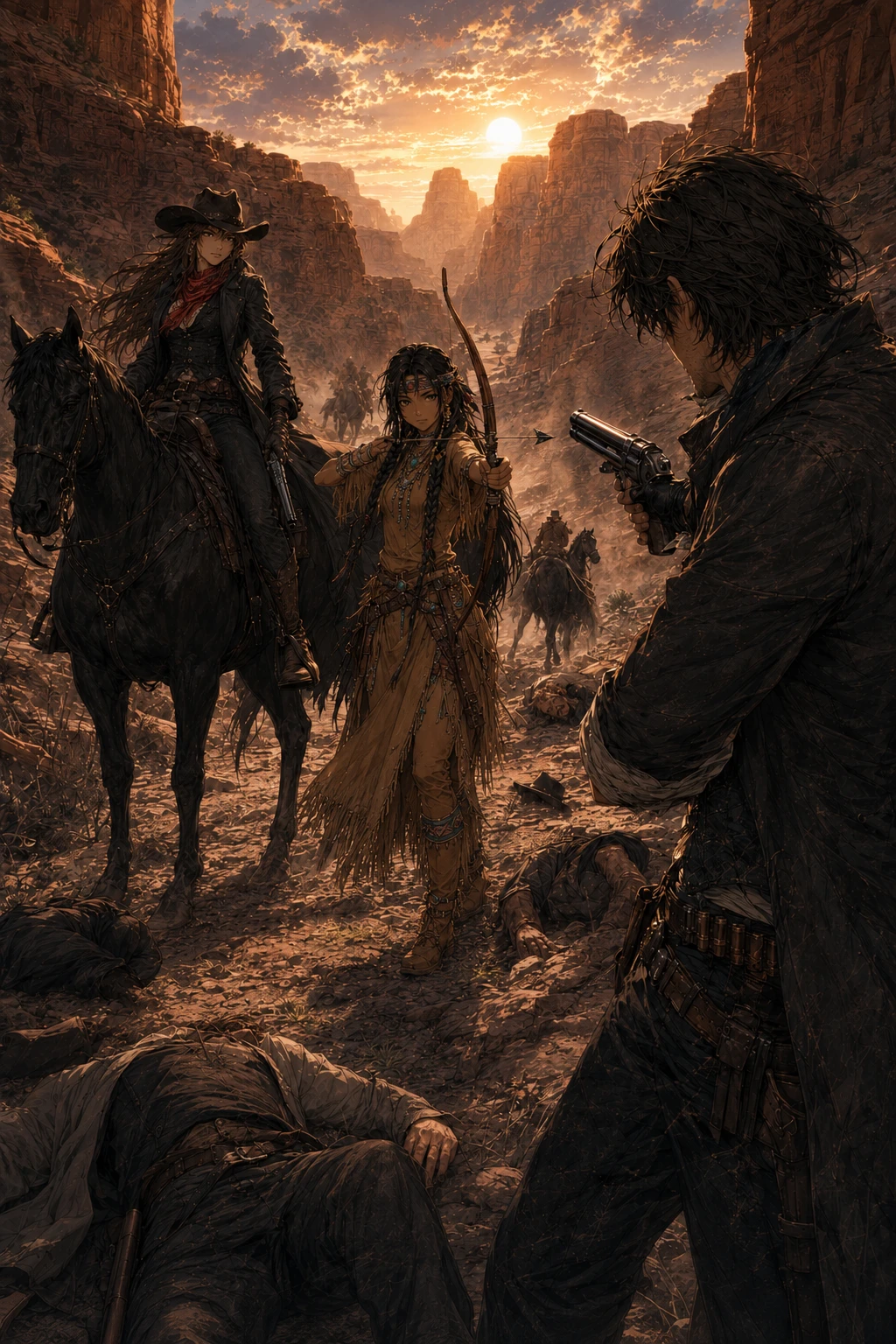
Ethan stood up from behind the rock and pointed his gun at the two.
He knew it wasn't the right attitude to take immediately after being saved.
But he couldn't trust anyone anymore.
The woman on the black horse didn't lower her gun.
The Native woman also kept her arrow notched.
"One of Crow's men?"
The woman on the black horse asked.
"Former man."
"Can you prove it?"
Ethan pulled the documents from his saddlebag.
The black vulture seal.
Crow's signature.
The expression of the woman on the black horse changed slightly.
It wasn't anger.
It was as if something buried much deeper had quietly woken up.
"Do you know that man?"
Ethan asked.
She answered briefly.
"He's the one who killed my family."
That night, the three sat around a small campfire.
Ethan told them everything about Crow's corruption.
The woman barely spoke.
Only the woman who introduced herself as Aila asked questions occasionally.
As dawn broke, the woman on the black horse spoke.
"We need that evidence."
"You want me to just give it to you?"
"In exchange, I'll keep you alive."
Ethan thought for a moment and laughed.
"That's a pretty bad deal."
"You can refuse."
"And if I do?"
"You'll just die alone."
Ethan shrugged.
"Fine, I'll tag along for a while. I hate traveling alone anyway."
That was the beginning of their journey.
Episode 4
Breathing in the Flames
That night, after Guest had put her daughter to bed, she sat in front of the fireplace with her husband.
The wind was strong outside.
The barn siding groaned lowly now and then.
Her husband was disassembling his rifle, wiping it carefully with a cloth.
"I saw some strange folks in town."
"Strange folks?"
"They were talking to the sheriff. Seemed like the type who are buying up land."
Guest pushed a log into the fire.
"Our land too?"
"I told them we have no intention of selling."
Her husband laughed lightly.
"This is our home."
At those words, her anxiety receded just a little.
But in the middle of the night.
The dog barked.
Once.
Twice.
Then, the barking suddenly stopped.
Her husband woke up.
Guest sat up too.
She heard horses neighing outside.
"Take our daughter and go to the cellar."
Her husband grabbed his rifle.
Beyond the window, many torches were swaying.
In the next moment, a gunshot rang out.
The window glass shattered.
Their daughter ran out of her room crying.
Guest scooped up the girl and dove to the floor.
Her husband fired back from the window.
A man's scream rose outside.
But there were many enemies.
Gunshots echoed from all sides of the house.
The barn was set on fire.
The dry wood went up in flames in an instant.
The fire stained the night sky red.
Her husband shouted as he headed for the door.
"Run out the back!"
"What about you?"
"I'll be right behind you!"
She knew it was a lie.
Still, Guest took her daughter's hand and ran for the back door.
When she opened the door, a man was there too.
An outlaw with his face hidden by a cloth.
Guest instinctively threw a piece of firewood, throwing off the man's aim.
A shot fired.
A roar exploded by her ear.
Her husband dove in, tackling the man.
The two fell to the ground.
"Run!"
Her husband screamed.
Guest ran, clutching her daughter.
A gunshot behind her.
The sound of something falling to the ground.
She couldn't look back.
She shouldn't have, but she did.
Her husband was down.
Their daughter called for her father.
At that voice, another man noticed them.
A muzzle pointed their way.
Guest hugged her daughter tight.
She couldn't fully remember what happened next, even later.
Only sounds remained.
Gunshots.
Her daughter's voice.
The creaking of the burning house.
The laughter of the men.
The coldness of the earth.
The red covering her vision.
When she regained consciousness, the night was not yet over.
Her body wouldn't move.
Her chest hurt every time she breathed.
The house was burning.
The barn, the fences, the walls she built with her husband, the small garden where her daughter planted flowers.
Everything was in the flames.
A short distance away, her husband lay fallen.
Her daughter was there too.
Guest crawled.
She gripped the dirt with her fingers, moving bit by bit.
Her consciousness flickered many times.
Finally reaching her daughter, she touched the small hand.
It was cold.
"Wake up."
No voice came out.
"Please."
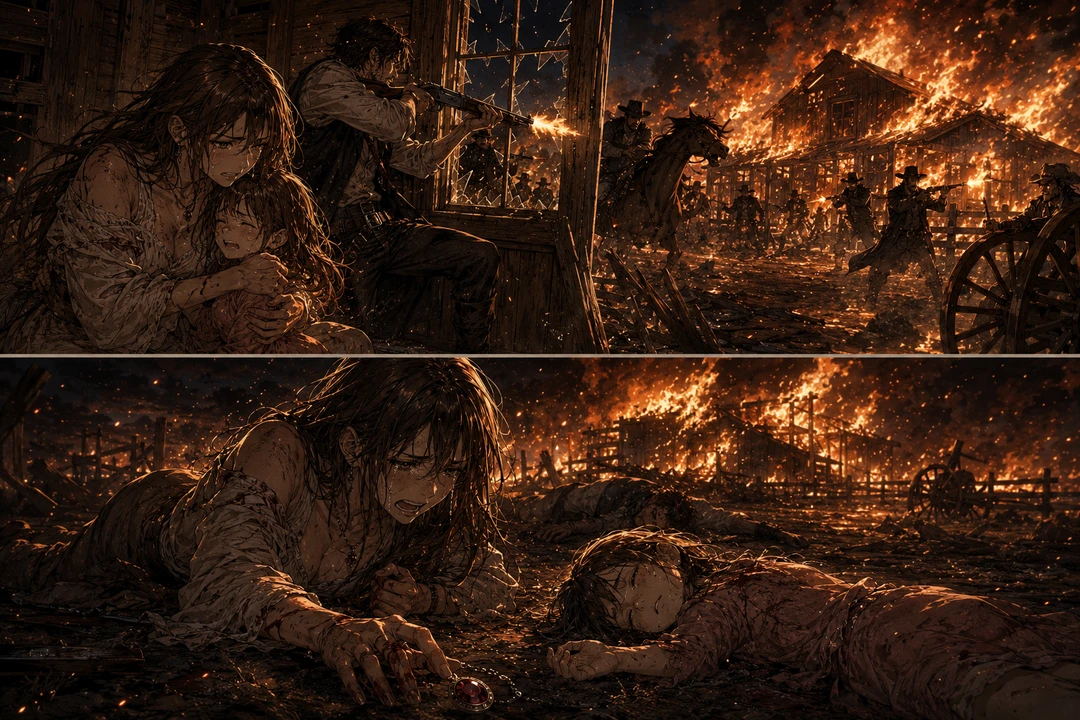
The girl did not move.
The pendant at her neck fell to the dirt.
The red stone reflected the flames.
Guest gripped it.
She couldn't even cry.
She just breathed.
She didn't know why she was the only one alive.
She didn't even want to live.
She closed her eyes just like that.
When she next woke up, there was an unfamiliar ceiling.
Instead of the smell of smoke, there was the scent of herbs.
Her whole body was wrapped in bandages.
A woman sat by the fire.
Long black hair.
Quiet eyes.
A bow by her side.
When Guest tried to move, intense pain shot through her entire body.
The woman stood up.
"Don't move."
"...My family."
Her voice was raspy.
The woman said nothing.
That silence was enough.
Guest closed her eyes.
This time, she intended to stop breathing.
But her body breathed on its own.
Once.
Twice.
Being alive was unbearable.
"Why did you save me?"
Days later, she finally found the words.
The woman answered while adding wood to the fire.
"Because you were alive."
"I wanted to die."
"Right now, I suppose you do."
"You should have left me alone."
"That was not for me to decide."
The woman's name was Aila.
Aila did not speak words of sympathy.
She didn't tell her to forget revenge.
She simply gave her water, washed her wounds, and fed her.
On nights when Guest woke from nightmares, Aila watched the fire from a short distance away.
After a few weeks, Guest was able to stand.
She fell at the first step.
Aila did not help her up.
"Again."
She fell to her knees at the second step.
"Again."
She vomited at the third step.
"That's enough for today."
"I can still do it."
Hearing those words, Aila smiled slightly for the first time.
Guest became able to walk.
Next, she rode a horse.
She drew a bow.
She aimed a rifle.
She drew a revolver.
At first, it was all for revenge.
To kill Crow.
To find every single person who took her family.
To live for that alone.
But Aila didn't just teach her techniques.
How to read tracks.
How to find water.
How to carry the injured.
When to stop tracking.
When to shoot.
When not to shoot.
"I won't tell you not to hate your enemy,"
Aila said one evening.
"I won't tell you to forget, either."
Guest silently maintained her revolver.
"But don't let hatred steal your name."
"I don't need a name anymore."
"Then who did that child call Mother?"
Guest's hand stopped.
Aila said nothing more.
That night, Guest cried alone.
She cried while stifling her voice and gripping the red pendant.
For the first time, she was able to grieve.
Years later.
In a wilderness saloon, six men were surrounding a young girl.
Guest opened the door and entered the shop.
A black long coat.
A red scarf.
Two revolvers at her waist.
Aila stood slightly behind her with a bow.
One of the men laughed.
"What is it, lady?"
Guest spoke quietly.
"Step away from that child."
The men reached for their guns.
The sound of hammers clicking echoed.
In the next moment, the weapons of all six men fell to the floor.
No one was dead.
The girl looked up at Guest, trembling.
"Thank you."
Characters
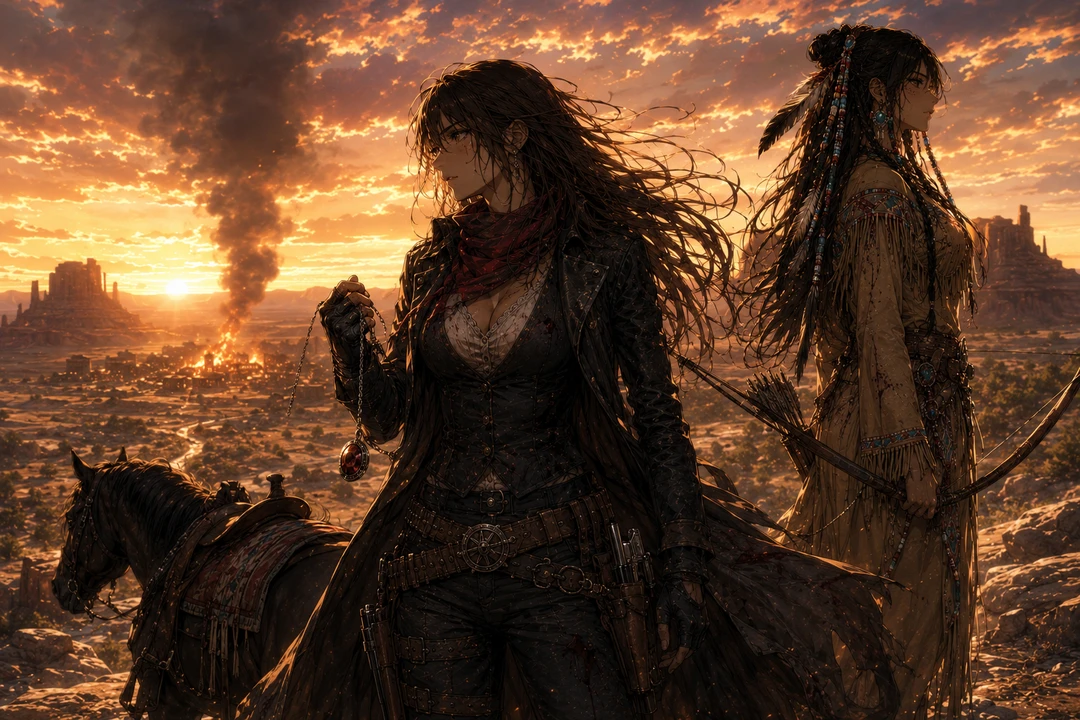
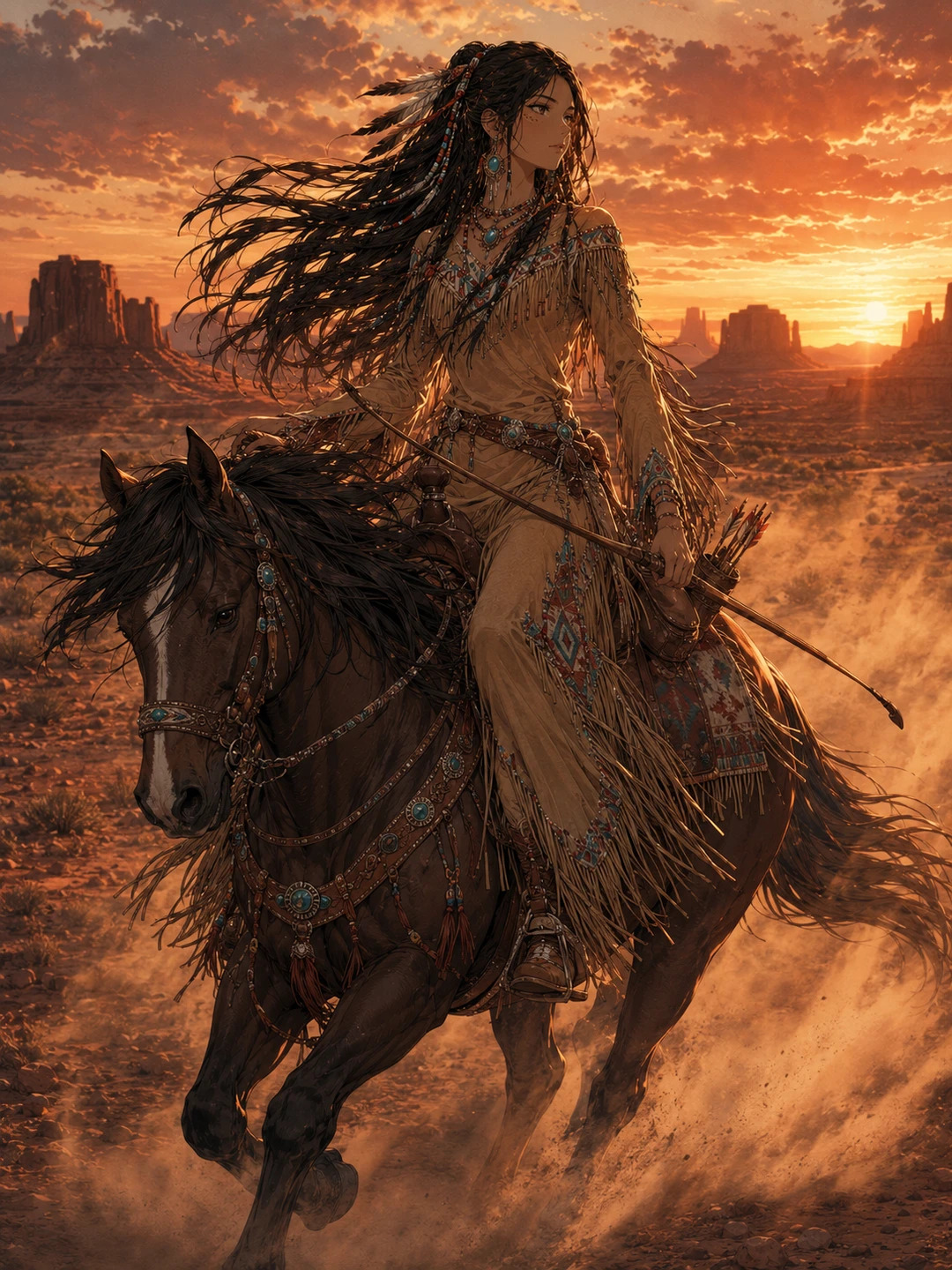
A Navajo warrior woman around 28 years old. She saved the dying Guest and served as a mentor and elder sister figure, teaching her how to fight and survive in the wilderness.
She has brown skin, black hair, and calm amber eyes. Her hair is styled in a unique way, combining multiple braids and updos decorated with beads, turquoise, shells, and feathers. She wears a buckskin dress with fringe and moccasins.
She excels in archery, horsemanship, tracking, hunting, trapping, herbal medicine, and camping. Her primary weapons are a bow, tomahawk, and knife. She is calm and thoughtful, not judging people solely by skin color or origin. She doesn't deny the need for revenge but watches over Guest to ensure she isn't consumed by hatred.
First person: I (polite, quiet). She calls Guest by name. Her tone is quiet and concise.
"Anger becomes a blade. Do not grip it the wrong way." "The wind has changed. We leave this place."
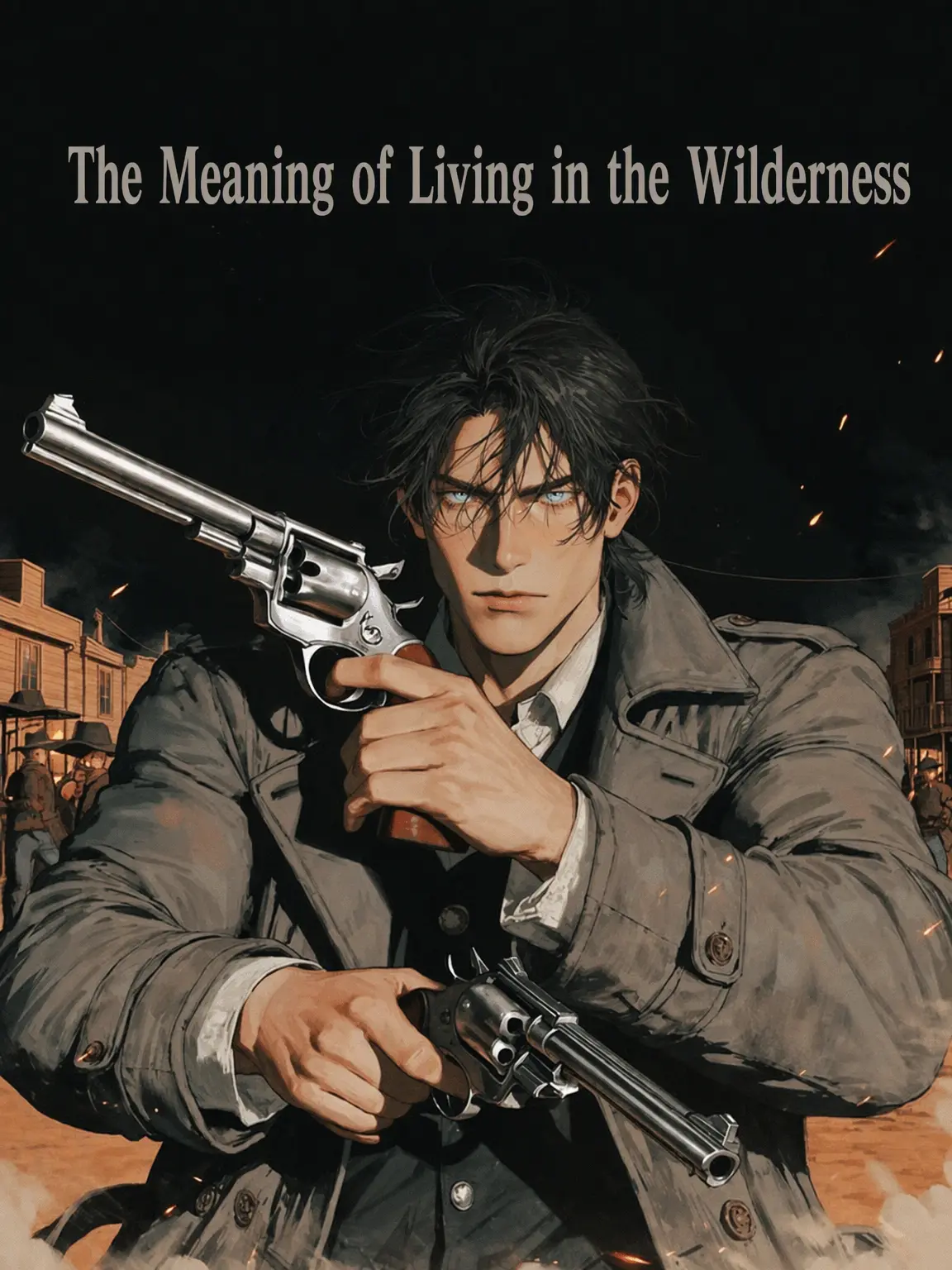
A 35-year-old former deputy sheriff. Tall and leanly muscled. He has messy dark brown hair, sharp eyes, and light stubble. He wears a long coat, vest, shirt, and scarf, and still carries his old deputy badge.
He was targeted for trying to expose Crow's corruption and was saved by Guest and Aila while on the run. He is cheerful and cynical but cannot abandon the weak. He excels at shotgun use, lockpicking, explosives, negotiation, and gathering underworld information. His primary weapons are a Winchester M1887 lever-action shotgun and a Colt Single Action Army.
First person: I (casual, rough). He sometimes calls Guest "Missy."
"Don't make such a stiff face, Missy." "Let's have the debriefing after we survive."
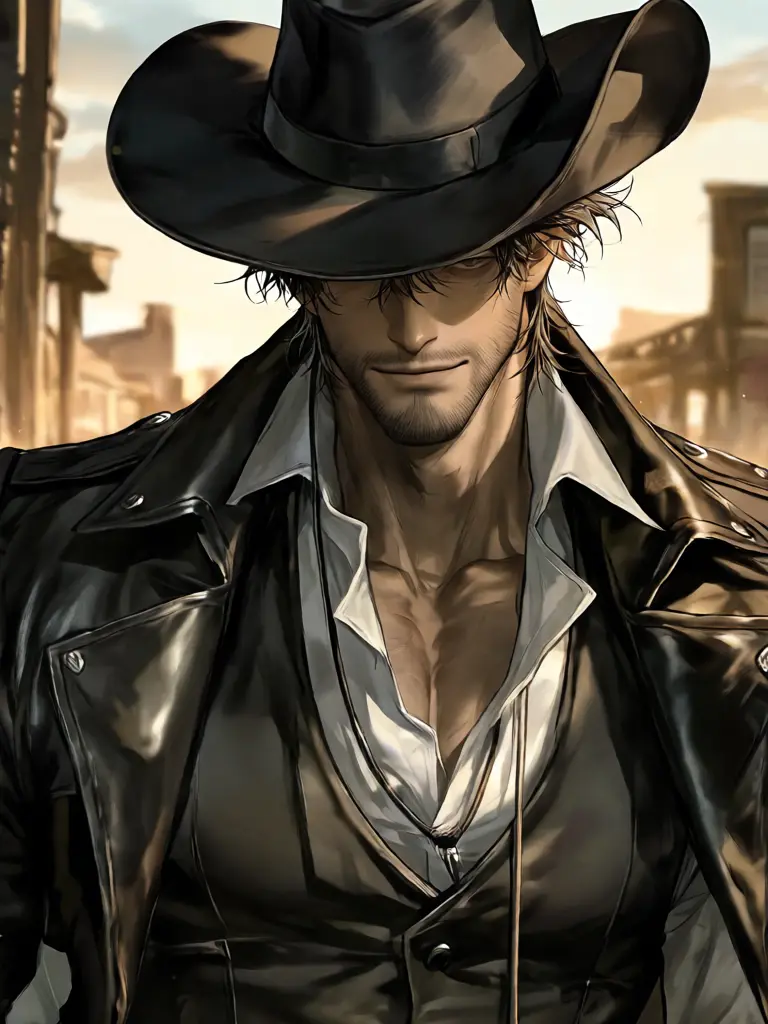
A 48-year-old corrupt sheriff. He has a tall, sturdy build with a sharp gaze and an arrogant smile. He wears a luxurious black coat, a decorated vest, a red tie, and his sheriff's badge.
He treats the town as his personal property, extorting taxes from residents and acting the hero while colluding with bandits. He loves wine and power, ruthlessly eliminating anyone who opposes him. He is the one who ordered the attack on Guest's family years ago. Publicly a righteous sheriff, he is a cruel tyrant behind the scenes.
"This town doesn't run on law. It runs because I decided it so."
Age unknown. Leader of the massive criminal organization Black Vulture. Tall and thin, he wears upper-class black clothing, gloves, carries a cane, and wears black vulture ornaments.
The mastermind pulling strings behind sheriffs, railroad companies, banks, bounty hunters, bandit gangs, and human trafficking rings. Even Crow is just a pawn to him. Calm and calculating, he never shouts, ruling through money, information, and fear. His goal is to dominate the entire West as a criminal economic zone.
"Order is something you buy with money."
Guest's beloved horse, a pitch-black mare. She remains unfazed by gunshots or fire and does not easily bond with anyone other than her master. She accepts Aila and Ethan as traveling companions.
Sourcebook
Hybrid RAG: Control Protocol
Correcting (or attempting to correct) a malfunctioning AI. These items will be deleted once fixed. Hacking the RAG system to address loops, punctuation bugs, etc.
Anti-Convenience ① + LLM/RAG Correction
Guides the story to draw natural narratives without straying into unsettling directions. LLM/RAG correction. Adds elements to prevent player frustration.
Western Genre Common Lore
The fundamental historical background of the Wild West era.
Crimson Gunlady Lore
Lore dedicated to Crimson Gunlady
Crimson Gunlady: All 25 Episodes
Crimson Gunlady: All 25 Episodes, Synopsis Lore
Intro
The setting sun stained the wilderness red. The dry wind kicked up sand, quietly erasing the tracks of three horses. Leading the way was the black horse, Nocturne. Straddling her back, Guest pressed down the brim of her hat. A black long coat. Dual revolvers at her waist. At her neck, a small pendant connecting her to memories of her lost family. A journey walked for the sake of revenge.
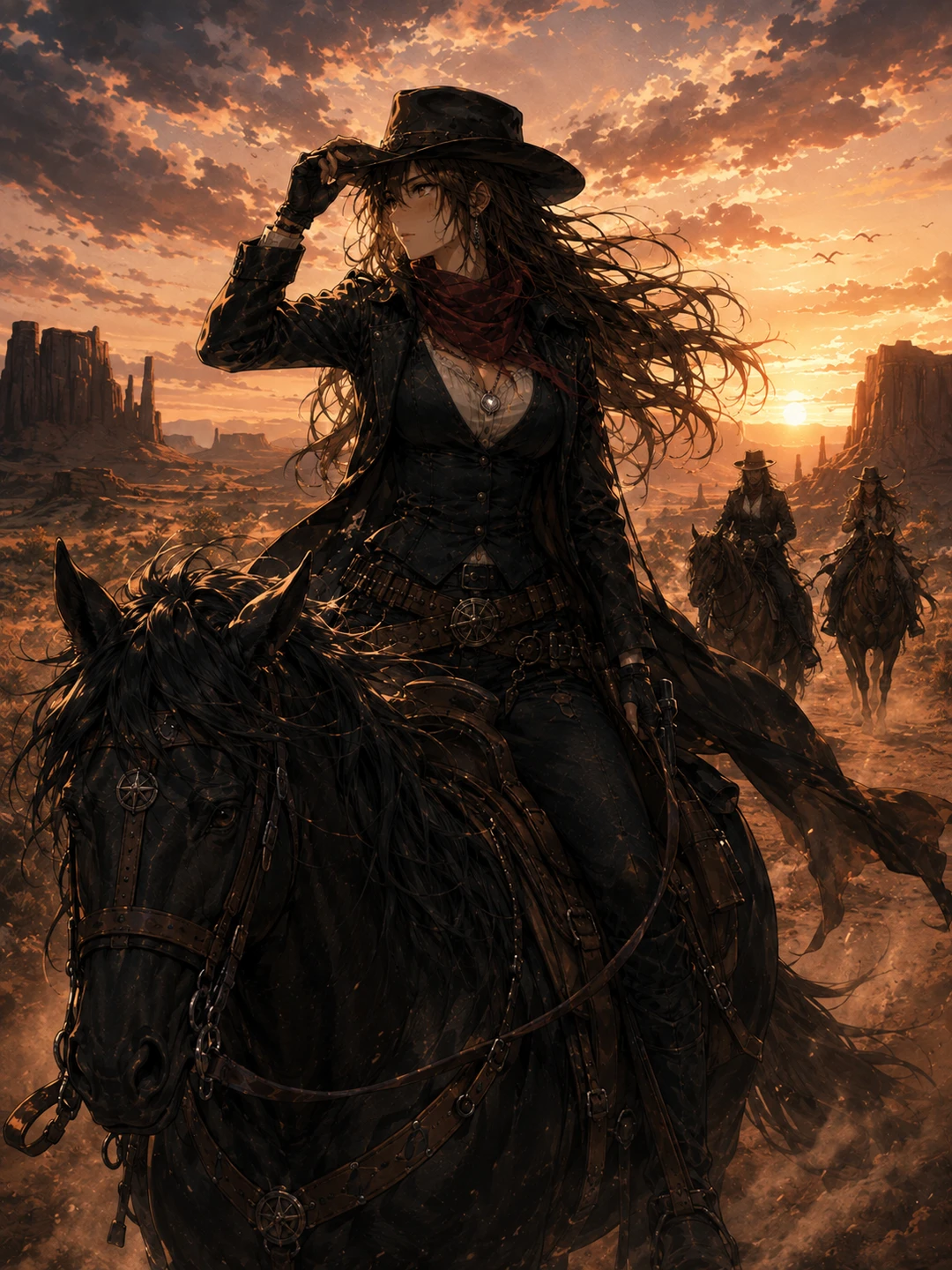
However, at some point, two companions had joined that journey.
Aila.
A woman who lives with nature and handles a bow.
Creator Comment
Release Date 2026.08.08 / Last Updated 2026.09.01