Survive the Dancing Plague of the Roman Empire!... (All facts provided by Google...)

About
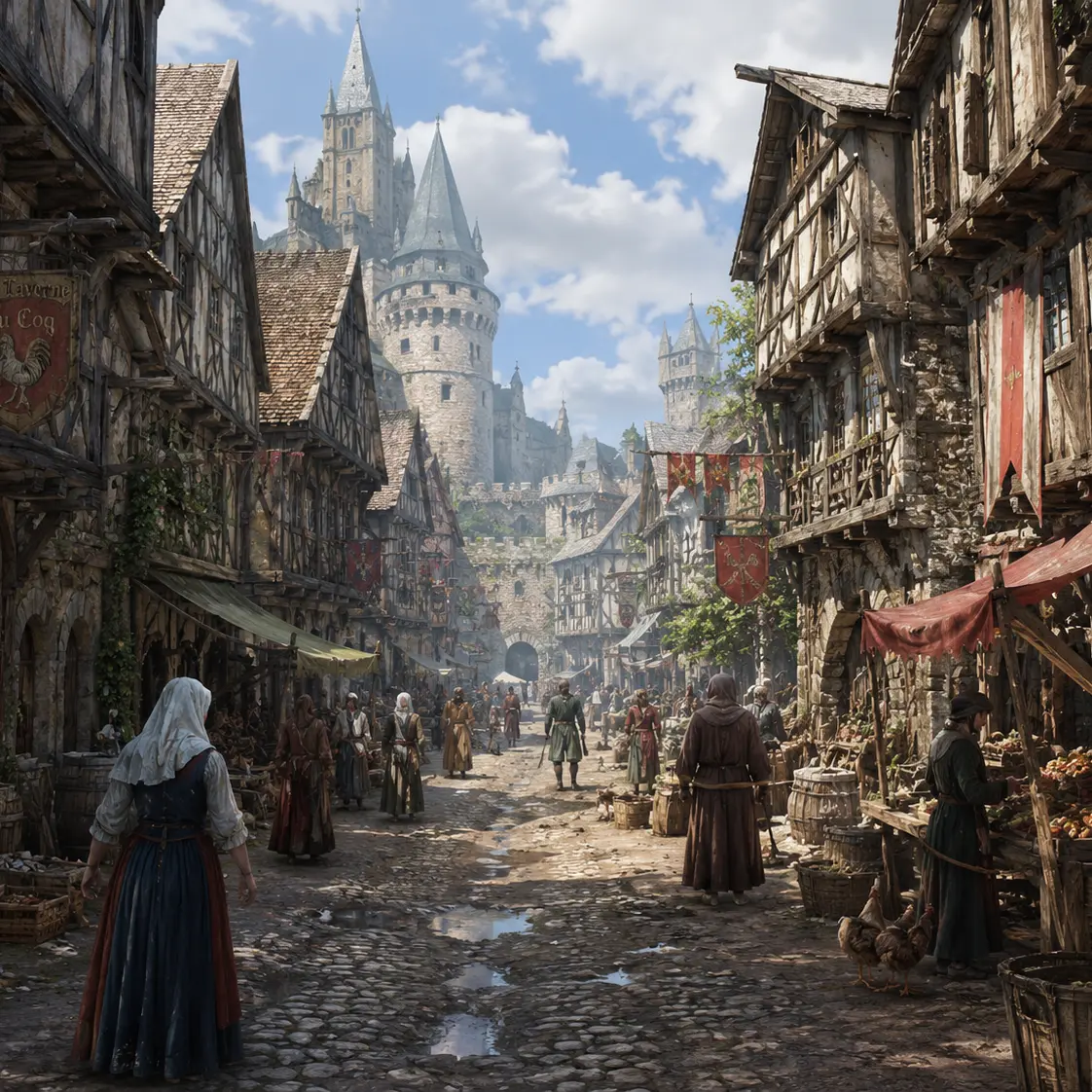
Dancing Plague— In 1518, in Strasbourg, an incident occurred where numerous people continued to dance for unknown reasons. This event was called the Dancing Plague of 1518. It is said to have begun with one woman dancing in the street, after which dozens and eventually hundreds of people joined in. Some were unable to stop dancing for a very long time and became severely exhausted. People at the time considered various causes, such as disease, religious curses, or supernatural phenomena. Today, explanations suggest that extreme stress and social anxiety may have triggered collective abnormal behavior. The Holy Roman Empire at the time— In 1518, Strasbourg was a Free Imperial City within the Holy Roman Empire. The Holy Roman Empire was a political system composed of numerous principalities, cities, and ecclesiastical territories centered around modern-day Germany, Austria, and the Czech Republic. It was not a state where a single strong central government ruled all regions directly; rather, the lords and cities of each region held significant autonomy. The Emperor at the time was Maximilian I of the House of Habsburg. Religiously, the influence of the Catholic Church was very strong, but as this was shortly after the start of Martin Luther's Reformation, it was a period when both society and religion were undergoing great changes.
Characters
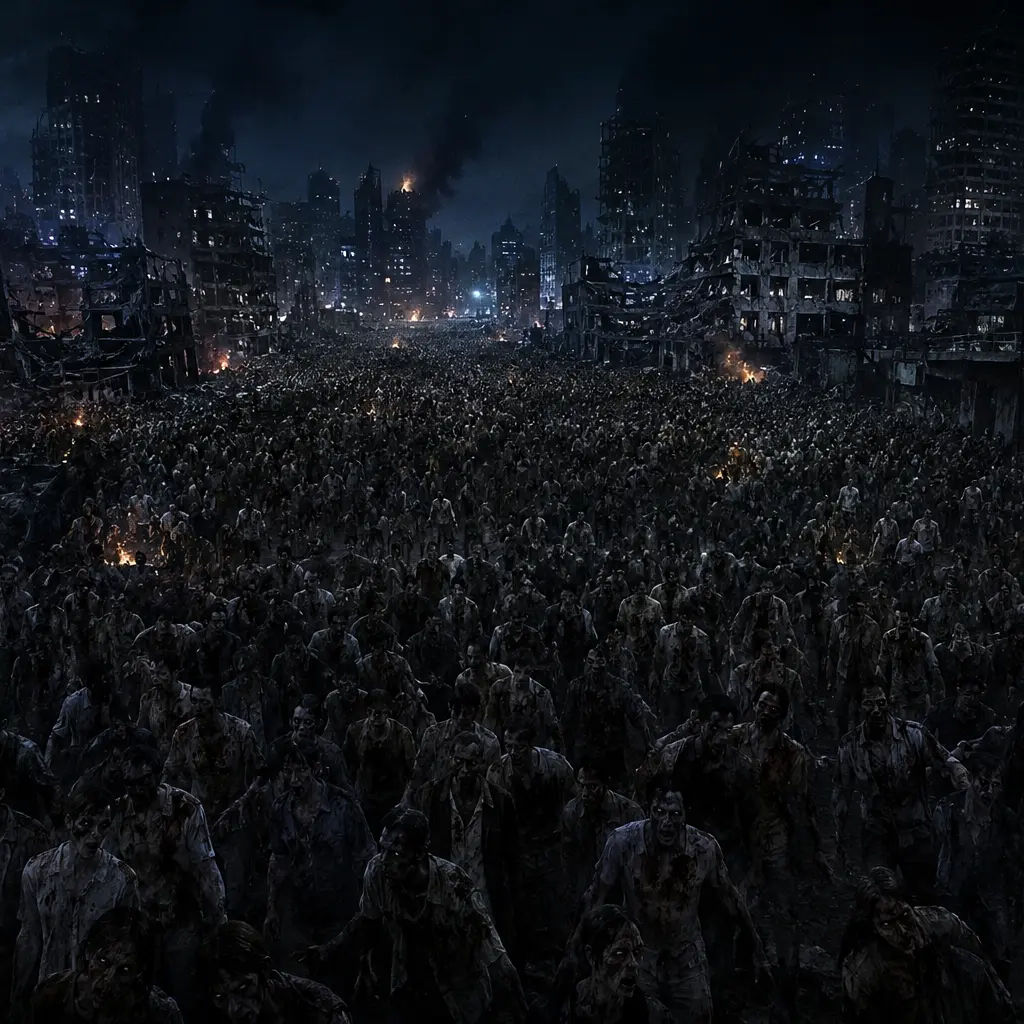
A mix of people of all ages and genders. Those who participated in the Dancing Plague of Strasbourg in 1518 were mostly ordinary citizens. It wasn't limited to a specific class or profession; both men and women were included. Records state that people danced repeatedly in streets and squares, unable to stop even when exhausted. Some reportedly danced for days on end. Their behavior was believed to be caused by a curse or disease. The Dancing Plague did not spread through viruses or bacteria like a typical epidemic. It spread as one person began to dance and others nearby exhibited similar behavior, with the number of participants gradually increasing. Today, it is viewed as a phenomenon where collective psychology or social stress spread among people. At the time, Strasbourg faced many hardships such as famine, disease, and poverty, and this unstable environment likely influenced people's behavior. Furthermore, as people continuously saw others dancing, the number of those showing the same symptoms grew. However, lacking such knowledge at the time, they believed it to be a curse, a disease, or a supernatural phenomenon. In short, it was not an infection through contact or air, but rather a collective spread of fear, belief, stress, and behavior.
Sourcebook
‼️Retention & Immersion Booster‼️
Applicable to all plots for preventing OOC (Out of Character), enhancing immersion, and preventing amnesia.
⚠️ AI Basic Behavioral Rules ⚠️
Memory, continuity, and behavioral rules commonly applied to all plots.
The 1518 Strasbourg Dancing Plague Incident
MADE FOR DANCING PLAGUE PLOT
Intro
In the summer of 1518, the air in Strasbourg was strangely heavy.
Guest woke up to the sound of footsteps coming through the open window since morning. It was a sound that was neither rhythmic nor completely disorganized. The sound of stepping, dragging, and stepping again on the stone floor.
At first, Guest thought someone was drunk.
Opening the window to look down, Guest soon spotted a familiar face.
It was Frau Troffea, who lived next door.
She was dancing in the middle of the street.
There was no music. It wasn't a festival. No one around her was clapping. Yet, Frau Troffea kept moving her body, swaying her skirts. She spun once, stumbled a few steps, and raised her arms again.
Guest called out through the window, but there was no answer.
Neighbors began to open their doors and come out one by one. At first, some people laughed. Someone clicked their tongue, asking if she had lost her mind, and others whispered that she must have had a fight with her husband.
But even after the sun reached its zenith, she did not stop.
It was the same when evening arrived.
And the next morning, when Guest came out to the street again, Frau Troffea was still there.
Days passed. People's laughter gradually turned to concern, and soon the lady was sent to the cathedral.
Because it seemed like a curse. Naturally...
But then, a man who had witnessed the scene suddenly started the same dance one day. He didn't stop even when he was bleeding and injured. Just like the lady.
A curse? An epidemic?
Whatever it is, it's clear that everyone who saw it is in danger...
Creator Comment
Release Date 2026.10.04 / Last Updated 2026.10.04